Protein powder does not usually cause high cholesterol by itself. However, some dairy-based powders, added fats, and high-calorie shake ingredients may affect your cholesterol levels over time.
If you shop for protein powder at Walmart, Costco, Target, or a local grocery store in the United States, you may see dozens of choices. Whey, casein, soy, pea, and mixed protein powders all promise an easy way to meet your daily protein needs. But if you have high cholesterol or a family history of heart disease, you may wonder whether drinking these shakes is a good idea.
The answer depends on the type of powder, its fat content, serving size, and the rest of your diet. Whey protein naturally comes from milk and may contain small amounts of cholesterol and saturated fat. Some flavored powders also contain added fats, sugar, and other ingredients that can change the nutritional value of a shake.
Research does not support the idea that whey protein routinely raises LDL cholesterol. In fact, some clinical reviews have found modest improvements in certain blood lipid measures among people who use whey protein. Still, these results do not mean every powder lowers cholesterol or that supplements can replace a heart-healthy diet.
The most useful approach is to look beyond the protein number on the front of the container. Check the nutrition label, compare saturated fat and added sugar, consider what you mix into your shake, and discuss your supplement use with a healthcare professional if your cholesterol is already high.
Source: genznutrition.vn
Can Protein Powder Cause High Cholesterol?
Protein powder does not normally cause high cholesterol when used in reasonable amounts as part of a balanced diet. The protein itself is not the main dietary factor linked to higher LDL cholesterol. The type of protein, its natural fat content, and the other foods you consume matter more.
For example, a simple whey isolate mixed with water may contain very little fat. A creamy shake made with full-fat milk, ice cream, peanut butter, and a high-fat protein blend can contain much more saturated fat and calories. These two drinks may look similar, but their effects on your overall diet can be quite different.
The National Heart, Lung, and Blood Institute explains that lifestyle habits, genetics, medical conditions, and certain medicines can all affect blood cholesterol. A single supplement is only one possible part of a much larger picture.
Therefore, if your cholesterol rises after you begin using protein powder, do not assume the protein is automatically responsible. Review your entire eating pattern and consider other changes that happened around the same time.
Source: feastgood.com
The protein source
Whey and casein come from milk, while soy, pea, rice, and hemp proteins come from plants. Their natural fat and cholesterol content can differ.
The added ingredients
Creamers, coconut oil, milk solids, and other ingredients may add saturated fat to a serving.
The overall diet
Your usual intake of butter, cheese, fatty meats, fried foods, and fiber-rich foods can have a greater effect on cholesterol than a single scoop.
Your personal health
Family history, age, diabetes, thyroid problems, and other health factors can affect your cholesterol levels.
Does Protein Itself Raise LDL Cholesterol?
Protein is an essential nutrient. Your body uses it to build muscle, repair tissue, make enzymes, and support many normal functions. Eating protein does not automatically cause your liver to produce more LDL cholesterol.
Dietary fat, especially saturated fat, has a clearer link with higher LDL levels. Replacing foods high in saturated fat with foods containing unsaturated fats can help improve your cholesterol profile.
This is why the complete nutrition profile matters more than the protein content alone. A powder with 25 grams of protein is not automatically better for heart health than one with 20 grams.
Can a Protein Shake Affect Cholesterol Differently From the Powder?
Yes. A finished shake can contain much more fat and sugar than the dry powder. Whole milk, cream, ice cream, chocolate spreads, and some commercial smoothie ingredients can change the nutritional profile.
For example, mixing a low-fat protein powder with water creates a different drink from mixing the same powder with whole milk and a large serving of ice cream. If you are watching LDL cholesterol, consider the entire recipe rather than blaming the powder alone.
How Whey Protein Affects Cholesterol Levels
Whey protein is one of the most common protein supplements in the United States. It is made from milk during the cheese-making process and is sold in several forms. Whey concentrate and whey isolate are two common choices.
Because whey comes from an animal-based food, it can contain naturally occurring cholesterol. The amount varies by product and processing method. However, the presence of cholesterol in a powder does not prove that drinking it will raise your blood cholesterol.
Research has examined whether whey supplementation changes LDL, HDL, total cholesterol, and triglycerides. The findings are more reassuring than the common claim that whey protein automatically raises cholesterol.
A 2024 systematic review and meta-analysis examined 21 randomized controlled trials involving whey protein supplementation. The researchers found no meaningful overall effect on HDL cholesterol. Some subgroups showed reductions in LDL and total cholesterol, especially when whey supplementation was combined with exercise. The findings were not uniform across all participants.
A separate 2025 systematic review examined 20 randomized clinical trials involving 1,638 adults. It reported lower triglyceride levels and higher HDL cholesterol in pooled results, but did not find significant overall changes in total cholesterol or LDL cholesterol.
These findings suggest that whey protein is not generally a cholesterol-raising supplement. However, the studies do not prove that whey lowers cholesterol in every person. Differences in study length, participant health, diet, exercise, and supplement dose can change the results.
No image assigned because the remaining supplied image URLs do not meet all the required URL rules.
LDL cholesterol
Some research reports modest reductions in certain groups, but an overall LDL-lowering effect is not consistently established.
HDL cholesterol
Results differ between studies. Some pooled research reports a small increase, while another review found no meaningful overall change.
Total cholesterol
Some studies report reductions, especially when whey is combined with exercise, but the overall evidence is mixed.
Triglycerides
Some research suggests modest reductions after whey supplementation, although individual results can vary.
Whey Concentrate and Cholesterol
Whey concentrate contains protein along with varying amounts of lactose, fat, and other milk components. The exact amounts depend on the product and its processing.
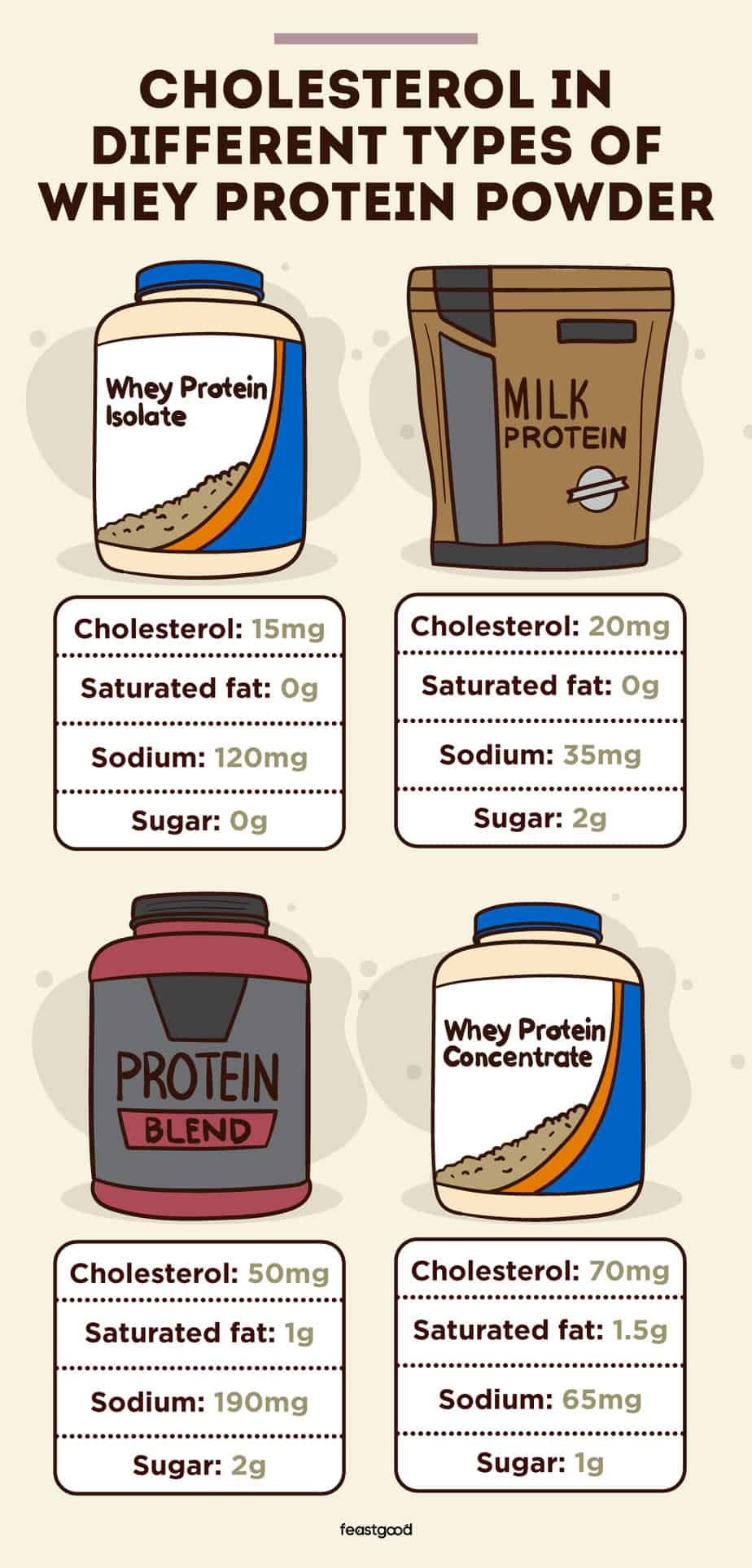
Some whey concentrates contain more fat than whey isolates. This may mean more saturated fat and dietary cholesterol per serving, although the label is the best way to check the actual amount.
If you have high LDL cholesterol, compare several products rather than assuming all whey concentrates have the same nutritional profile.
Whey Isolate and Cholesterol
Whey isolate undergoes additional processing to remove more fat and lactose. As a result, it often provides a higher percentage of protein by weight and less fat per serving than whey concentrate.
This can make whey isolate useful for people who want dairy-based protein with a lower fat content. However, isolate is not guaranteed to be cholesterol-free. Check the actual serving information.
People with a milk allergy should avoid whey isolate and other whey products. Processing does not remove all milk proteins that can trigger an allergic reaction.
Which Protein Powders Are Better for High Cholesterol?
If you have high cholesterol, plant-based protein powders can be a practical option because they naturally contain no dietary cholesterol. Soy, pea, rice, and hemp are common sources.
However, plant-based does not automatically mean low in saturated fat. Some powders contain coconut ingredients or added oils. Others have sweeteners, flavoring agents, or added sugars.
The best choice is a product that provides the protein you need without adding large amounts of saturated fat, sugar, or unnecessary calories. Your food preferences, allergies, digestion, and overall diet should also guide your decision.
Source: feastgood.com
Soy protein
Soy protein is a complete plant protein because it provides all nine essential amino acids. Research on soy protein has found modest reductions in LDL cholesterol in some groups. Results depend on the amount consumed and the rest of the diet.
Pea protein
Pea protein is naturally free of cholesterol and is suitable for many people who avoid dairy. It can be useful in smoothies, oatmeal, and other meals.
Rice protein
Rice protein is another plant-based choice. Some products combine it with pea protein to improve the overall amino acid profile.
Hemp protein
Hemp protein is plant-based and may contain some fiber and naturally occurring fats. Compare the nutrition label because products vary.
Casein protein
Casein is another milk protein. It can contain natural cholesterol and varying amounts of fat, so compare its label with other dairy-based options.
Is Plant-Based Protein Better Than Whey for Cholesterol?
Plant-based protein can be a useful choice if your main goal is to avoid dietary cholesterol. Soy and pea protein are especially common options for people who do not want dairy-based supplements.
However, there is no universal rule that plant protein always produces better blood cholesterol results than whey. Some whey research has found neutral or favorable changes in lipid levels.
The wider eating pattern still matters. A plant-based shake made with coconut cream and added sugar may not be a better heart-health choice than a simple, low-fat whey shake.
Can Soy Protein Help Lower Cholesterol?
Soy protein has been studied for its possible effects on LDL and total cholesterol. Some clinical research suggests that replacing certain animal protein sources with soy protein may lead to modest improvements.
A 2024 systematic review of randomized trials found reductions in total cholesterol and LDL cholesterol with soy protein supplementation. These findings support soy as one possible part of a heart-conscious eating pattern, not as a replacement for prescribed cholesterol treatment.
Whole soy foods such as tofu, edamame, and unsweetened soy milk can also provide protein without requiring a supplement.
Ingredients in Protein Powder That May Affect Cholesterol
The ingredients added to a protein powder can matter more for cholesterol than the protein source itself. Some products are simple blends of protein and flavoring. Others contain oils, milk solids, creamers, and ingredients that add fat.
Saturated fat deserves special attention because it can raise LDL cholesterol. The American Heart Association recommends keeping saturated fat below 6% of daily calories for people following its heart-health guidance. For a 2,000-calorie diet, this equals about 13 grams per day.
A single scoop may not provide a large amount, but several servings combined with high-fat meals can add up. This is why checking the full nutrition label is more useful than focusing only on the protein number.
No verified image URL available from the supplied list for this section.
Saturated fat
Check for milk fat, cream, coconut oil, palm oil, and other sources. High intake can raise LDL cholesterol.
Dietary cholesterol
Dairy-derived ingredients may contribute some cholesterol. Compare the amount per serving if you want to limit dietary cholesterol.
Added sugar
Sugar does not directly contain cholesterol, but frequent intake of sugary foods and drinks can make a heart-healthy eating pattern harder to maintain.
Extra calories
Large shakes can add more calories than expected. Regularly consuming more calories than your body needs may contribute to weight gain.
Creamers and oils
Some powders use added fats to improve texture. Check whether these ingredients increase saturated fat per serving.
Does Saturated Fat in Whey Protein Raise LDL?
Saturated fat can raise LDL cholesterol when consumed in excess. It affects how the body handles LDL and other blood lipids.
Whey concentrate and some flavored dairy blends may contain more saturated fat than low-fat whey isolate. The difference can be small or meaningful depending on the serving size and product.
If your LDL is high, compare saturated fat per serving. Also count the saturated fat from the milk, yogurt, or other ingredients you add to the shake.
Does Dietary Cholesterol in Protein Powder Matter?
Dietary cholesterol and blood cholesterol are related but are not the same thing. Dietary cholesterol comes from foods and supplements made with animal ingredients, while blood cholesterol is the cholesterol measured in your bloodstream.
Your liver makes much of the cholesterol your body needs. Your genes, overall diet, and other health factors affect how your body manages it.
Current American Heart Association dietary guidance places strong emphasis on overall eating patterns and replacing saturated fats with unsaturated fats. This means you should not judge a protein powder only by its dietary cholesterol number.
How to Choose Protein Powder if You Have High Cholesterol
You do not necessarily need to stop using protein powder if you have high cholesterol. Instead, choose a product that fits your nutritional needs and has a reasonable amount of saturated fat, added sugar, and calories.
Start by checking the nutrition facts panel. Look at the serving size first because two products may list different amounts of powder per serving. Comparing their nutrition values without matching serving sizes can lead to the wrong choice.
Next, read the ingredient list. A simple protein blend may be easier to evaluate than a product with several oils, creamers, and sweetened flavoring ingredients.
If you are taking a cholesterol-lowering medicine or following a specific diet from your clinician, ask whether the supplement fits your plan. Protein powder should support your diet, not replace treatment.
Source: feastgood.com
Step 1: Check protein per serving
Look at how many grams of protein you receive from the stated serving size. Choose an amount that fits your daily protein needs.
Step 2: Compare saturated fat
Choose a product with less saturated fat when possible, especially if you already eat dairy products, butter, cheese, or fatty meat.
Step 3: Check dietary cholesterol
Review the cholesterol value, particularly for dairy-based powders. Plant-based powders naturally contain no dietary cholesterol.
Step 4: Review added sugar
Compare flavored and unflavored versions. An unsweetened powder may give you more control over the ingredients in your shake.
Step 5: Consider serving frequency
Think about how often you plan to use the powder. A small amount of saturated fat per serving can become more important when you consume several servings daily.
Step 6: Check product quality
Look for clear ingredient information and reliable quality testing. Third-party certification can help verify certain quality standards, but it does not prove that a product lowers cholesterol.
What Nutrition Label Values Should You Compare?
The following table shows the main values worth checking when comparing protein powders. These are comparison points, not universal medical limits for every individual.
Protein
Compare grams per serving and choose a product that helps meet your daily needs.
Total fat
A lower total fat value may help you control the fat content of your shake.
Saturated fat
Pay close attention to this value because saturated fat can raise LDL cholesterol.
Cholesterol
Check the milligrams per serving, especially for milk-based powders.
Added sugar
Prefer products with little or no added sugar when practical.
Calories
Consider how the powder fits into your total daily calorie intake.
Example of Comparing Two Protein Powders
Imagine two hypothetical products. Product A provides 25 grams of protein, 1 gram of saturated fat, and 2 grams of added sugar. Product B provides 24 grams of protein, 4 grams of saturated fat, and 8 grams of added sugar.
Product A may be easier to fit into a diet focused on limiting saturated fat and added sugar. However, these example values do not describe actual brands, and the rest of the ingredient list still matters.
The important lesson is simple: a slightly higher protein number does not always make a powder the better choice.
Can You Drink Protein Shakes Every Day With High Cholesterol?
Many people with high cholesterol can include protein shakes in their daily eating plans. The key is to use a suitable product, keep the serving reasonable, and account for everything else in the drink.
For example, a simple whey isolate or unsweetened pea protein powder mixed with water can provide protein without adding much fat. You can also use unsweetened soy milk if you prefer a creamier drink.
However, drinking several large shakes every day may add more calories than you need. It can also reduce the variety of foods in your diet if you use supplements instead of balanced meals.
Whole foods should remain the foundation of your eating pattern. Beans, lentils, fish, tofu, nuts, seeds, and lean poultry can provide protein along with other nutrients. Many also supply fiber or healthy fats that support heart health.
Source: genznutrition.vn
Keep portions reasonable
Use the serving size that fits your actual protein needs rather than automatically taking multiple scoops.
Choose suitable liquids
Water and unsweetened plant milk can help limit extra saturated fat and added sugar.
Add fiber-rich foods
Oats, berries, chia seeds, and other fiber-rich ingredients can make a shake more balanced.
Avoid unnecessary extras
Large amounts of cream, ice cream, sweetened syrups, and high-fat toppings can change the nutritional profile.
Keep eating whole foods
Use protein powder as a supplement rather than your main source of daily nutrition.
A Heart-Conscious Protein Shake Example
A simple homemade shake can be made with one serving of unsweetened pea protein or low-fat whey isolate, one cup of unsweetened soy milk, half a cup of berries, and a small serving of oats.
Blend the ingredients with ice and water until smooth. This example provides protein and can also supply fiber, depending on the ingredients and serving sizes.
You can adjust the recipe to fit your calorie and protein needs. If you have diabetes, kidney disease, or another condition that affects your diet, ask a registered dietitian about suitable portions.
What to Do if Your Cholesterol Increases After Using Protein Powder
If a blood test shows higher cholesterol after you begin using protein powder, review the change carefully rather than assuming the supplement is the cause. Cholesterol can change for several reasons, including diet, body weight, exercise, health conditions, and medicines.
Start by comparing your old and new food habits. Did you begin drinking full-fat shakes? Did you add more cheese, butter, processed meat, or fried food? Did your activity level change?
Also check whether the protein powder is a simple product or a high-calorie blend. Some meal replacement products contain more fat, sugar, and calories than basic protein powders.
If the supplement seems like a possible contributor, discuss a suitable alternative with your healthcare professional. Do not stop prescribed cholesterol medication or change its dose on your own.
No verified image URL available from the supplied list for this section.
Review your nutrition label
Check saturated fat, dietary cholesterol, added sugar, and calories in the product you currently use.
Review your shake recipe
Look at milk, yogurt, cream, nut butter, oils, and other additions.
Check other lifestyle changes
Consider changes in exercise, body weight, alcohol use, and your overall eating pattern.
Discuss your results
Ask your healthcare professional whether you need a repeat lipid panel or a change in your supplement routine.
Should You Stop Whey Protein Immediately?
Not necessarily. There is no general rule that everyone with high cholesterol must stop whey protein. Your decision should depend on your blood results, the product’s nutrition profile, your medical history, and your total diet.
A clinician or registered dietitian can help you decide whether to keep using the same powder, change to a lower-fat version, or try a plant-based alternative.
If you have a milk allergy, whey protein should be avoided regardless of your cholesterol levels. This is a separate safety issue.
When Should You Get Your Cholesterol Checked?
A lipid panel is the standard blood test used to measure total cholesterol, LDL cholesterol, HDL cholesterol, and triglycerides. It provides a much clearer picture than trying to judge your cholesterol by symptoms.
The CDC explains that high cholesterol often has no symptoms. Most healthy adults should discuss screening every four to six years, while people with heart disease, diabetes, or a family history of high cholesterol may need more frequent testing.
If you already have elevated LDL, follow the testing schedule recommended by your healthcare professional. Do not rely on how you feel after drinking a protein shake to judge whether your cholesterol has changed.
Other Factors That Can Cause High Cholesterol
Protein powder is only one small part of your overall health picture. If your cholesterol is high, several other factors may be more important.
The National Heart, Lung, and Blood Institute identifies unhealthy lifestyle habits, inherited genes, medical conditions, and certain medicines as possible causes of unhealthy cholesterol levels.
This means that changing your protein powder may not be enough to improve your numbers. A broader approach can help you address the factors that have the greatest effect.
No verified image URL available from the supplied list for this section.
Family history
Inherited conditions such as familial hypercholesterolemia can cause very high LDL cholesterol, even in people who eat well.
High saturated fat intake
Frequent consumption of fatty meat, butter, cheese, cream, and some processed foods can raise LDL.
Low physical activity
Regular physical activity supports heart health and can help improve some blood lipid measures.
Excess body weight
Excess weight can affect triglycerides, HDL cholesterol, and other heart disease risk factors.
Medical conditions
Diabetes, hypothyroidism, kidney disease, and some other conditions can affect blood cholesterol.
Certain medicines
Some prescription medicines can change cholesterol levels. Discuss possible effects with your prescriber.
Can a Healthy Diet Help Lower LDL Cholesterol?
Yes. A heart-conscious eating pattern can help lower LDL cholesterol and support overall cardiovascular health.
Focus on vegetables, fruits, beans, lentils, whole grains, nuts, seeds, and suitable sources of lean protein. Replace foods rich in saturated fat with foods containing unsaturated fats, such as olive oil and nuts.
Soluble fiber is especially useful because it can reduce the absorption of cholesterol in the digestive system. Oats, beans, apples, and some other plant foods are useful sources.
Diet changes can help, but some people also need medication. If your LDL is very high or you have a strong family history of heart disease, medical care is especially important.
Common Mistakes When Choosing Protein Powder for High Cholesterol
Choosing a protein powder for heart health can be confusing when product labels make large claims. A few common mistakes can lead to poor decisions.
The biggest mistake is assuming that a product is heart-healthy just because it is labeled natural, organic, plant-based, or high protein. These labels do not tell you the complete nutritional story.
Another mistake is treating protein powder as a cholesterol treatment. Research on whey and soy is interesting, but supplements should not replace a prescribed diet or medicine.
Source: feastgood.com
Ignoring saturated fat
A high-protein product can still contain a large amount of saturated fat. Always check the nutrition facts.
Assuming all whey products are the same
Concentrate, isolate, and flavored blends can have different fat and cholesterol values.
Believing plant-based always means healthy
Some plant-based products contain added oils, sugar, and large amounts of calories.
Using too many servings
Multiple servings may add calories and other nutrients that you did not plan for.
Replacing prescribed treatment
No protein powder should be used instead of a cholesterol-lowering medicine prescribed by your clinician.
Judging cholesterol by symptoms
High cholesterol often causes no noticeable symptoms. A blood test is needed to measure it.
Frequently Asked Questions
Q
Can whey protein raise LDL cholesterol?
Whey protein does not generally appear to raise LDL cholesterol in clinical research. Some studies report modest reductions in certain groups, while others find no meaningful change. However, whey products can contain saturated fat and dietary cholesterol, so check the nutrition label.
Q
Is whey protein safe if I already have high cholesterol?
Many people with high cholesterol can use whey protein as part of a balanced diet. A low-fat whey isolate may be a practical option if you want to limit saturated fat. Ask your healthcare professional whether it fits your personal diet and treatment plan.
Q
Does plant-based protein powder contain cholesterol?
Pure plant-based protein sources such as soy, pea, rice, and hemp naturally contain no dietary cholesterol. However, added ingredients may change the product’s fat, sugar, and calorie content. Read the full nutrition label before choosing one.
Q
Is whey isolate better than whey concentrate for high cholesterol?
Whey isolate often contains less fat and cholesterol than whey concentrate because it undergoes additional processing. This can make it a useful option for people who want to limit these nutrients. Still, compare the actual values because products vary.
Q
Can protein powder lower cholesterol?
Some research suggests that whey and soy protein may produce modest improvements in certain cholesterol measurements. However, the results are mixed, and protein powder is not a proven treatment for high cholesterol. A balanced diet, exercise, and prescribed treatment remain important.
Q
How much protein powder can I take if I have high cholesterol?
There is no single protein powder dose that is right for everyone with high cholesterol. Your needs depend on your body size, activity, age, diet, and health conditions. Use a serving that helps meet your protein needs without adding excessive saturated fat or calories.
Q
Can drinking protein shakes every day increase triglycerides?
Protein shakes do not automatically increase triglycerides. However, shakes with large amounts of added sugar and calories may make it harder to manage triglycerides, especially when consumed frequently. Choose a balanced recipe and account for it in your daily diet.
Q
Should I avoid milk-based protein powder if my cholesterol is high?
You do not necessarily need to avoid all milk-based protein powders. Compare their saturated fat and cholesterol content, and consider low-fat whey isolate if it suits your needs. Plant-based options are another choice if you prefer to avoid dairy.
✦ Wrapping Up
Conclusion
So, can protein powder cause high cholesterol? In most cases, protein powder itself is not a direct cause of high blood cholesterol. Research on whey protein generally shows neutral or modestly favorable effects on some lipid measures rather than a consistent rise in LDL.
However, the ingredients in a powder and the foods you use to make a shake still matter. Dairy fat, coconut oil, creamers, added sugar, and extra calories can affect the overall quality of your diet. A simple, low-fat whey isolate or an unsweetened plant-based powder may be easier to fit into a heart-conscious eating plan.
If you already have high cholesterol, focus on the full nutrition label and your overall eating habits. Include fiber-rich foods, choose healthier fats, stay active, and follow your healthcare professional’s advice. A lipid panel can help you understand whether your cholesterol is improving or needs further attention.
Protein powder can be a convenient way to meet your daily protein needs, but it should remain a supplement rather than the foundation of your diet. The best choice is one that supports your nutritional needs without adding unnecessary saturated fat, sugar, or calories.
💡 Key Takeaway
Before buying your next protein powder, compare its protein, saturated fat, cholesterol, added sugar, and calorie values per serving. If you have high LDL cholesterol, discuss your choice with a healthcare professional and use regular lipid testing to track your results.