When Should I Eat Protein Bars: Easy guide

The question "when should I eat protein bars" doesn't have one clean answer. It depends on whether you just ran an eight-mile tempo, sat through a six-hour meeting, or are trying to hit 40 grams of protein before bed. The bar is just the delivery format.
The timing is the strategy.
Here's the data point that reframes everything: muscle protein synthesis (MPS) stays elevated for roughly four to six hours after you consume a meaningful protein dose. The International Society of Sports Nutrition backs this in their position stands on nutrient timing. So you've got a window, not a 30-minute countdown.
Let's walk through where the bar actually slots into your day.
Quick Answer
You can eat a protein bar 60 minutes pre-workout to two hours post-workout. For meal replacement, slot it into a three-to-four-hour gap between meals. Your daily protein total (1.6 to 2.2 g/kg for lifters) beats exact timing.
As of 2026, the research consensus still supports that.
The 30-Minute Anabolic Window Is Dead. Here's What Replaced It
For years, the fitness world ran on one rule: "Eat protein within 30 minutes or lose the gain." That script caused real stress for anyone who finished a class, drove home, and then finally ate.
The research has moved on. Aggregate findings reviewed by the International Society of Sports Nutrition show MPS stays elevated for four to six hours after a protein feed. One dose of 20 to 40 grams of protein kicks off the signal.
You don't need to chug a shake the second you step off the treadmill.
What actually drives muscle growth is your total protein across the day. One bar at 2 p.m. and another at 7 p.m. will beat one bar shoved into the "window" followed by a protein desert for the rest of the day.
Practically, that means:
- If you train and then have a meal within two hours, the bar is optional fuel.
- If nothing else is coming until evening, the bar bridges the gap.
- The bar doesn't need to be the very first thing you eat.
Start With Your Daily Protein Target, Not the Clock
Before you worry about the clock, figure out your number. The USDA Dietary Guidelines for Americans set the baseline at 0.8 grams per kilogram of body weight for sedentary adults. If you train, the target climbs.
The American College of Sports Medicine recommends 1.2 to 1.7 g/kg for active individuals and up to 2.2 g/kg for athletes in a calorie-restricted phase.
| Activity level | Daily protein target | Where the bar fits |
|---|---|---|
| Sedentary (desk job, minimal exercise) | 0.8 g/kg | One bar as a snack, max two |
| Active (3 to 5 sessions/week) | 1.2 to 1.6 g/kg | One to two bars to close gaps |
| Performance / bulking | 1.6 to 2.2 g/kg | Two bars plus meals, or one bar plus a shake |
Here's how to run the math fast:
- Weigh yourself. Multiply by your target range.
- Log every protein source for three days (meals, shakes, bars, eggs, dairy).
- Subtract your average from your target. That gap is where the bar lives.
Most people who "eat protein bars all day" are actually overconsuming. They grab two bars on top of two protein-heavy meals and quietly stack 300 extra calories. The bar fills a gap.
It doesn't replace the entire strategy.
Your Goal and Schedule Set the Rules
This is where the decision tree kicks in. Your answer changes based on four variables. Walk through them in order.
You're cutting or maintaining
If the goal is fat loss, the bar is a snack tool, not a meal. You're eating in a caloric deficit. Two bars a day on top of your meals puts you right back at maintenance.
The rule: if your gap between meals is under three hours, skip the bar. Eat a smaller portion of your next meal instead. If the gap is four to five hours, one bar (200 to 250 kcal) keeps hunger in check without wrecking your deficit.
You're bulking or performance-training
You need total volume. One bar at 250 kcal won't close a 500-calorie surplus. Here, the bar supplements meals rather than replacing them.
Pair a high-protein bar (25 to 30 g protein) with a carb source (banana, rice cake) 60 to 90 minutes before training. Post-session, hit 30 to 40 grams of protein. That's one bar or a bar plus a shake, depending on what the label shows.
You're sedentary or on a shift schedule
You're not chasing MPS peaks. You're chasing convenience and hunger management. A bar between 3 p.m. and 5 p.m. keeps you from nuking the vending machine.
Shift workers with compressed meal windows (a 40-minute break in a 12-hour shift) benefit most. The bar is the only pre-portioned protein that needs zero prep, zero cleanup, and no fridge.
You have digestive sensitivities (IBS, FODMAPs, lactose)
This changes the type of bar more than the time of day. Whey-based bars trigger lactose reactions. High sugar-alcohol bars (maltitol, isomalt over 15 g) flare IBS.
Stick to plant-based or egg-white protein bars with under 10 g of sugar alcohols. Eat them 30 to 60 minutes after a small meal, not on a totally empty stomach. The buffer reduces bloating and gas.
Pre-Workout: When a Bar Beats Eating a Full Meal 90 Minutes Out
A solid bar works best 60 to 90 minutes before training. That gives your stomach time to empty enough that you're not dragging a heavy load into a squat or a tempo run.
Here's the if/then logic:
- If you have 90+ minutes before the session: eat a normal meal. The bar isn't needed.
- If you have 60 to 90 minutes and no meal is ready: grab a bar with 15 to 25 g of carbs and 10 to 15 g of protein. The moderate glycemic index (35 to 55 for most bars) gives you steady fuel without a glucose spike.
- If you have under 45 minutes: skip the solid bar. Your stomach won't empty it in time. A liquid (shake, smoothie) digests faster and feels lighter.
One caveat: check the caffeine content. Some performance bars carry 50 to 150 mg of caffeine. If you eat that at 5 p.m. before a night class, you'll be wired during your post-workout meal.
Pair the bar with water, not more espresso.
Post-Workout: You Have More Time Than You Think
You don't need to crack a bar open the second you walk out of the gym. The four-to-six-hour MPS window covers you. A bar eaten 90 minutes post-session still triggers the same anabolic signal as one eaten 10 minutes post.
The number that matters: 20 to 40 grams of protein per feed. If your bar delivers 25 g, you've hit the lower threshold. Pair it with a carb source (a piece of fruit, a banana) and you've covered the glycogen side too.
Where the bar wins post-workout:
- You're in transit and can't sit down for a meal.
- You're doing a second session later and need a quick protein hit between.
- You're cutting and need a 200-to-250-kcal option that still delivers 20+ g of protein.
Where it loses: you're home, you have a kitchen, and you can plate up eggs, chicken, or a protein bowl in 10 minutes. Whole food gives you more micronutrients and longer satiety for the same calories.
Before bed, the logic shifts. A casein-heavy bar (30 to 40 g of slow-digesting protein) sustains MPS through the seven-to-eight-hour overnight fast. That's the one slot where the bar format genuinely beats a shake.
The Between-Meal Slot: Filling Gaps Without Adding 300 Calories You Didn't Plan For
The between-meal bar works when your gap hits four to five hours and no meal is planned. That's the 3 p.m. lull, the 10 a.m. stretch on a light breakfast, or the late shift where dinner doesn't arrive until 7 p.m.
Here's the if/then logic:
- If your next meal is under three hours away: skip the bar. You'll be hungry enough to eat a real portion at the next sitting.
- If the gap is four to five hours: one bar (200 to 250 kcal, 15 to 25 g protein) keeps hunger manageable without resetting your appetite for dinner.
- If you're already at your daily protein target: the bar adds calories, not nutrients. Swap it for a handful of almonds or a piece of fruit instead.
The key rule is intentionality. You're not "grabbing a bar because it's in the drawer." You're closing a specific gap you mapped in the morning. If you eat the bar on top of a full lunch and a full dinner, you've quietly added 250 calories that weren't in your plan.
One practical note: bars are dry and dense. Pair the bite with water or coffee. Chewing a high-fiber, compressed bar on a zero-liquid stomach triggers nausea in a lot of people.
Before Bed: Why a Casein-Heavy Bar Is the Overnight Move
You fast for seven to eight hours while you sleep. That's a long gap with zero protein input. A casein-rich bar (look for 30 to 40 g protein, micellar casein or cottage-cheese-based formats) keeps MPS ticking through the night.
The timing: 30 to 60 minutes before you turn off the lights. Eating it right at the bedside works. Eating it at 6 p.m. and then sleeping at 10 p.m. misses the point, because slow digestion peaks around hour three to four.
If your bar is whey-based (fast absorption), it won't sustain overnight synthesis the way casein does. In that case, the bar works as a pre-bed snack but you'll want a second protein source at breakfast within 90 minutes of waking.
Who benefits most:
- Lifters in a calorie deficit who cut their evening meal
- People training early morning who want overnight recovery fuel
- Older adults (60+) where overnight MPS declines and the slow-digesting protein buffer matters more
Using a Bar as a Meal: When It Works and When It Falls Short
A standard protein bar delivers 200 to 350 kcal and 15 to 30 g of protein. A full meal needs 400 to 700 kcal with balanced macros and fiber. So a bar can replace a meal only when it's specifically a meal-replacement format (350 to 500 kcal, 25+ g protein, 10+ g fiber, included vitamins).
When it works:
- You're traveling, driving, or stuck in a meeting with no food access
- You're in a calorie surplus and need 500 kcal that aren't a full plate
- You're in a rehabilitation or post-surgical phase and need consistent, measured protein
When it falls short:
- You're doing this three or more days a week and missing micronutrients (iron, B12, folate) that no bar covers
- You rely on bars for two meals daily, cutting your whole-food intake to near zero
- The bar is a 200-kcal snack format masquerading as a meal
Limit meal-replacement bars to one per day max. After that, whole foods get crowded out and your micronutrient profile thins over weeks.
Bar, Shake, or Whole Food: Matching the Format to the Time Slot
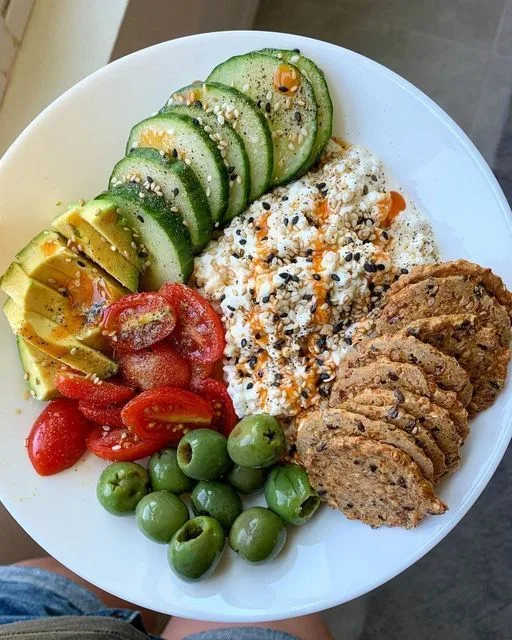
The format changes absorption speed and the satiety curve. Match the format to the time slot, not just the protein grams.
| Format | Absorption speed | Best time slot | Why |
|---|---|---|---|
| Solid bar (whey) | 30 to 90 min | Pre-workout, between meals | Portable, portion-controlled, no prep |
| Liquid shake / smoothie | 15 to 45 min | Post-workout, pre-bed if whey | Faster gastric emptying, less GI load |
| Casein bar or cottage cheese | 4 to 6 hr | Before bed | Slow digestion sustains overnight MPS |
| Whole food (eggs, chicken, tofu) | 60 to 120 min | Main meals | Micronutrient density, longer satiety |
A few practical pairings:
- Morning, no time to cook: bar + black coffee. Simple, 200 kcal, 20 g protein, done in 90 seconds.
- Post-lift, heading home: a shake beats a dense solid bar you'd be chewing through the drive.
- Desk job, 2 p.m. hunger: the bar is the only option. No blender, no stove, no cleanup.
- Evening meal: whole food wins every time. You get 300 to 500 kcal of protein plus vitamins a bar simply doesn't carry.
What to Actually Check on the Label Before You Bite
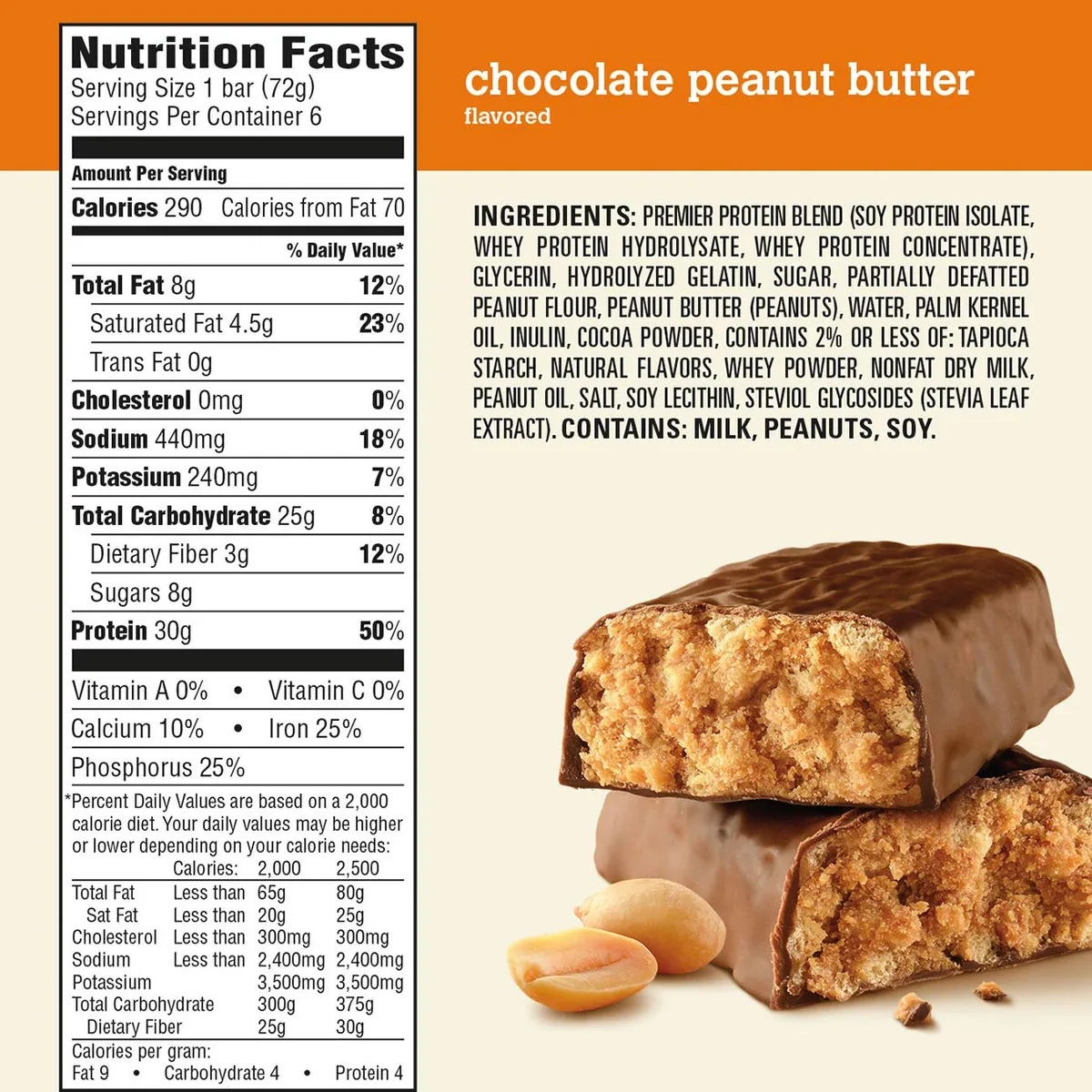
You need to scan five numbers on the back of the wrapper before the bar enters your rotation.
Protein grams per bar: You want 20 to 30 g for a post-workout or pre-bed slot. Under 15 g means it's a snack, not a protein feed. The FDA requires "high protein" claims to mean at least 6 g per 100 g or 2 g per serving, so a "high protein" bar can still deliver just 10 g total.
Sugar and sugar alcohols: Keep total added sugar under 5 g if you're cutting. Sugar alcohols (maltitol, erythritol, isomalt) above 15 g will cause bloating and gas in sensitive guts. If you have IBS, stay under 8 g.
Carb load: 15 to 25 g is the sweet spot for a pre-workout bar. Over 40 g means you've essentially eaten a carb bar with a protein marketing label. Fine for post-endurance, wrong for a cutting snack.
Caffeine: Check the ingredient list for green tea extract, coffee, or guarana. Performance bars carry 50 to 150 mg. If you eat one after 3 p.m., your sleep quality will suffer.
The FDA notes that 400 mg of caffeine per day is the upper safe limit for healthy adults, and one bar can eat into that budget fast.
Protein source: Whey isolate, casein, pea, rice, egg white, or a blend. If you're lactose-intolerant, whey concentrate will bother you. Whey isolate is better tolerated but still dairy.
Plant-based (pea, rice, hemp) avoids the issue entirely.
Run through those five numbers in under 20 seconds. If the bar passes, it's a valid tool. If it fails on two or more, it's candy wearing a protein label.
Five Mistakes That Quietly Ruin Your Protein Strategy
The biggest one is the health halo. You grab a bar, feel like protein's covered, and skip the rest of the day's feeds. Two bars on top of two protein-heavy meals quietly stacks 400 extra calories.
Other quiet failures:
- Eating a dense, high-fiber bar on a totally empty stomach with zero liquid, triggering nausea
- Using a fast-absorbing whey bar at 11 p.m. when a casein format would actually sustain overnight MPS
- Stacking a bar and a shake in the same 20-minute window, which over-doses one feed
- Buying a "protein" bar with 8 g of protein and 22 g of sugar, then timing it like a post-lift feed
Each mistake is small in isolation. Stack all four and the strategy stops working.
When a Protein Bar Is the Wrong Call
Sometimes the bar is the wrong tool, and the timing question becomes irrelevant. Four situations where you should walk away:
- Caffeine-loaded performance bars (50 to 150 mg) eaten after 3 p.m. wreck sleep in light sleepers
- Sugar-alcohol bars carrying 15+ g of maltitol or isomalt flare IBS within an hour
- Any bar under 10 g of protein is a candy bar with a marketing label. It doesn't feed MPS
- Solid bars for kids under 8 carry a choking risk. A smoothie or shake is the safer format
If you hit any of those four, the answer isn't "when" to eat the bar. The answer is "don't."
Your Day-Mapping Cheat Sheet: Slot the Bar in 10 Seconds
This table compresses the whole guide into one glance. Find your slot, grab the right format, move on.
| Time slot | What to grab | Why it works |
|---|---|---|
| 60 to 90 min pre-workout | 25 g protein, 15 to 25 g carb bar | Steady fuel, stomach settles before loading |
| 0 to 2 hr post-workout | 30 to 40 g protein bar + a banana | Hits the MPS threshold, refills glycogen |
| 3 to 4 hr gap, no meal planned | 200 to 250 kcal snack bar | Hunger bridge without caloric creep |
| 30 to 60 min before bed | 30 to 40 g casein bar | Sustains overnight MPS through a 7 to 8 hr fast |
| Travel, no kitchen access | Any shelf-stable bar + water | Only portable, portion-controlled protein on the go |
Pick your row. Slot the bar in. You're done.
Quick Answers to the Questions You're Actually Googling
Can I eat a protein bar on an empty stomach?
Yes, but pair it with a glass of water or coffee first. A dense, high-fiber bar chewed on a completely dry stomach triggers nausea in sensitive people. Wait five to ten minutes after sipping water before you start chewing.
Is one protein bar a day enough?
Not as your only protein source. One bar delivers 15 to 30 g. A 180-lb lifter needs 80 to 120 g daily at 1.6 to 2.2 g/kg.
The bar fills one slot. You still need meals, shakes, or whole-food protein for the rest.
Should I eat a bar before or after my morning coffee?
Either works. Caffeine doesn't block protein absorption. But if the bar carries its own caffeine, back off the coffee.
A double espresso plus a 100-mg caffeine bar pushes you past 300 mg before 9 a.m.
Do protein bars spike insulin like a donut?
No. Most bars sit at a glycemic index of 35 to 55, which is moderate. A donut or candy bar hits 60 to 75.
The protein and fiber in a quality bar slow glucose absorption. Carb-loaded performance bars are the exception to watch for.
Can I build muscle with bars and no other protein source?
You can, but it's expensive and nutritionally thin. Three bars a day gets you 60 to 90 g, which is below the 1.6 g/kg target for most lifters. You'd need four to five bars, and you'd still miss iron, B12, and magnesium that whole foods provide.