Why Are Protein Bars Bad for You: Easy guide
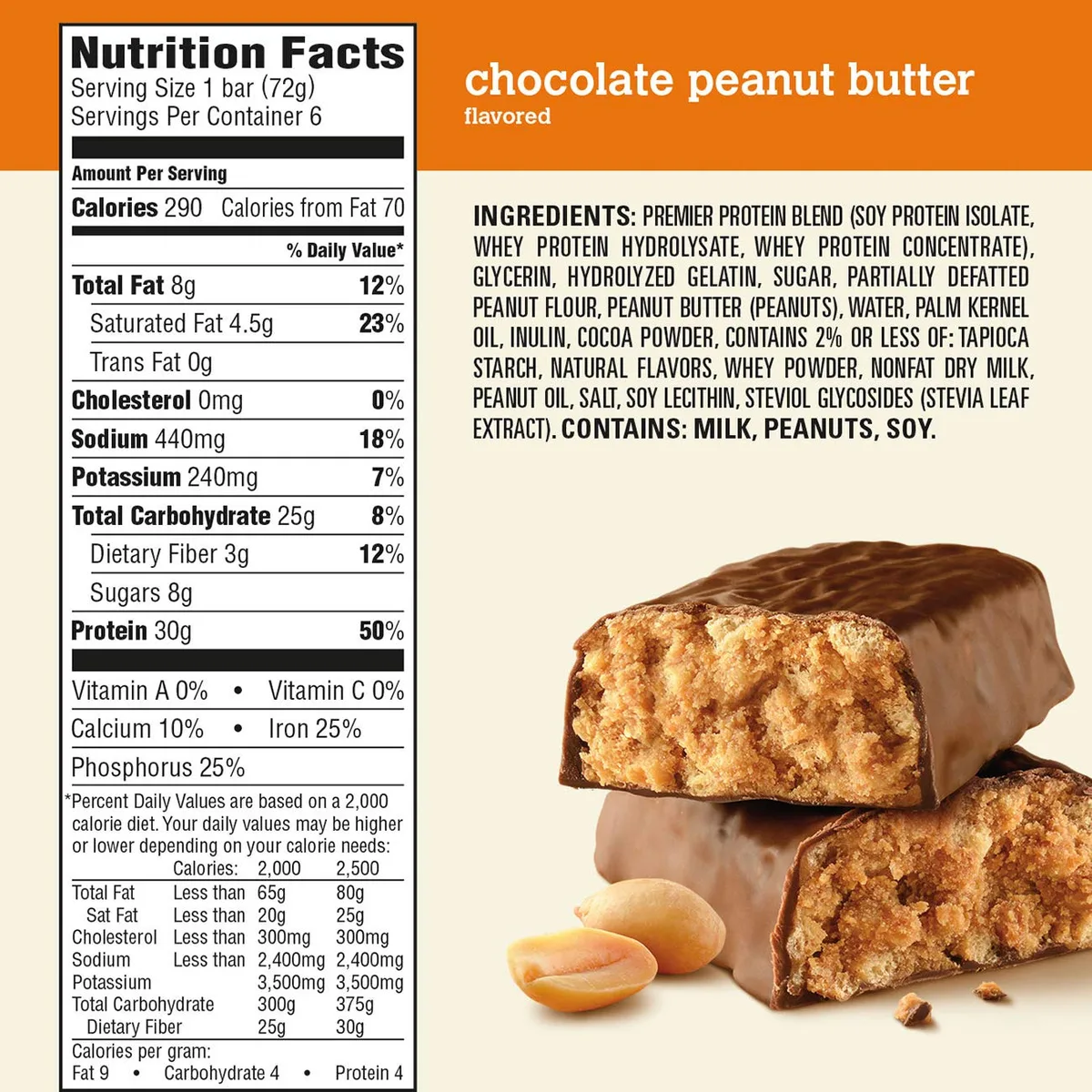
If you've ever stood in the health food aisle wondering why are protein bars bad for you when the label touts 25 grams of protein, you're not being irrational. The word "protein" is doing marketing heavy lifting, and the rest of the package tells a different story. I want to sort out what's actually in that wrapper, how it affects your body over time, and when a bar is genuinely useful versus when it's just expensive candy in a health halo.
As of 2026, the US protein bar market sits above $12 billion. A typical mainstream bar carries 5 to 30 grams of added sugar alongside 25 to 50 ingredients on the back. The WHO recommends keeping free sugars under 10% of daily calories, roughly 45 grams on a 2,000 kcal diet.
One "low sugar" bar can burn through half of that in a single sitting. Here's what the research actually shows and where the real risks live.
Quick Answer
Protein bars pack 15 to 30 grams of sugar per serving. That sugar load, plus 25 to 50 additives, outweighs the protein. The "protein" label creates a false health halo.
Your gut and blood sugar pay the price. The bar isn't toxic, but it's not what you think.
The protein isn't the problem (and here's what actually is)
The protein in a bar, whether it's whey isolate, casein, or pea protein, is doing exactly what it's supposed to do. It provides amino acids, it supports muscle repair, and in the right context, it's genuinely useful. Nobody credible is telling you that 20 grams of whey will damage your kidneys, unless you already have renal issues, which is a separate conversation.
So where does the "bad for you" claim actually come from? It comes from everything else in that wrapper. The sugar.
The emulsifiers. The 30 additives that turn a food into a product. Your body metabolizes the bar's sugar load the same way it metabolizes a candy bar, just slightly slower because the protein buffers the spike.
The real issue is what the bar replaces. If it's a post-workout top-up after you've already eaten a real meal, you're fine. If it's your only protein for the day, you're missing the fiber, micronutrients, healthy fats, and satiety signals that come with a plate of chicken, rice, and vegetables.
The protein number on the front is a marketing anchor. It makes the 22 grams of sugar and the carrageenan feel forgivable. They're not.
What's inside that wrapper: sugar load, BMRs, and the food matrix
Every mainstream protein bar in the US as of 2026 carries a recipe classified as ultra-processed food under the NOVA taxonomy. That means 10 or more ingredients and 5 or more Bio-resistance Markers, additives that modify the food matrix in ways your gut wasn't built to process in bulk. You can verify the nutrient breakdown for specific SKUs in USDA FoodData Central.

The sugar you're not seeing
Maltodextrin, corn syrup, agave, and inulin all count as added sugars or sugar-alcohol fillers. A "low sugar" bar can still carry 8 to 12 grams through these routes. The American Diabetes Association recommends men cap added sugar at 36 grams per day and women at 25.
One bar eats 40 to 70% of that allowance before you've had a real meal.
The "no added sugar" trick
"No sugar added" means no sucrose or glucose was poured in after processing. It does not mean no sugar. Maltodextrin and inulin (chicory root fiber) get filed under "fiber" or "carbohydrate" on the label.
Your pancreas doesn't care about the legal category. It still processes the glucose load.
Why 20 g of bar protein ≠ 20 g of chicken
The food matrix matters. Chicken comes with creatine, taurine, B12, heme iron, and a full amino acid profile in a structure your gut evolved to process. A bar's 20 grams of isolated whey sits inside a matrix of emulsifiers, sweeteners, and palm oil.
The absorption rate, satiety response, and micronutrient payload are completely different. Same gram count, different biological event.
What the research actually says about ultra-processed "health food"
The "health food" shelf is where most metabolic surprises live. In 2023, Dieters and colleagues at Penn State published a controlled trial in Nature Medicine. Weight-stable adults on an ad libitum UPF diet gained 0.9 kg in two weeks, ate more calories without feeling hungrier, and showed Lachnospira shifts in gut microbiota.
A 2020 study by Smit in the American Journal of Clinical Nutrition found similar fat-mass increases and microbiome changes.
Gut microbiome shifts and energy intake
The mechanism isn't mysterious. Emulsifiers like polysorbate 80 and carrageenan alter the mucus layer of your colon. That thins the barrier, shifts bacterial species dominance, and nudges your body toward higher energy intake.
You feel less full. You snack more. The sugar in the bar spikes insulin, then crashes, and you're reaching for the next thing.
Hyperpalatability and the overconsumption loop
These bars are engineered to be hard to stop at. High sugar, high fat, high protein, all in one dense, shelf-stable packet. Your reward system responds the same way it does to a chocolate bar, just with a "cleaner" label.
The result: you eat two or three "in a pinch." The "in a pinch" becomes the pattern. The health halo means you never question it. These findings apply to protein bars directly because they sit squarely in the UPF category.
The protein content doesn't exempt them from the metabolic effects documented in these trials.
When a protein bar is the right tool for the job
Let's be fair. A protein bar is not inherently evil. In specific contexts, it's the right call, and I want to be clear about which contexts those are.
Post-workout, within two hours of training. If you just finished a hard session and haven't eaten a real meal in four or more hours, a whey-based bar with 20+ grams of protein and under 10 grams of sugar is a legitimate recovery tool. The leucine dose (you need about 2.5 grams to trigger muscle protein synthesis) hits the threshold. The sugar aids glycogen replenishment.
This is the scenario where the bar earns its keep.
When you genuinely can't eat a meal. You're on a 12-hour shift, stuck on a road trip, or hiking where a stove is impractical. A bar beats no protein. It beats a gas station hot dog.
It's a survival tool in that context.
Where it stops working: If it's your lunch. If it's a 3 p.m. desk snack replacing a salad. If you're eating three a day "because they taste good and have protein." The convenience that makes it useful in a pinch becomes the exact thing that makes it harmful as a pattern.
The rule is simple: supplement, don't substitute. One bar as a bridge to a real meal? Fine.
One bar as the meal? You're paying $4 for what a $1.50 container of Greek yogurt and a handful of almonds would do better, with probiotics and actual fiber thrown in.
Reading the label in 60 seconds: a practical walkthrough
Here's what to do when you're at the shelf and you actually want to know if the bar in your hand is worth the metabolic load. You don't need a nutrition degree. You need to care enough to flip the package over.
Step 1: Count the ingredients. Twenty-five or fewer? Good sign. Forty-plus?
You're looking at a product, not a food. The NOVA UPF threshold is 10+ ingredients with 5+ BMR additives. Look for polysorbate 80, carrageenan, xanthan gum, mono/diglycerides, and inulin.
Three or more of those? You're in UPF territory.
Step 2: Find "Total Sugars" and "Added Sugars." US labels must list added sugars separately now. If it says 18 grams total and 15 grams added, that's 60% of the daily added-sugar limit for women in one bar.
Step 3: Check the protein source. Whey isolate is fast-absorbing and high in leucine. Pea and rice blends are fine but lower in leucine per gram. Collagen hydrolysate is not a complete protein, it's missing tryptophan.
If the label says "protein blend" and lists collagen first, you're getting marketing, not a full amino acid profile. You can cross-reference the nutrient data through the NIH Office of Dietary Supplements protein fact sheet.
Step 4: Do the math. Protein per dollar, sugar per bar. If the numbers don't beat a tub of plain Greek yogurt plus a handful of nuts, the bar is a convenience tax you're choosing to pay.
| What to check | Good | Red flag |
|---|---|---|
| Total ingredients | Under 15 | Over 30 |
| Added sugar per bar | Under 5 g | Over 15 g |
| Protein source (first listed) | Whey isolate, casein, pea | Collagen, unlisted "blend" |
| BMR additives | Zero to one | Three or more |
| Fat source | Almond, coconut, MCT | Palm oil, modified starch |
That table is your 60-second audit. You run it at the shelf, in the aisle, before you pay. It takes less time than scanning the front-of-package protein claim that's doing the heavy lifting for the brand.
Swapping the bar for protein that actually feeds you
The cost and nutrient-per-gram math
Here's the number that should reframe how you think about that $4 bar. A mainstream protein bar with 20 grams of protein costs roughly $0.20 per gram. A 14-ounce tub of plain Greek yogurt at about $1.50 gives you 15 grams of protein per 3-ounce serving for under $0.10.
Add a small handful of almonds (5 grams protein, about $0.08) and you've matched the bar's protein for under 20 cents total. You also get probiotics, healthy fats, and soluble fiber the bar can't replicate.
What to reach for instead (and how)
The swap depends on your situation. For a post-workout meal, grab a scoop of whey isolate (25 g protein at roughly $0.04/g) and blend it with a banana. Thirty seconds, no emulsifiers, no inulin.
For a lunch you can prep the night before, hard-boiled eggs (6 g protein each, about $0.15 apiece) plus a small container of hummus and pita covers protein, fat, and fiber in one bag. For older adults struggling to hit protein targets without cooking, a can of salmon (20 g protein, $1.50) squeezed over rice beats any bar on the nutrient-per-dollar.
The rule stays the same from the last section: one bar as a bridge is fine. Replacing every meal with one is how you accumulate 30 grams of sugar, 40 additives, and a measurable gut microbiome shift across a single week. The bar isn't poison.
It's a convenience tax on a diet that should be built around real food.
Five mistakes that turn a convenient snack into a metabolic problem
These are the patterns that show up consistently in how people actually use bars, and they're all fixable once you name them.
Replacing a meal with a bar. One bar delivers 200 to 320 calories. A normal meal is 500 to 800. You're not saving calories. You're cutting fiber, micronutrients, and the satiety signal your gut needs. The 3 p.m. hunger hits harder because your stomach never got the full meal.
Eating two or three "just in case." Hyperpalatability does its work. The first bar tastes good. The second is "just one more." The third is because they're still in the bag and they taste fine. You've just consumed 60 to 90 grams of sugar and 75 to 150 grams of additives without a real meal.
Trusting the front-of-package protein claim. The 25 g number is the anchor. It makes you skip the back. The maltodextrin. The polysorbate 80. The palm oil. The protein number is real. So is everything else on that list.
Using bars as your only protein source for the week. One or two a week is a supplement. Five a day is your entire protein intake. You're missing amino acid diversity, heme iron, B12, and creatine that whole foods provide in combination. No bar replicates that matrix.
Letting kids and teens treat bars as "healthy snacks." The AAP recommends under 25 grams of added sugar per day for children. One "kids' protein bar" can carry 10 to 14 grams. Two bars and you've hit the limit before the afternoon. The health halo makes parents feel safe. The sugar load doesn't care about the label.
Your real questions, answered straight
Is a protein bar worse than a donut?
Not in sugar alone. A typical donut carries 10 to 14 grams of sugar. Many "low sugar" bars hold 8 to 12 grams.
The bar adds 30 or more additives and emulsifiers the donut doesn't. Metabolically, the UPF matrix and BMR load make the bar arguably harder on your gut microbiome than a simple donut, despite the health-food framing.
Can I eat a protein bar every day?
You can, and it won't harm you acutely. But daily bar use means you're relying on a UPF matrix for a core nutrient. The 2023 Penn State trial showed measurable gut shifts in two weeks of ad libitum UPF.
If you're eating a whole-food diet and using one bar as a supplement, you're fine. If it's your primary protein, you're stacking risk.
Are "clean label" protein bars actually better?
"Clean label" is not a regulated term. It's marketing. A bar can list 18 ingredients and call itself clean while still carrying inulin, xanthan gum, and palm oil.
The NOVA classification doesn't recognize "clean." Look at the ingredient count, the BMR additives, and the sugar. Those three numbers tell you what the front of the package hides.
Do protein bars cause insulin spikes?
Yes, if they carry 10 or more grams of sugar or maltodextrin. The protein slows absorption slightly, but the glucose load still triggers an insulin response. A 25-gram sugar bar spikes insulin within 15 to 20 minutes.
The protein halo makes you expect the protein to do the work. It doesn't cancel out the sugar.
Is collagen protein in bars actually protein?
Collagen is incomplete. It lacks tryptophan, so it cannot drive muscle protein synthesis on its own. If your bar's first ingredient is collagen hydrolysate, you're getting a structural protein, not a performance one.
It's fine as a supplement. It's not a substitute for whey, casein, or a plant blend if you're training.