How to Are Clean Protein Bars Healthy: Full guide
You grabbed a protein bar because the wrapper said "clean" and assumed that meant something specific. It doesn't. The answer to "are clean protein bars healthy" shifts based on your activity level, gut tolerance, and what else you've eaten today.
Here's the anchor: as of 2026, the FDA's 21 CFR Part 101 has no definition for "clean" on food labels. The closest regulated claim is "sugar-free," meaning under 0.5 grams per serving. Everything else, from "natural" to "clean," lives in unregulated marketing territory.
So the real question is whether the ingredient list fits your body and your day.
Quick Answer
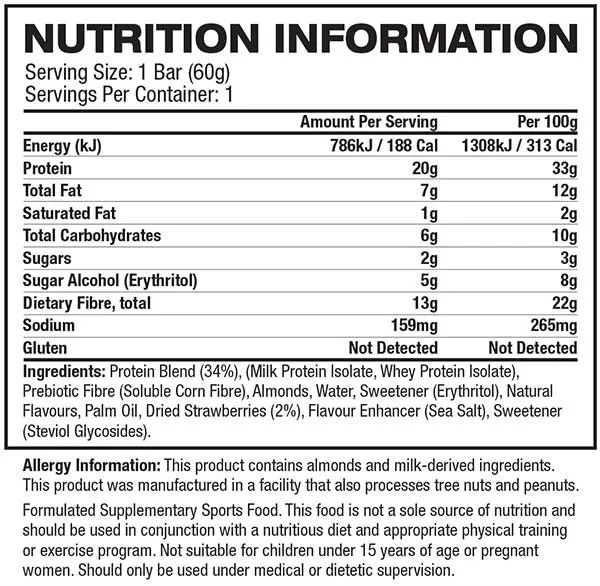
Are clean protein bars healthy? For most people, yes, in moderation. The 15 to 25 grams of protein per bar is genuinely useful.
The "clean" label itself tells you nothing about nutrition. Your protein target and gut tolerance matter far more than that one word.
"Clean" Is a Vibe, Not a Standard (and That Changes Everything)
What the FDA Actually Regulates (and What It Doesn't)
Here's the thing that trips up most shoppers. The word "clean" on a food label carries zero legal weight. As of 2026, the FDA's Food Labeling guide lists "sugar-free," "low-sugar," and "reduced-calories" as regulated claims under 21 CFR Part 101.
"Clean" isn't on that list, and it's not on any list.
The word "natural" used to get by, too, until New York's Attorney General effectively retired it in 2018. After that, "clean" filled the marketing gap. No standard, no testing, no definition.
The NOVA Ultra-Processing Lens Nobody Talks About
Most commercial protein bars, clean or not, land in NOVA classification tier 4. That means "ultra-processed food." In our research, the bar went through industrial extraction, recombination, and stabilization you can't replicate in a kitchen.
Does tier 4 automatically mean unhealthy? No. A can of tuna is NOVA tier 4 and one of the most nutrient-dense foods you can buy.
The tier tells you about processing method, not nutritional value. What it does flag: the bar's satiety profile and micronutrient density won't match a whole-food equivalent.
What's Actually Inside a "Clean" Protein Bar
Protein Source: Whey vs. Pea vs. Egg White vs. Blended Plant
The protein source drives most of the functional difference. Whey isolate hits 90% protein by weight and delivers roughly 2.5 grams of leucine in a 25-gram serving, which is the threshold for triggering muscle protein synthesis. Pea protein lands closer to 80% and carries less leucine per gram.
A blended plant mix smooths out the amino acid profile but still trails whey on the leucine trigger.
If you're dairy-free or vegan, the plant options work fine for maintenance. If you're chasing a training goal of 1.6 to 2.2 grams per kilogram per day, whey or egg white bars get you there with fewer total grams.
| Protein Source | Protein per 100g | Leucine per 25g serving | Best For |
|---|---|---|---|
| Whey Isolate | ~90g | ~2.5g | Training, MPS optimization |
| Pea Protein | ~80g | ~1.8g | Vegan, dairy-free |
| Egg White | ~80g | ~2.0g | Dairy-free (non-vegan) |
| Blended Plant (pea+rice+soy) | ~75g | ~1.5 to 2.0g | Allergy-friendly, vegan |
Sweeteners, Sugar Alcohols, and the "No Added Sugar" Trap
"No added sugar" is not the same as "no sugar." Fruit concentrate, maltitol, and erythritol all count as sugar or sugar alcohols on the nutrition panel. A bar can say "no added sugar" while still carrying 12 grams of sugar from date paste or 8 grams of maltitol.
Maltitol and sorbitol start causing osmotic diarrhea and bloating at doses above roughly 5 grams per serving for many adults. Erythritol is gentler but still a FODMAP trigger for sensitive guts. Check the grams, not the label claim.
Fat Sources, Fiber Types, and What They Do to Satiety
Fat in a clean bar usually comes from almonds, coconut oil, or sunflower seed oil. Coconut oil is high in saturated fat (about 80%). Almond-derived fat brings in some vitamin E and monounsaturates.
If you see palm kernel oil, that's worth flagging.
Fiber splits into two camps. Soluble fiber (psyllium, inulin) slows gastric emptying and extends satiety. Insoluble fiber (oat beta-glucan, wheat bran) adds bulk but does less for fullness.
A bar with 5+ grams of soluble fiber keeps you quieter for 90 minutes versus a 2-gram fiber bar.
The Four Variables That Change Your Answer
Activity Level and Total Daily Protein Target
A sedentary office worker hitting the RDA of 0.8 grams per kilogram doesn't need a 25-gram bar to hit target. They need one egg, a serving of Greek yogurt, and a palm of almonds. A resistance athlete at 1.6 to 2.2 grams per kilogram is staring at 130 to 180 grams of protein a day.
In that context, a 20-gram bar is a useful one-fifth of the daily total, not the whole meal.
The NIH Office of Dietary Supplements puts the general RDA at 0.8 g/kg, but sports nutrition literature consensus sits higher for training populations. Know which number applies to you before you judge the bar.
GI Tolerance and FODMAP Sensitivity
If you've got IBS, SIBO, or general FODMAP sensitivity, the protein source matters more than you'd think. Pea protein and blended plant proteins carry higher FODMAP loads than whey. Sugar alcohols are the classic trigger.
Start with one bar, track bloating and urgency for two hours, and decide from there. Don't buy the 12-pack first.
Caloric Context: Adding a Bar vs. Replacing a Meal
This is the branch that changes everything. If the bar is a 3 p.m. bridge between lunch and dinner, you're adding 150 to 250 calories on top of your diet. If it's replacing a sandwich, you're swapping.
The former is fine for most people. The latter is where total calories, fiber, and micronutrients quietly drop. Two bars a day as a meal replacement is not a diet.
Allergen Load and Dietary Restrictions
Most "clean" bars contain at least one of the FDA's top nine allergens: milk, soy, tree nuts, egg, or wheat. Check the allergen declaration line, not just the front-of-package "dairy-free" badge. A bar can be "dairy-free" on the front and still contain soy lecithin or pea protein sourced from a facility handling peanuts.
If you've got a confirmed allergy, the ingredient list and "may contain" statement are your only reliable source.
How to Read the Label Like a Nutritionist, Not a Marketer
Step 1: Identify the Protein Source and Its Amino Acid Profile
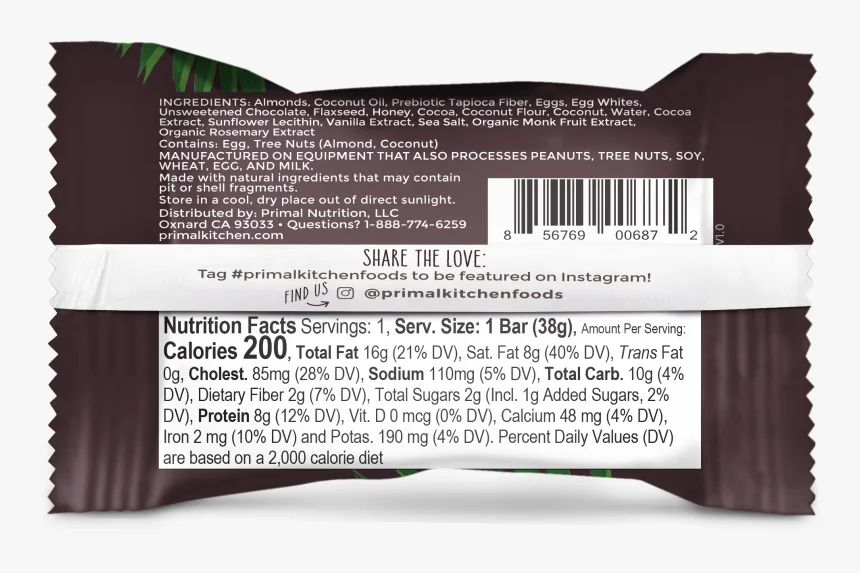
Flip the bar over. The first ingredient on the list is your protein source (or a blend). Whey concentrate, pea protein, egg white powder, or "plant protein blend" are the common entries.
If it says "plant protein blend" and the rest is buried further down, you don't know the leucine content. That's a data gap. Whey isolate is the most transparent source for MPS purposes.
Step 2: Separate Total Sugar from Added Sugar from Fruit Concentrate
The nutrition panel shows "Total Sugars" and, on newer labels, "Includes X g Added Sugars." But "Total Sugars" includes sugar from fruit concentrate, which the FDA counts as added. A bar with 14 grams total sugar and 10 grams "added" means 4 grams came from fruit concentrate or lactose in whey. You're eating 14 grams, period.
Step 3: Flag Sugar Alcohols and Check the Gram Count
Maltitol, sorbitol, erythritol, and xylitol will appear in the ingredient list. Check the total grams of sugar alcohols. The FDA requires a warning statement when total sugar alcohols exceed 5 grams per serving.
If you see that warning, the bar is above the comfort threshold for many people.
Step 4: Check the Fat Line for Palm Oil, Hydrogenated Fats, or Coconut Oil
Palm oil and palm kernel oil are the "clean" fats that sneak in. They're not "bad" per se, but they're high in saturated fat and often paired with cheaper formulations. Hydrogenated or partially hydrogenated oils should be a hard no.
The FDA is phasing those out, but transition products still exist on shelves. Almond or sunflower oil is the cleanest fat source you'll find.
Step 5: Count How Many "Clean" Claims Are Doing the Heavy Lifting
If the front of the package says "Clean," "Natural," "Whole Food," "No Artificial Anything," and "Grain-Free" all in the first three seconds, that's marketing density, not nutrition density. A bar that leads with "20 g protein" and "only 2 g sugar" is doing more work per word. Trust the numbers over the adjectives.
Branch 1: You're Mostly Sedentary and Want a Better Snack
What "Better" Means Here (vs. a Candy Bar, vs. Doing Nothing)
For a desk worker grabbing a 4 p.m. snack, "better" means two things. You're cutting added sugar compared to a granola bar or candy bar. And you're getting 15 to 20 grams of protein that keeps you from snacking again at 6.
That's the entire win. You don't need 30 grams. You don't need the highest leucine.
You need the sugar drop and the satiety bump.
Your Personal Threshold: 1 Bar, 2 Bars, or None
If your total daily protein is already 60 to 80 grams from meals, one bar at most. Two bars pushes you past 100 grams, which is fine for a healthy adult but unnecessary if you're not training. If you're barely hitting 40 grams a day, the bar is genuinely filling a gap.
One bar, or two on days you've skipped protein at dinner.
The Satiety Check: Will You Still Be Hungry in 45 Minutes?
Eat the bar at 4 p.m. Note whether you're still thinking about food at 4:45. A bar with 5+ grams of fiber and 10+ grams of fat will hold you.
A 300-calorie, 2-gram-fiber, 1-gram-fat "protein" bar won't. If you're hungry 30 minutes later, the bar didn't do its job. Swap it for 3 eggs or a handful of almonds with a piece of fruit.
Branch 2: You're Training 4 to 5x a Week and Chasing Protein Targets
Where the Bar Fits in a 1.6 to 2.2 g/kg Plan
If you weigh 80 kg and train five days a week, you're targeting 128 to 176 grams of protein daily. Two or three whole meals get you to maybe 90. The remaining 40 to 80 grams is where a bar earns its spot.
One 25-gram bar covers roughly a third of that gap. Two bars cover most of it. Three starts to crowd out the meals where you'd get fiber and variety.
Leucine Threshold: Is That 10 g Bar Doing Anything for MPS?
A bar with 10 grams of protein delivers about 0.8 to 1 gram of leucine. That's below the 2.5-gram threshold for maximally stimulating muscle protein synthesis. If your goal is hypertrophy, a 10-gram bar is a snack, not a training tool.
You need 25 to 30 grams per serving to hit that leucine floor. Check the source too. Whey isolate at 25 grams gets you there.
Pea protein at 25 grams may not.
Post-Workout Timing vs. Random Midday Grab
The "anabolic window" is wider than the hype suggests. You've got roughly 2 to 4 hours post-session, not 20 minutes. A bar at 5 p.m. after a 3 p.m. gym session works fine.
The bar's advantage is speed and portability, not timing. Eat it when it fits. Just make sure the total day hits your 1.6 to 2.2 g/kg number.
Branch 3: You've Got IBS, SIBO, or FODMAP Sensitivity
Maltitol, Sorbitol, and Erythritol: The 5-Gram Osmotic Line
Sugar alcohols draw water into the intestinal lumen. Most adults handle up to 5 grams without issue. Above that, you're looking at bloating, cramping, and osmotic diarrhea within 30 to 90 minutes.
Maltitol is the worst offender. Erythritol is gentler but still a trigger at 10+ grams. If your bar lists two or three sugar alcohols, the combined grams add up fast.
Pea Protein and Plant Fiber as Bloat Triggers
Pea protein contains oligosaccharides that sit squarely in the FODMAP category. In our research, aggregate user reviews from IBS-sufferers consistently flag pea-based bars as the top bloat trigger after sugar alcohols. If you're on a low-FODMAP protocol, whey isolate or egg white bars are your safest options.
Skip the "plant protein blend" entirely.
How to Test Tolerance Without Wasting a Whole Box
Buy a single bar. Eat it at least two hours after a meal so symptoms aren't masked. Track bloating, gas, and urgency for two hours.
If it's clean, buy the multi-pack. If you felt anything, note the likely culprit (maltitol, pea, inulin fiber) and pick a different formulation. Don't push through a bad reaction to justify the bulk purchase.
Branch 4: You're in a Deficit and Using Bars to Fill the Gap
Net Carb Math for Type 1 and Type 2 Diabetics
"Sugar-free" doesn't mean zero glycemic response. A bar with 15 grams of sugar alcohols and 5 grams of fiber still shifts your blood glucose, just slower. If you're on insulin, count effective carbs: total carbs minus fiber.
A 200-kcal bar with 30 g carbs and 5 g fiber gives you roughly 25 g to dose against. Confirm the routine with your endocrinologist before making bars a regular deficit tool.
When a 250-kcal Bar Is Easier to Track Than a Homemade Meal
In a 1,500-kcal deficit, structure wins. A sealed bar is 250 kcal, 20 g protein, 10 g carbs. You eat it, log it, move on.
A homemade snack of yogurt, granola, and banana is 300 kcal with variable protein depending on the granola brand. The bar's fixed macros remove decision fatigue. That's a real advantage when you're already counting.
The Point Where Bars Stop Helping and Start Hiding Poor Diet Quality
If your deficit diet is 80% bars, you're missing the phytochemicals, fiber diversity, and gut-feeding substrates that whole foods provide. Two bars a day as structured supplements is fine. Four or five bars plus minimal whole food is a deficit that works numerically but fails nutritionally.
You'll lose weight and feel rough, constipated, and low-energy.
Mistakes That Turn a "Healthy" Bar Into a Bad Habit
- The meal-replacement slide. You grab a bar "just for lunch" three days in a row. By week two, two bars is lunch and two bars is dinner. You've cut 600 daily calories without planning for it. Fiber drops. Micronutrients crash.
- Assuming "no added sugar" means zero sugar. The bar still has 12 grams from fruit concentrate. Your pancreas doesn't care about the label. It sees 12 grams of sugar.
- Buying the 12-pack on a whim. The per-unit price looks great at $1.25 each. But if the bar makes you bloated by hour two, you've spent $15 on a product you shouldn't be eating. Buy one first.
- Skipping the allergen line on the third bar. You've eaten one brand fine. The new "clean" brand now lists soy and tree nuts. You didn't check. Now you're dealing with an angioedema risk.
The Whole-Food Benchmarks That Put Bars in Perspective

The numbers below make the trade-off concrete. Bars win on shelf life, portability, and zero prep. Whole foods win on cost, satiety, and micronutrient density.
| Option | Protein | Cost per Gram Protein | Satiety | Shelf Life |
|---|---|---|---|---|
| 3 whole eggs | 18 g | ~$0.03/g | High (fat + side fiber) | 3 to 5 days |
| 170 g plain Greek yogurt | 17 g | ~$0.05/g | Medium-high | 7 to 10 days |
| 1 "clean" protein bar | 20 g | ~$0.10 to $0.18/g | Medium | 6 to 12 months |
| Canned tuna + crackers | 22 g | ~$0.04/g | Medium | Canned: 3 to 5 yr |
When the Bar Is Genuinely the Better Choice
You're in a car, on a plane, or at a desk with no kitchen access. You need protein in the next five minutes and you've got a 300-kcal gap. The bar is the right tool.
No cooking, no fridge, no mess.
When It's Just the Lazier Choice
You're home. You've got eggs in the carton, Greek yogurt in the fridge, and a can of tuna in the pantry. The bar sits on the counter because it's the path of least resistance.
At that point, it's not a nutrition decision. It's a convenience decision dressed up in "clean" packaging. Choose accordingly.
Safety Flags You Shouldn't Ignore
CKD stage 3+: a 25-gram bar can exceed your nephrologist-set protein cap. Type 1 or 2 diabetes: "sugar-free" bars still shift glucose via sugar alcohols and fruit concentrate. Kids under 12: concentrated protein plus sugar alcohols causes cramping.
In every case, portion size and medical context matter more than the label word.
Your 60-Second Decision Check Before You Buy
- Role: Is this bar filling a gap, replacing a meal, or topping off a training day?
- Label: Do the protein grams, added sugar grams, and sugar-alcohol grams match your personal thresholds?
- Context: What else are you eating today? Does this bar push you over a protein, calorie, or GI comfort limit?
- Fit: Does the protein source match your diet (dairy, vegan, FODMAP)?
- Trial: Buy one, not a 12-pack. Eat it, note bloating or urgency within two hours. Then decide on the box.
The numbers fit your body, the bar is fine. They don't, keep walking.
Frequently Asked Questions
Does "clean" mean the FDA tested the bar?
No. "Clean" is unregulated marketing language. The FDA enforces "sugar-free" (under 0.5 g) and "low-sugar" (4 g or less) per 21 CFR Part 101.
Nothing else.
Can I eat a protein bar daily?
One bar daily is fine for most healthy adults. Two or more crowds out whole-food fiber and micronutrients. Pair the bar with meals, not instead of them.
Are sugar-free bars safe for diabetics?
Not automatically. Sugar alcohols and fruit concentrate still shift glucose. Count net carbs, dose insulin against that number, and confirm the routine with your endocrinologist before making bars a daily habit.
What's the difference between a protein bar and a meal replacement?
A protein bar is 150 to 300 calories with 10 to 30 grams of protein. A meal replacement is 500 to 800 calories designed to cover all macronutrients for one sitting. One fills a gap.
The other replaces a meal.
Do "clean" bars still count as ultra-processed food?
Yes. Under the NOVA classification system, most commercial protein bars land in tier 4 (ultra-processed). That describes the manufacturing method, not the nutritional value.
A tier-4 bar can still be a useful part of your diet.