How to Can Kids Have Protein Bars: Easy guide
The question lands in the snack aisle more than once a week, and the answer is not the flat "yes" most shelf labels want you to believe. The real question is which bar, how much, and whether it's actually doing more good than the candy it replaced.
Per the USDA Dietary Guidelines, a 4-to-8-year-old needs roughly 19 g of protein daily, and a 14-to-18-year-old needs 52 to 58 g. A single bar labeled "20 g protein" can cover half or even most of that total. That changes how you think about whether one bar is a snack or an accidental second lunch.
Here's how to sort it out.
Short Answer: Yes, But "Yes" Hides the Real Question
Can kids have protein bars? Yes, in most cases. One bar as a snack is fine for a school-age child.
The key is picking the right one and not overdoing the frequency.
- Aim for at least 8 g of protein per bar.
- Keep added sugar under 10 g.
- Check the allergen line before handing it over.
- Target a 2-to-1 protein-to-added-sugar ratio.
What "Yes" Actually Means for Your Kid
That "yes" comes with conditions that matter more than the protein number on the front. A bar can be technically safe and still nutritionally boring. It can displace a proper meal or mask a picky-eating pattern that needs addressing.
The "yes" is real, but it's narrower than the marketing box suggests.
Why Getting This Wrong Isn't Just a Bad Snack Choice
This is where a pediatric dietitian's brain kicks in. A protein bar that looks harmless can quietly do three things at once. It floods a small kid's day with added sugar.
It substitutes for vegetables and whole grains they'd otherwise eat. It trains a preference for hyper-palatable, sweet, dense textures over plain food. None of those are emergencies.
Over months, they add up.
The protein-bar marketing gap parents walk into
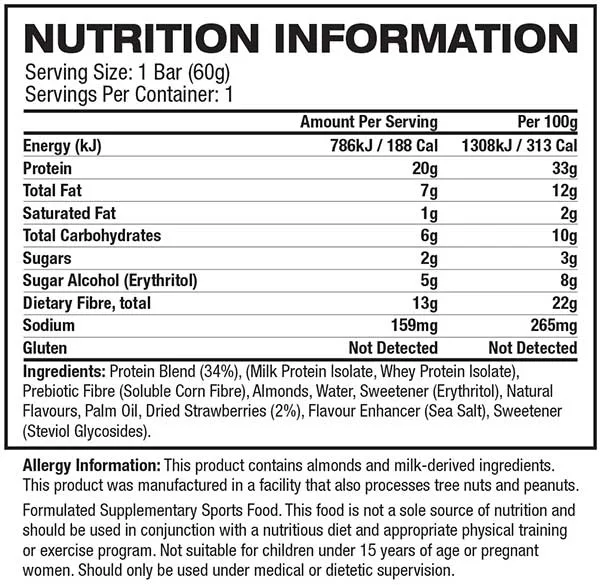
Walk down the protein aisle and you'll see "20 g protein" front and center. Flip the bar over. That same bar often carries 14 to 18 g of added sugar, 210 to 250 calories, and a protein source that's third or fourth on the ingredient list behind sugar and a starch binder.
The protein claim is technically legal. It's also not the main event on that label.
What a "high-protein" label doesn't tell you
Under FDA labeling rules, a product can carry a "high in protein" claim if protein supplies at least 5% of its calories. That's a low bar, literally. A dense, chewy, chocolate-coated bar can hit that threshold while still being closer to a candy bar in sugar load than to a true protein source.
As of 2026, no federal "kid-safe" certification exists for protein bars. You're reading the label, not a badge.
How to Read a Protein Bar Label Like a Pediatric Dietitian
You don't need a nutrition degree. You need a 30-second scan habit. Here's the order to follow at the shelf.
Protein-to-added-sugar ratio: the one number that matters
Divide the protein grams by the added sugar grams. You want at least 1:1. Better, 2:1.
A bar with 12 g protein and 4 g added sugar is a solid ratio. A bar with 12 g protein and 16 g added sugar is basically a brownie with a press.
Ingredient-order check: is protein actually the star?
Ingredients list by weight, heaviest first. If the first two items are "sugar" and "maltitol," the protein is a garnish. If the first item is "whey protein concentrate" or "pea protein," you're closer to what the front of the box promises.
Cross-check: does the protein source appear before the sweeteners?
Serving-size traps: mini bars vs. standard bars
A "mini" bar might list 6 g protein on a 1-oz serving. The standard version of the same SKU hits 14 g on 2.5 oz. If you grab the standard size and feed it to a 4-year-old, you've just served them 74% of their entire daily protein RDA in one dense, chewy block.
Check the serving size line before you calculate anything.
| What to check | Good zone for kids (4 to 12) | Red flag |
|---|---|---|
| Protein per bar | 8 to 15 g | Under 5 g |
| Added sugar per bar | 0 to 10 g | 12 g or more |
| Calories per bar | 120 to 200 kcal | Over 250 kcal |
| Protein-to-sugar ratio | 2:1 or better | Under 1:1 |
| First ingredient | A named protein (whey, pea, egg) | Sugar or a starch |
Matching Protein to Age: What Your Kid Actually Needs per Day
You don't need to hit an exact gram number every single day. The RDA is an average across a week. But you do need a ballpark so you're not stacking bars on top of a protein-rich lunch and wondering why your kid won't touch dinner.
RDA benchmarks from toddler to teen
The USDA Dietary Guidelines and the National Academies set these age-stratified values:
| Age group | Daily protein RDA | One 12-g bar covers |
|---|---|---|
| 1 to 3 years | 13 g | About 92% of the total |
| 4 to 8 years | 19 g | About 63% of the total |
| 9 to 13 years | 34 to 38 g | About 32 to 35% of the total |
| 14 to 18 years | 52 to 58 g | About 21 to 23% of the total |
You see the pattern. For a toddler, one bar is almost the whole day. For a teen athlete, it's a fraction.
That's why the same "one bar" habit works differently at 4 versus 16.
When a bar fills a gap vs. when it masks one
A bar fills a gap when your kid's typical meals are low in protein. Think cereal, toast, fruit, and cheese for breakfast. One 12-g bar at 3 p.m. genuinely adds value.
A bar masks a gap when it's the only protein on the plate all day. If the bar is doing the job that lunch should, you've solved the symptom, not the meal.
Sugar, Artificial Sweeteners, and the Risks That Are Real
This is the section where most parents get the wrong advice. "No sugar" sounds safer, but it swaps one problem for another.
Added sugar: the AHA 25 g/day pediatric ceiling
The American Heart Association recommends no more than 25 g of added sugar per day for children ages 2 to 18. One candy-mimic protein bar can carry 16 to 22 g. That's two-thirds to all of the daily budget, before your kid touches a cookie, a yogurt, or a juice box.
The bar isn't poison. It's just a lot of the allowance in one dense package that makes "just one" feel reasonable.
Sucralose, aspartame, and acesulfame-K: what the data does and doesn't say about kids
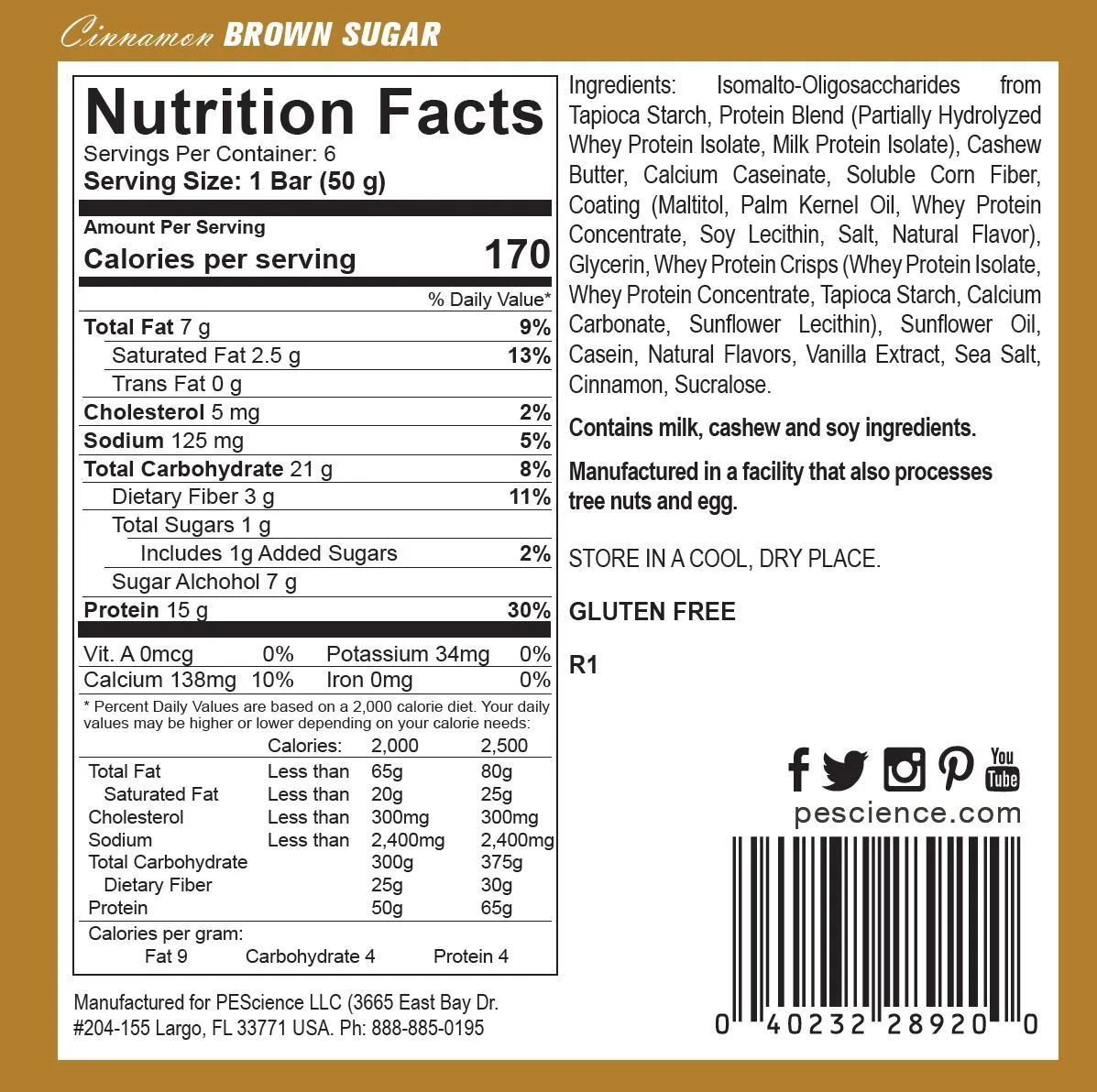
These three sweeteners hold GRAS (Generally Recognized as Safe) status for the general population under the FDA. The catch: GRAS dossiers were built on adult trial data. Pediatric-specific long-term studies at the doses found in a kid's weekly bar intake are thin.
The AAP hasn't issued a blanket "safe at any amount" statement for children under 8. That's not a ban. It's an "unknown." For a toddler or preschooler, the safest play is a bar sweetened with fruit juice or a small amount of honey, not a concentrated sweetener stack.
"Sugar-free" bars: a different problem, not a safer one
A "0 g sugar" bar usually leans on sucralose, acesulfame-K, and sometimes aspartame to hit that sweet spot. For a 5-year-old, three intense sweeteners doing the work that 10 g of real sugar would has not been validated. The kid also trains a preference for extreme sweetness that outpaces what whole fruit or plain yogurt delivers.
The "sugar-free" label solved the calorie math and created a texture-and-taste expectation problem that's harder to fix.
One more practical note: if your child has a known sensitivity to sucralose or acesulfame-K, the "sugar-free" protein bar becomes a daily irritant. The label won't flag that as an allergen. It won't flag it as anything.
You have to track it yourself.
When a Protein Bar Is the Right Call (and When It Isn't)
A protein bar earns its spot in the snack drawer in three specific situations. Outside those, it's just a more expensive candy.
Post-activity fuel for young athletes
If your 12-to-16-year-old just finished a 90-minute soccer match or a swim practice, a bar within the next 60 to 90 minutes makes physiological sense. The muscle is in its recovery window. A 15-to-20 g protein bar with moderate carbs replaces what they'd otherwise grab from a vending machine.
This is the strongest use case.
Picky-eater or travel-day protein bridge
Your 6-year-old eats grilled cheese and apple slices for lunch. That's maybe 8 g of protein. On a road trip where a real meal isn't practical, a 12 g bar closes the gap without a lecture.
Same logic applies to the kid who rejects eggs, tofu, and chicken but will chew a caramel bar without complaint.
Situations where a bar displaces a more nutritious option
If your kid already eats a protein-rich lunch (chicken, beans, cheese, yogurt) and grabs a bar at 3 p.m. "because it says protein," you've added 15 g on top of 25 g they already got. The extra protein isn't toxic, but it's not doing any work either.
The bar is now just 200 calories of sugar and starch wearing a protein badge. If the meals are already solid, the bar is optional, not necessary.
Picking a Bar That's Actually Kid-Appropriate: Specific Specs to Target
You already know the protein-to-sugar ratio from the label-reading section. Now layer in the other specs that matter for a child's body specifically.
Protein, sugar, calorie, and texture targets by age group
| Age | Protein target | Added sugar cap | Calorie cap | Texture note |
|---|---|---|---|---|
| 1 to 3 | 5 to 8 g | 0 to 4 g | Under 100 kcal | Skip dense/chewy. Use soft, small pieces |
| 4 to 8 | 8 to 12 g | 0 to 8 g | Under 150 kcal | Chewy is okay if cut in half |
| 9 to 12 | 10 to 15 g | 0 to 10 g | Under 200 kcal | Full-size bar fine |
| 13 to 18 | 15 to 25 g | 0 to 12 g | Under 250 kcal | Full-size, time it post-activity |
Allergen quick-check: the FALCPA 9 you must scan for
Under the FALCPA labeling rule, any bar containing milk, eggs, peanuts, tree nuts, wheat, soy, fish, or shellfish must declare it on the front of the package, not buried in the ingredient list. Before you hand a bar to a kid with a known sensitivity, scan that bolded "Contains:" line. Tree-nut cross-contact in a "whey" bar happens more often than you'd think.
If your child is allergic to almonds and the bar says "may contain traces of tree nuts," that's your walk-away trigger.
Choking-hazard cutoff: chewy and dense bars under age 4
The AAP and pediatric ENT guidance is consistent: hard, dense, or large chewy items are a choking risk below age 4. A pressed, gummy-texture bar the size of a credit card is a no for a 3-year-old. If you're feeding a toddler, you want a soft, small-format option broken into bite-size pieces.
A standard 2.5-oz chewy bar is not that.
Better Alternatives When a Bar Isn't the Best Tool
Sometimes the bar is the least efficient protein you can serve. Here's when the kitchen or a fridge beat the shelf.
Greek yogurt, egg-white muffins, and homemade bars
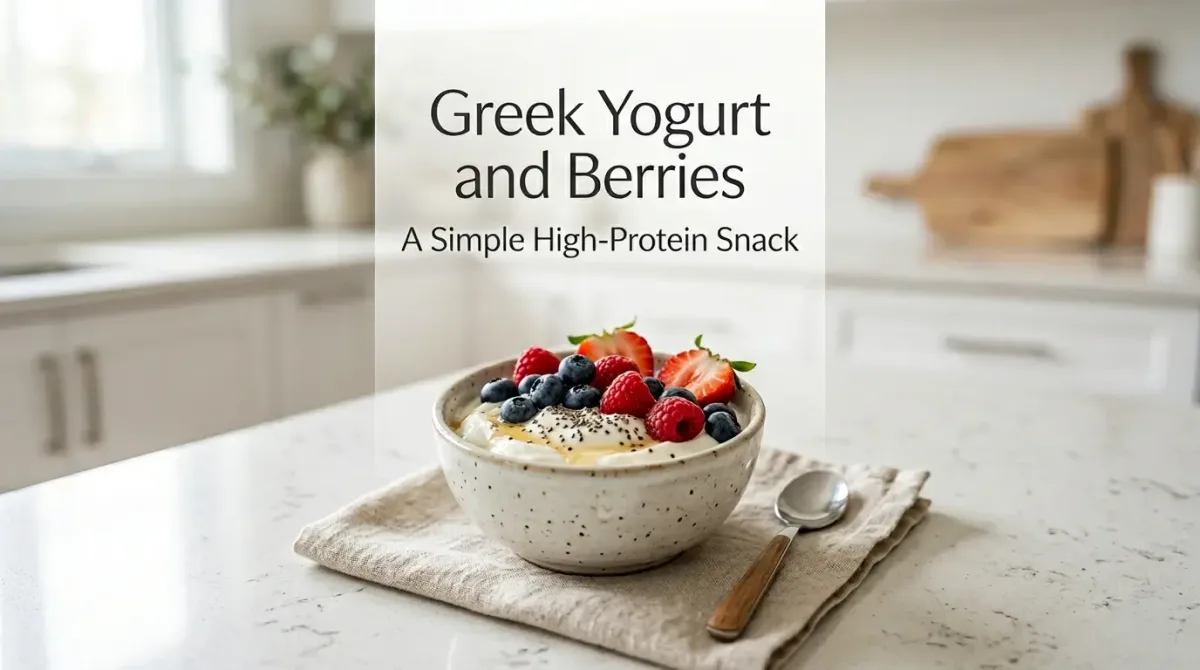
Plain Greek yogurt (2% fat) delivers 15 to 17 g of protein in a 170 g cup with zero added sugar. Add a handful of berries and you've matched or beaten most commercial bars on protein, calcium, and probiotic content. For a kid who eats breakfast at home, that's the better play.
Egg-white muffins batch-cook for the week and give you full ingredient control.
When a banana plus nut butter beats a $3 bar
A medium banana (1 g protein) plus two tablespoons of peanut butter (8 g protein) hits 9 g for roughly 250 calories and costs about 40 cents. No packaging, no sweeteners, no label decoding. For a 5-to-10-year-old on a normal training day, that combo is the highest-value, lowest-friction option.
The bar wins on portability. The banana wins on cost, ingredient transparency, and fiber.
Protein shakes versus solid bars for kids who gag on chewy texture
Some kids absolutely will not chew a dense bar. A liquid protein shake (whey or pea, 15 to 20 g protein, mixed into 8 oz of milk) sidesteps the texture issue entirely. The tradeoff: liquids don't trigger the same satiety signal, so the kid may still be hungry 30 minutes later.
A solid bar keeps them fuller longer. If your child is at the "I won't chew it" stage, the shake is the practical fallback.
Mistakes Parents Make That Turn a Fine Snack Into a Nutrition Problem
None of these are emergencies. They're slow-burn patterns that show up at the next well visit as "my kid only wants processed food."
Stacking bars, shakes, and a protein-rich lunch without checking totals
A chicken-wrap lunch (30 g protein), a post-practice shake (25 g), and a "just a bar" afternoon snack (15 g) lands your 11-year-old at 70 g of protein in one day. Their RDA is 34 to 38 g. The extra 30 g won't poison them.
But it means the bar and the shake are redundant, and the money spent on both could have bought a second lunch the kid never needed. Tally the day before you add the bar.
Treating "it says 20 g protein" as a green light on 20 g sugar
This is the marketing trap in action. The front panel anchors on the protein number. The back panel reveals 18 g added sugar and 240 calories.
The kid's brain files this as "healthy." The parent's brain files it as "I gave them a protein bar." Neither of you registered the sugar load. Flip the package every single time.
Skipping the allergen line on a new brand
You've been buying the same bar for six months. The manufacturer reformulates. Now "pea protein" is swapped for "almond butter" and the "Contains:" line updates.
You don't catch it because you're not reading the back anymore. If your child has any food sensitivity, the habit of scanning the allergen line never gets retired, even on a familiar brand.
Using a bar as a daily meal instead of a snack
One bar as a 3 p.m. snack: fine. One bar as lunch, replacing a meal that should include vegetables, whole grains, and a protein source: that's a nutritional shortcut that becomes a pattern. After four or five weeks, the kid's palate has adapted to the bar's flavor profile, and a plain plate of rice and chicken starts tasting "boring." You've trained the preference you're trying to avoid.
When to Flag This at Your Pediatrician's Visit
You don't need a crisis to bring this up. The well-check is the natural window.
Signs a bar is masking a broader dietary gap
If your child consistently eats two meals a day, both low-protein, and the bar is the only protein source, that's the thing to flag. The pediatrician can screen for whether the bar is compensating for a feeding pattern (picky eating, sensory aversion, ADHD-related meal-skipping) that needs a feeding therapist, not a shelf product.
Allergy or GI reactions that shouldn't be shrugged off
Two or three episodes of bloating, cramping, or loose stool after a specific bar brand points to either a sweetener intolerance or a hidden allergen. Don't just "try a different brand." Note the brand, the sweetener list, and the timing. Bring that to the visit.
A pediatric GI can distinguish a sweetener reaction from a true protein allergy.
Active kids on high training loads: is protein timing actually optimized?
A 15-year-old doing 12 hours of weekly training sits at the top of the RDA range (52 to 58 g, sometimes higher per Academy of Nutrition and Dietetics guidance). If the bar is their only post-exercise fuel and they're not hitting total daily protein, a sports dietitian can build a realistic plate-plus-snack plan. One bar isn't the answer.
It's one piece. Bring the training schedule, not just the bar wrapper, to the appointment.
Quick Decision Guide: Can My [Age]-Year-Old Have This Specific Bar?
Check protein, added sugar, and the allergen line. Match it to the age table above. That is the whole test.
The 30-second label test before you hand it over
Is protein first on the ingredient list? Is sugar under 10 g? Is the allergen line clear for your kid?
Three yeses means go. Any no means skip it.
A simple yes, modify, or no framework by age and bar profile
Under 4: no dense chewy bars, period. Ages 4 to 12: yes if the ratio hits 2:1. Teens: yes, but time it post-activity, not as a candy swap.
FAQs That Come Up More Than You'd Think
Is a Clif or RXBAR okay for my 8-year-old?
An RXBAR runs about 12 g protein and 10 g added sugar. That's a 1.2:1 ratio, which is workable for an 8-year-old as a once-daily snack. It's not a lunch replacement.
A ClifBuilder with 18 g protein and 14 g sugar is too sugar-heavy for that age. The RXBAR is the better pick of the two.
Can my 14-year-old athlete have two bars a day?
One post-practice bar covers the recovery gap. Two pushes total protein well past the 58 g upper RDA for that age. One is the move.
The second bar is redundant calories. If they're training hard, focus on whole-food protein at meals and save the single bar for the 30-to-60-minute window after practice.
Do I need to avoid all artificial sweeteners for kids?
No universal ban exists in U.S. food safety law. Under 8, favor fruit-sweetened or minimally sweetened bars to keep the palate from training toward extreme sweetness. Over 8, an occasional sucralose or acesulfame-K bar stays within GRAS tolerable daily intakes.
The bigger risk is weekly consistency, not any single bar.
Is a protein bar better than a Twix?
On protein-to-sugar math, yes. A Twix carries 0 g protein and 17 g added sugar in about 250 calories. A solid protein bar hits 12 g protein and 6 g sugar in 180 calories.
Same chew, same size, far better numbers. The bar is the smarter swap if the kid's only alternative is candy.