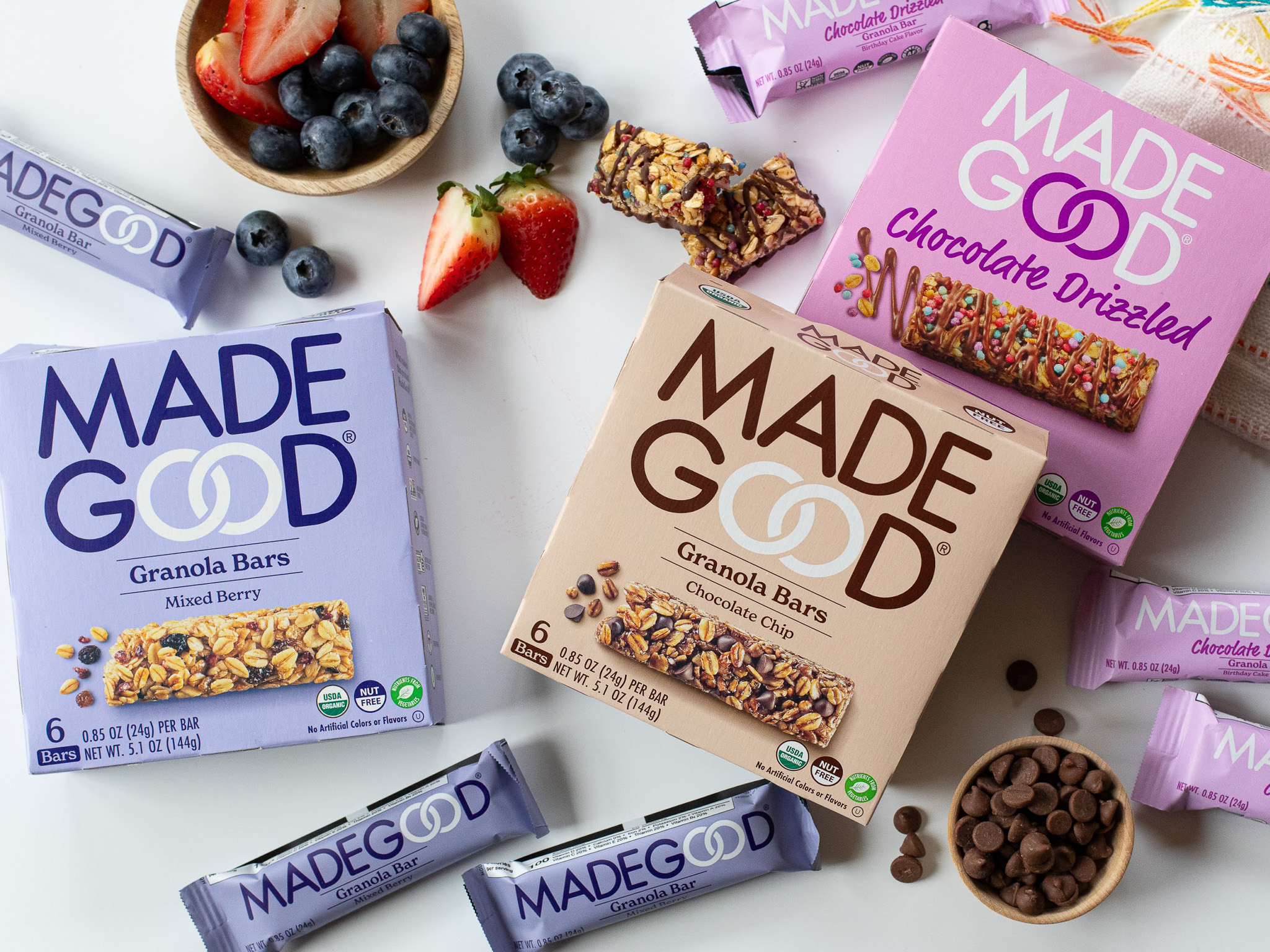
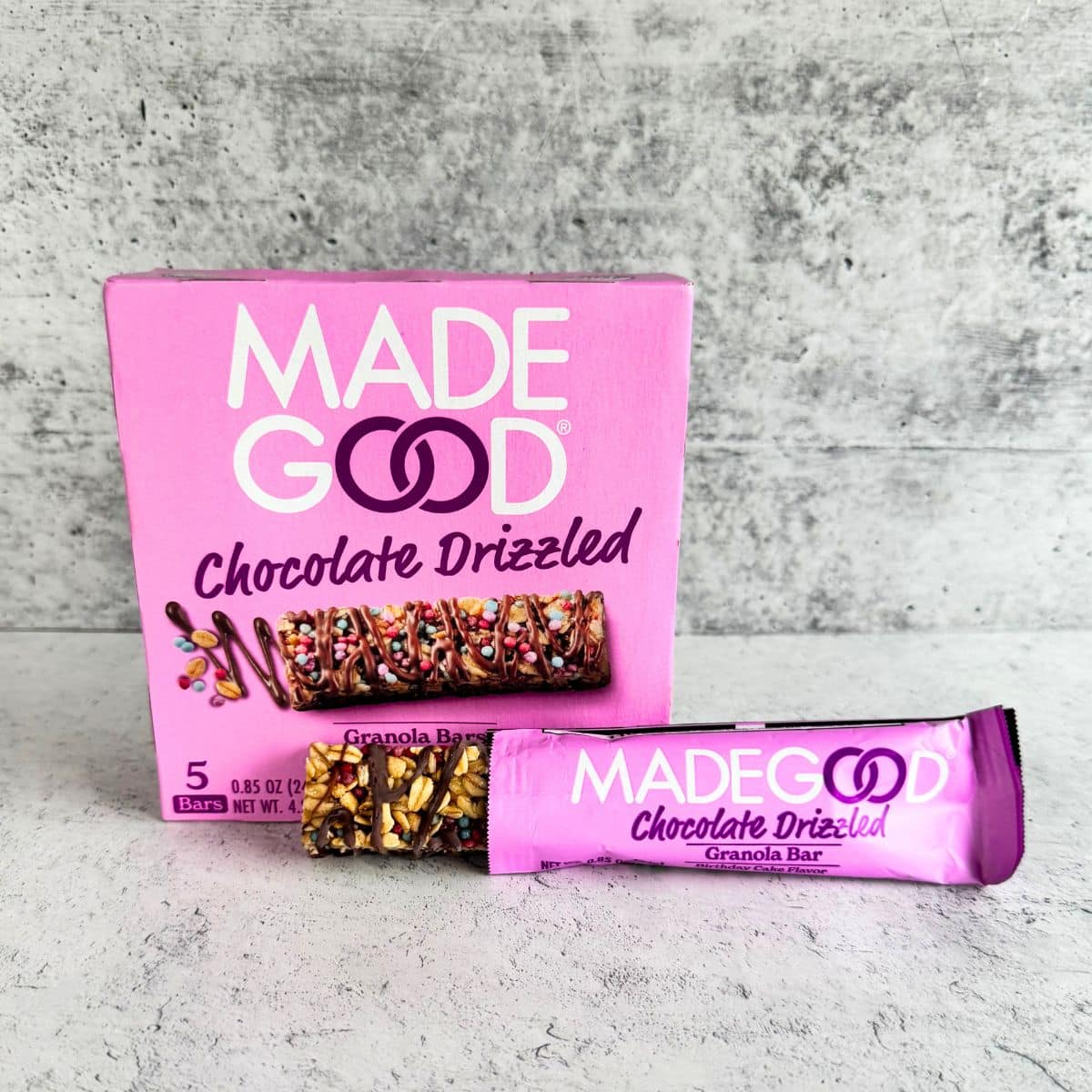
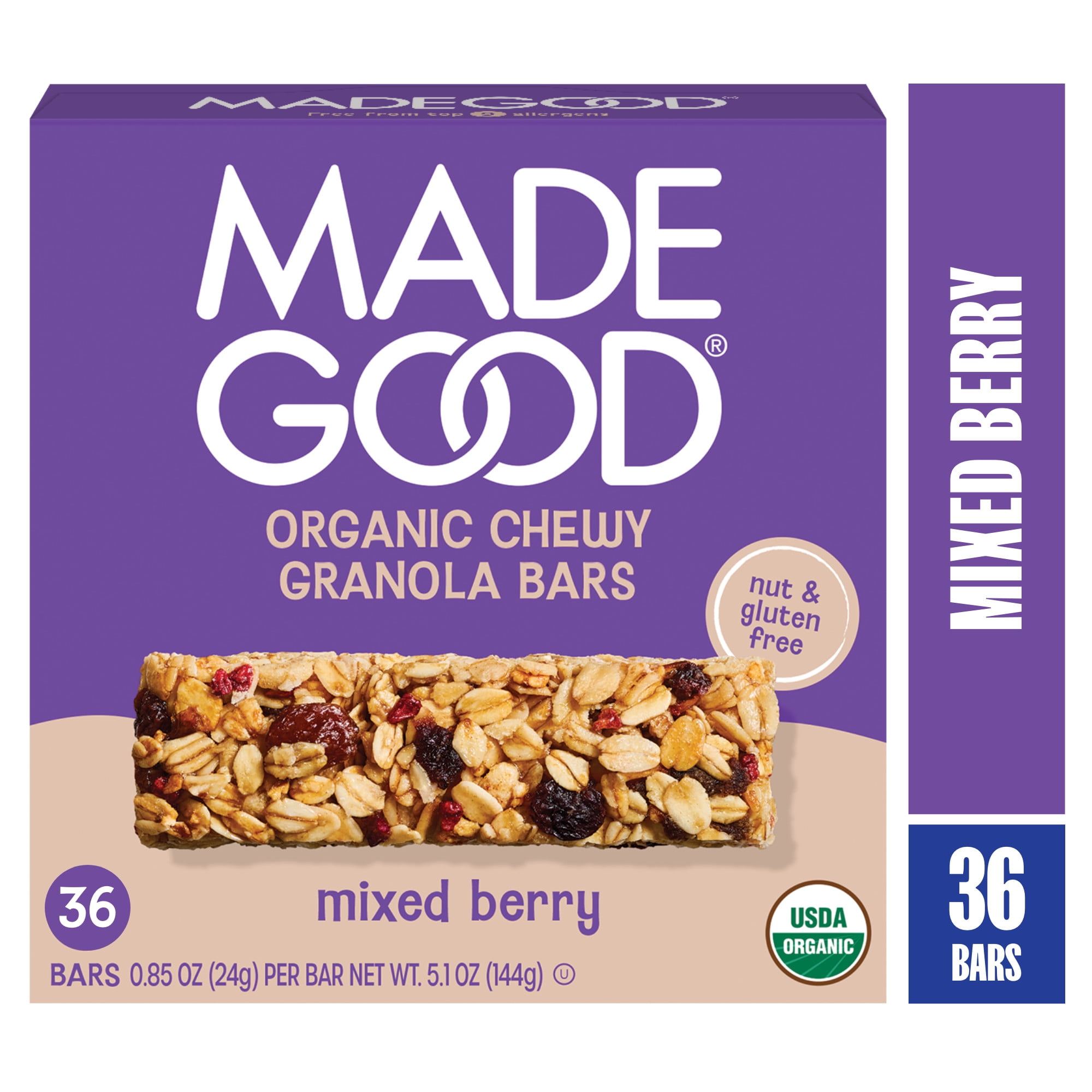
MadeGood bars can be a healthy snack in moderation, but their added sugar, low protein, and limited fiber mean they are not a complete meal.
For busy Americans, finding a quick snack that fits a balanced diet can be hard. Parents need easy lunchbox options, office workers want something between meetings, and students often need food they can carry in a backpack. MadeGood granola bars appeal to these groups because they are small, individually wrapped, and made with organic ingredients.
But are MadeGood bars healthy enough to eat every day? The answer depends on the flavor, serving size, and what else you eat during the day. A typical 24-gram MadeGood granola bar contains about 100 calories, 2 grams of protein, 1 gram of fiber, and 6 grams of sugar. Some of that sugar is added sugar, which deserves attention when you compare snack choices.
MadeGood bars also have useful features. Many varieties are organic, gluten-free, vegan, and made without peanuts or tree nuts. They contain vegetable extracts that provide several vitamins. Still, these features do not automatically make a snack highly nutritious. The best way to judge these bars is to look at the full nutrition label and consider how they fit into your daily eating habits.
Source: iheartpublix.com
What Are MadeGood Bars?
MadeGood is a snack brand known for its organic granola bars and other packaged foods. Its products are designed for people who want convenient snacks with simple dietary features. The company uses oats, rice ingredients, plant oils, sweeteners, and vegetable extracts in many of its granola bars.
One feature that sets MadeGood apart is its use of vegetable extracts. The brand uses extracts from vegetables such as spinach, broccoli, carrots, tomatoes, beets, and shiitake mushrooms. These ingredients help supply certain vitamins without making the bars taste like vegetables.
MadeGood also makes products for people who avoid common allergens. Many of its granola bars are produced in dedicated facilities designed to avoid specific allergens. However, product features and manufacturing statements can vary, so consumers should always check the package for the exact variety they plan to eat.
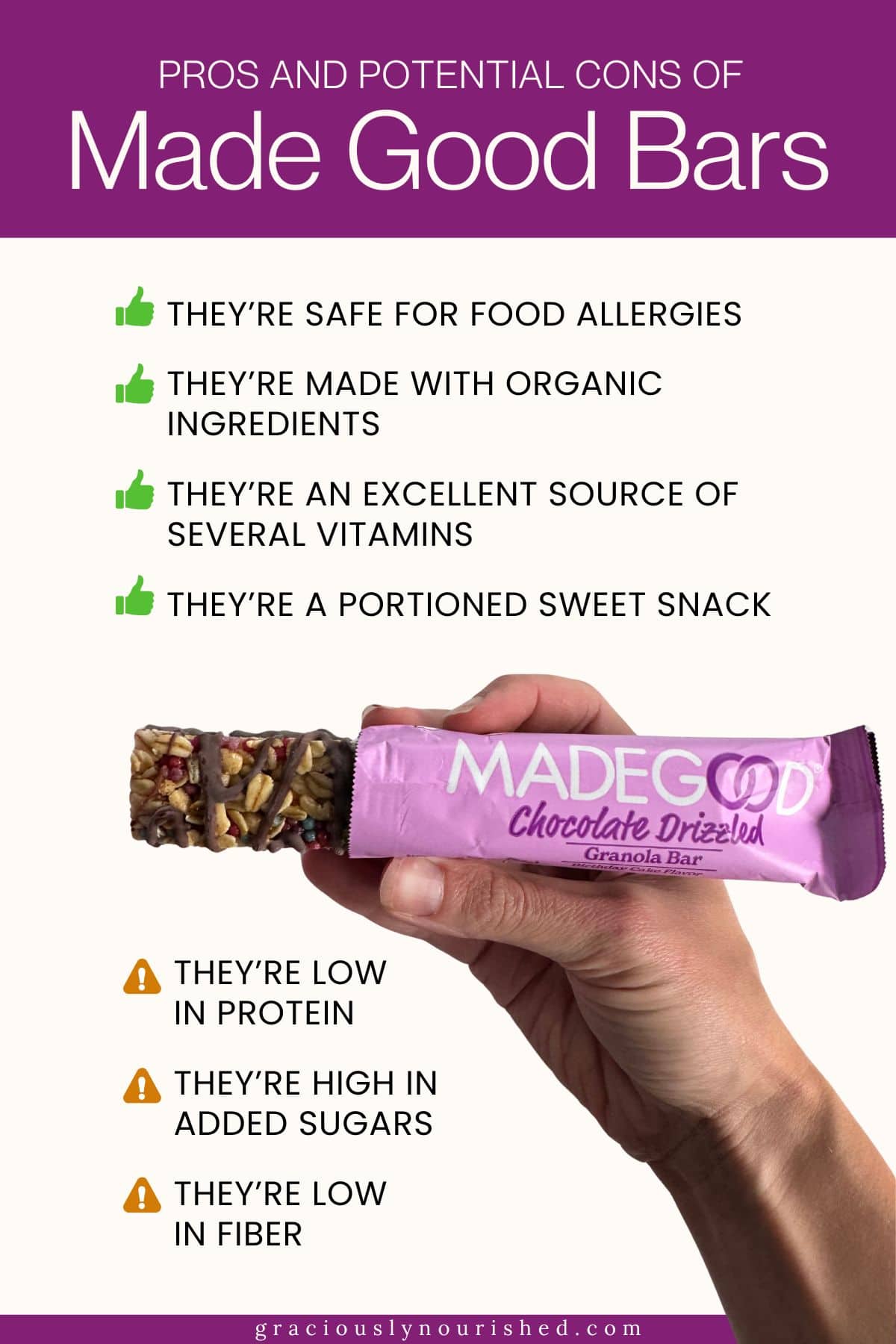
Source: graciouslynourished.com
Organic ingredients
Many MadeGood granola bars carry organic certification and use organic oats, sweeteners, and other ingredients.
Vegetable extracts
Selected vegetable extracts provide vitamins and add nutritional value without serving as a substitute for whole vegetables.
Dietary options
Many varieties are gluten-free, vegan, and free from peanuts and tree nuts.
Convenient packaging
Individual wrappers make the bars easy to pack for school, work, travel, and outdoor activities.
Are MadeGood Bars Considered Organic?
Many MadeGood granola bars are certified organic. Under USDA rules, a packaged food labeled organic generally needs at least 95% certified organic agricultural ingredients, excluding salt and water. The USDA organic seal can be used on products that meet the applicable requirements.
Organic certification describes how ingredients are produced and handled. It does not mean a product is low in sugar, high in protein, or automatically better for every health goal. An organic granola bar can still contain added sweeteners and refined ingredients.
What organic means
It relates to approved farming and processing practices under USDA organic standards.
What organic does not mean
It does not guarantee low calories, low sugar, or a high amount of fiber and protein.
MadeGood Bars Nutrition Facts: What Is Inside?
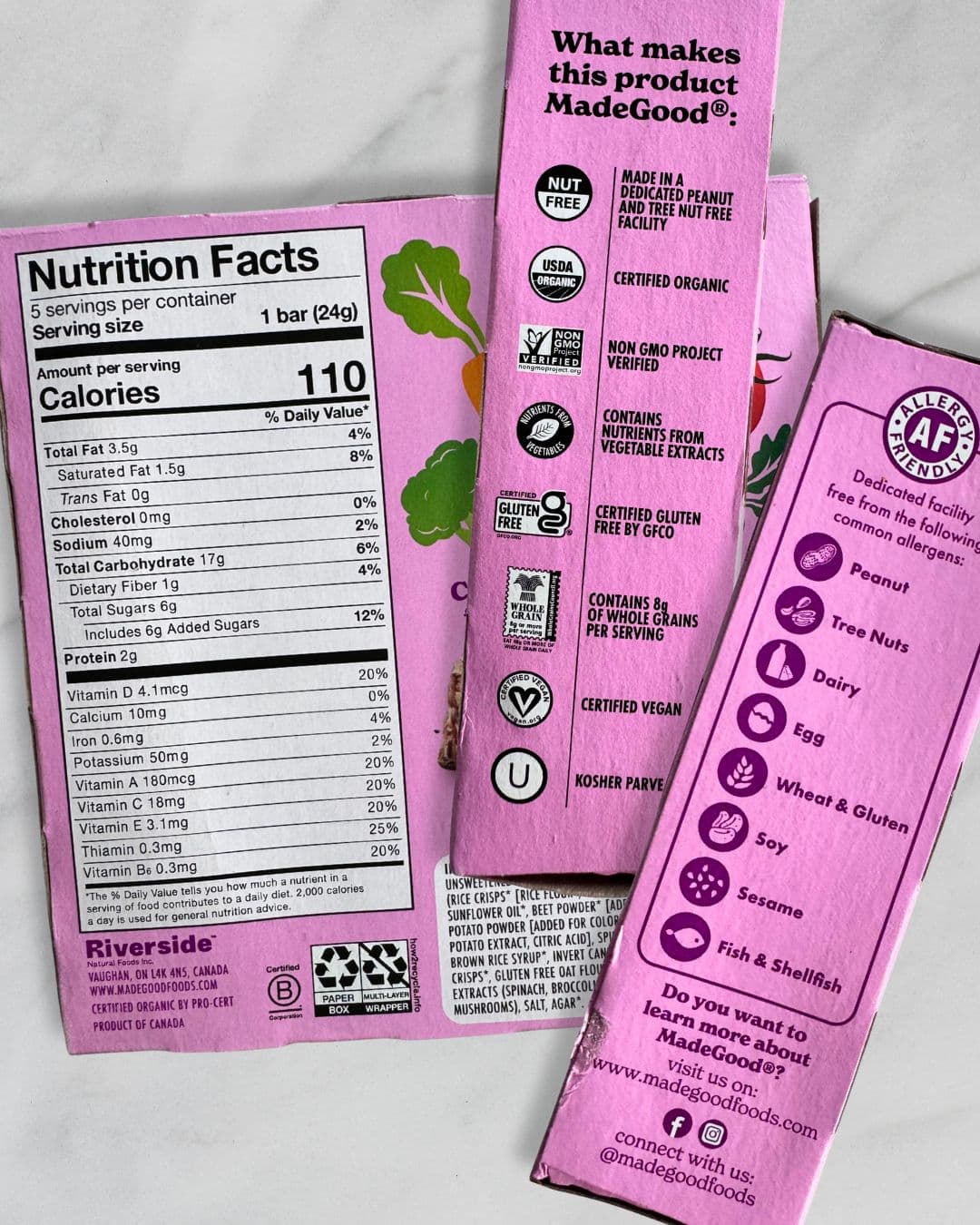
The nutrition profile of a MadeGood bar depends on its flavor and product size. A useful example is the standard Chocolate Chip Granola Bar. The manufacturer’s US product information lists one 24-gram bar at approximately 100 calories.
That serving provides a small amount of protein and fiber, along with carbohydrates and added sugar. It also supplies several vitamins from the vegetable extracts. These numbers make the bar a reasonable light snack, but they do not make it a high-protein or high-fiber food.
The following table uses the manufacturer’s published information for one standard Chocolate Chip Granola Bar. Other flavors, including drizzled and specialty varieties, may have different values.
Source: graciouslynourished.com
Calories
About 100 calories per 24-gram bar.
Protein
About 2 grams, which is a modest amount for a snack.
Dietary fiber
About 1 gram, or roughly 4% of the Daily Value.
Total sugar
About 6 grams, including added sugar.
A Typical MadeGood Chocolate Chip Bar Nutrition Profile
Here is a closer look at the published nutrition information for one 24-gram Chocolate Chip Granola Bar. These figures are a reference for this flavor, not a universal nutrition profile for the entire brand.
Yes. The standard Chocolate Chip variety provides several vitamins, including vitamins A, C, D, and E, along with thiamin and vitamin B6. The exact amounts depend on the product formulation and the current package label.
These vitamins support normal body functions. Vitamin A supports vision and immune function. Vitamin C helps with collagen formation and supports normal immune function. Vitamin D helps the body absorb calcium, while vitamin E acts as an antioxidant.
However, the vitamin content should be viewed as an extra benefit rather than a reason to rely on these bars as a main source of nutrition. Whole vegetables, fruits, grains, and other varied foods remain important parts of a balanced diet.
Vitamin A
Supports normal vision, immune function, and cell growth.
Vitamin C
Helps form collagen and supports normal immune function.
Vitamin D
Helps the body absorb calcium and supports bone health.
Vitamin E
Helps protect cells from oxidative damage.
Thiamin and vitamin B6
Help the body use energy and support normal nervous system functions.
Are MadeGood Bars Healthy for Everyday Snacking?
MadeGood bars can be part of an everyday eating plan, but the amount and frequency matter. Their small serving size makes them easy to fit into a snack routine. They also offer a practical alternative to some candy bars and heavily frosted snack cakes.
However, a typical bar has only about 2 grams of protein and 1 gram of fiber. Those amounts are relatively low for foods that are meant to keep hunger away for several hours. If you eat one between meals, you may feel hungry again fairly soon.
A better way to judge the bar is to look at what it offers and what it lacks. It provides quick energy, some vitamins, and convenient portion control. It does not provide the same nutritional balance as a snack containing fruit, protein, and fiber.
Source: graciouslynourished.com
A useful portion size
A single bar contains around 100 calories in some common varieties, making it easy to include in a planned snack.
Convenient energy
Its carbohydrates can provide energy when you need a quick bite before an activity or between meals.
Modest protein
The small protein amount means it is not a strong choice for recovery after demanding exercise.
Limited fiber
One gram of fiber does not contribute much toward the daily fiber goal for most adults.
Are MadeGood Bars Better Than Candy Bars?
Some MadeGood bars can be a more balanced choice than traditional candy bars. A standard 100-calorie granola bar may contain less total energy than a larger chocolate candy bar. It may also provide oats, vegetable extracts, and several vitamins.
Still, the comparison depends on the exact products. A chocolate-drizzled MadeGood bar can contain more calories than a plain granola variety. A candy bar with nuts may also provide more protein than a basic MadeGood bar.
The better choice is the one that fits your needs. If you want a small snack with oats and added vitamins, MadeGood may work. If you want a snack that keeps you full longer, a combination of fruit and nuts or yogurt may be more useful.
MadeGood advantage
Some varieties offer oats, organic ingredients, vegetable extracts, and portion-controlled servings.
MadeGood limitation
Many varieties are low in protein and fiber and still contain added sweeteners.
Candy bar comparison
Do not assume every granola bar is healthier than every candy bar. Compare serving sizes and nutrition labels.
Can You Eat MadeGood Bars Every Day?
Most healthy adults can include a MadeGood bar regularly if it fits their overall diet. Eating one bar does not create a health problem by itself. What matters more is your total intake of added sugar, fiber, protein, and other nutrients across the day.
If you eat a bar daily, try to vary your snacks. Fresh fruit, plain yogurt, oatmeal, vegetables, eggs, and nuts can provide nutrients that a packaged granola bar may lack. Variety also helps prevent a small range of packaged foods from taking over your eating routine.
Keep portions sensible
Start with the serving size printed on the package.
Rotate your snacks
Include whole foods instead of relying on granola bars for most snack breaks.
Check your daily sugar
Consider added sugar from drinks, breakfast foods, desserts, and other snacks.
Are MadeGood Bars High in Sugar?
MadeGood bars contain added sugar, so they are not sugar-free snacks. A standard Chocolate Chip Granola Bar contains about 6 grams of total sugar, with 6 grams listed as added sugar. This equals 12% of the FDA Daily Value for added sugar, based on a 2,000-calorie diet.
The main sweeteners can include agave syrup, brown rice syrup, invert cane syrup, and cane sugar. These ingredients give the bars their sweet taste and help bind the oats and other ingredients together.
Some people assume that sweeteners from plants are always better than regular sugar. That is not a sound way to judge a food. Agave syrup and brown rice syrup still contribute added sugar. The body does not treat a sweetener as sugar-free simply because it comes from a plant.
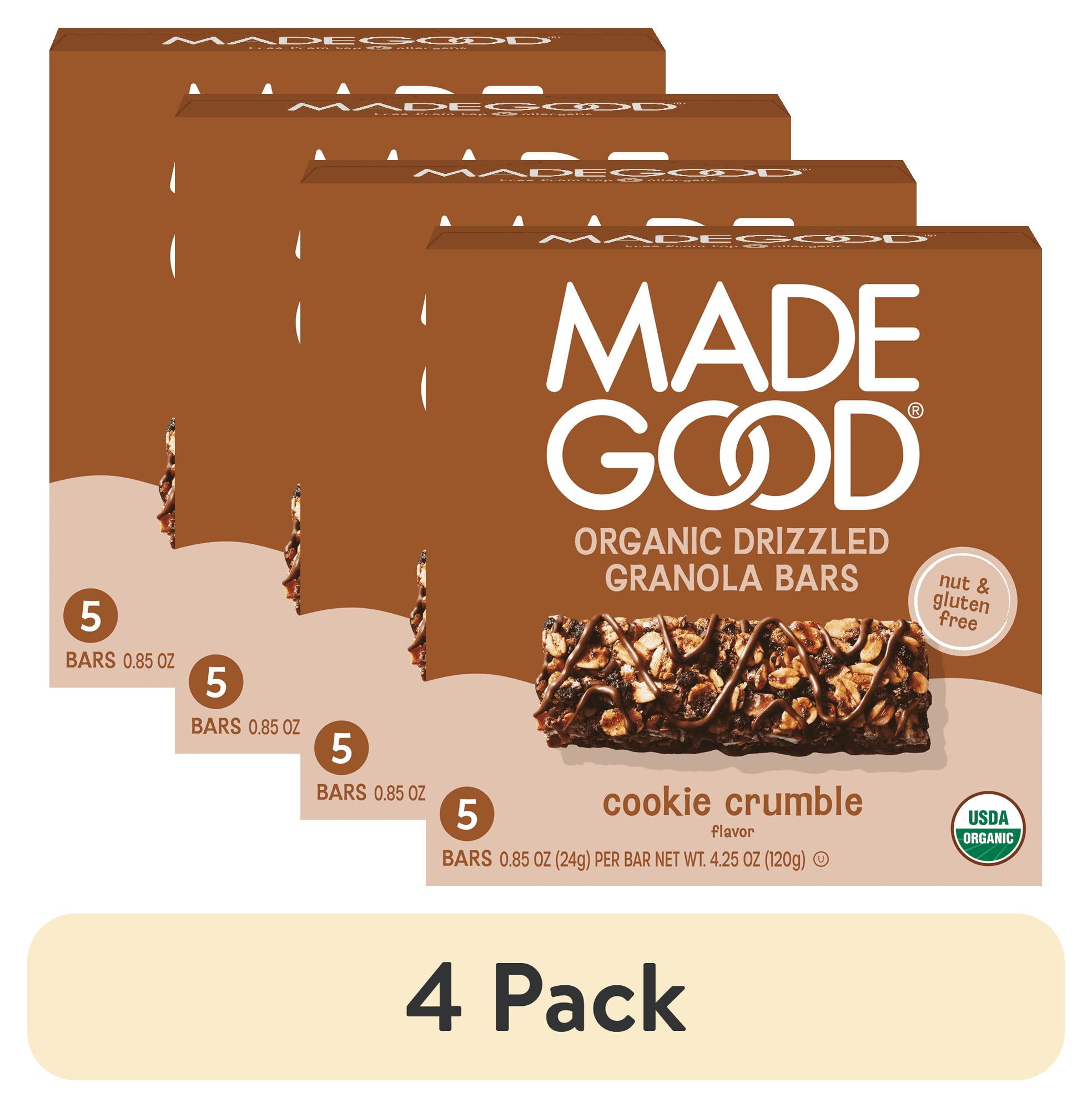
Source: walmart.com
Agave syrup
A plant-based sweetener that contributes added sugar and calories.
Brown rice syrup
A sweetener made from rice starch that helps add sweetness and texture.
Cane sugar
A common sweetener used in chocolate chips and other ingredients.
Invert cane syrup
A liquid sweetener used in some recipes to improve sweetness and texture.
How Much Added Sugar Is Too Much?
The FDA lists 50 grams as the Daily Value for added sugar. The Dietary Guidelines for Americans recommend keeping added sugars below 10% of daily calories for people aged 2 and older. On a 2,000-calorie diet, that works out to less than 50 grams per day.
For example, one standard MadeGood Chocolate Chip bar with 6 grams of added sugar uses 12% of that 50-gram reference amount. Two bars would provide 12 grams, or 24% of the Daily Value.
This does not mean that eating two bars is automatically unhealthy. It means you should consider the sugar from the rest of your diet. Sweetened coffee, soda, breakfast cereal, flavored yogurt, and desserts can add up quickly.
One bar
About 6 grams of added sugar in the standard Chocolate Chip variety.
Two bars
About 12 grams of added sugar.
Daily reference
The FDA Daily Value is 50 grams of added sugar.
Are Natural Sweeteners Healthier?
Natural sweeteners can sound more appealing, but their presence does not automatically make a snack healthier. Agave syrup and brown rice syrup still add calories and sugar. The total amount matters more than the marketing language used to describe the sweetener.
When shopping, look for the line that says Includes Added Sugars on the Nutrition Facts panel. This gives you a clearer picture than judging the product by the front label or the name of its sweeteners.
Read the full sugar amount
Check total sugar and added sugar rather than looking at only one number.
Compare serving sizes
A product with fewer grams of sugar may also have a smaller serving.
MadeGood Bars Ingredients: Are They Good for You?
The ingredients in MadeGood bars include several useful food sources, but the complete recipe matters. A standard Chocolate Chip Granola Bar uses gluten-free oats, agave syrup, chocolate chips, brown rice syrup, sunflower oil, brown rice crisps, and vegetable extracts.
Oats provide carbohydrates and some fiber. They are also a source of plant compounds and can contribute to a balanced diet. However, the amount of oats and fiber in a small processed bar is not the same as eating a bowl of plain oatmeal.
The bars also contain sweeteners and oils. These ingredients are not automatically harmful, but they explain why the product should be viewed as a snack rather than a complete health food.
Source: graciouslynourished.com
Gluten-free oats
Provide carbohydrates and a small amount of dietary fiber.
Brown rice crisps
Add a light, crunchy texture and contribute carbohydrates.
Sunflower oil
Provides fat and helps create the desired texture.
Chocolate chips
Add flavor and sweetness, depending on the variety.
Vegetable extracts
Supply selected vitamins from vegetables such as spinach, broccoli, carrots, tomatoes, beets, and shiitake mushrooms.
Do Vegetable Extracts Count as Eating Vegetables?
Not fully. Vegetable extracts can supply certain vitamins, but they do not offer the same food structure as whole vegetables. Whole vegetables contain water, fiber, and a wider mix of nutrients and plant compounds.
Think of vegetable extracts as a small nutritional addition, not a replacement for a serving of vegetables. Eating a bar does not remove the need to include broccoli, carrots, spinach, or other vegetables in your meals.
What extracts can provide
Selected vitamins and plant-derived nutrients.
What they do not replace
The full fiber content, volume, and variety of nutrients found in whole vegetables.
Are the Ingredients Highly Processed?
MadeGood bars are packaged foods made from multiple ingredients and processed to create a consistent texture and shelf life. Their organic status does not make them unprocessed foods.
Processing is not always harmful. Washing, drying, grinding oats, and baking are common ways to prepare food. However, it is useful to recognize that a granola bar is different from a simple homemade mixture of oats, fruit, and seeds.
The practical question is whether the product provides enough nutritional value for the role it plays in your diet. For an occasional snack, the ingredient list may be acceptable. For a main meal, the low protein and fiber content make it less suitable.
Processing is not a health score
Judge the complete food using its ingredients, nutrition facts, and serving size.
Organic is not unprocessed
Organic ingredients can still be used in packaged and processed foods.
Are MadeGood Bars Healthy for Kids?
MadeGood bars can be a convenient snack for children, especially when parents need individually wrapped foods for school or travel. Their small size makes portion planning easier, and many varieties are made without peanuts and tree nuts in dedicated facilities.
The vitamin content is another useful feature. Some varieties provide several vitamins from vegetable extracts. However, these bars should not be treated as a replacement for fruit, vegetables, dairy foods, or other sources of essential nutrients.
The main nutritional limitation for children is the modest amount of protein and fiber. A bar alone may not keep a growing child satisfied for long. Pairing it with a more filling food can make snack time more balanced.
Source: walmart.com
Easy to pack
Individual wrappers are practical for lunchboxes, road trips, and after-school snacks.
Useful dietary features
Many varieties are gluten-free, vegan, and made without peanuts and tree nuts.
Some added vitamins
Vegetable extracts provide selected vitamins.
Added sugar still matters
Parents should check the added sugar amount and consider other sweet foods in the child’s diet.
Are MadeGood Bars Safe for School Lunchboxes?
Many MadeGood granola bars are designed for people who avoid common allergens. Some products are made in facilities that exclude peanuts, tree nuts, and other listed allergens. This can make them useful when choosing school snacks.
However, no packaged snack should be assumed safe for every child with a food allergy. Manufacturing statements can differ by product and market. Always read the current allergen statement on the exact package and follow the child’s allergy plan.
Schools also have their own food rules. Some prohibit specific ingredients or require certain packaging. Check the school’s policy before packing a snack for a shared classroom.
Check the package
Read the complete allergen statement and manufacturing information.
Check school rules
Follow the school’s food and allergy policies.
Avoid assumptions
A nut-free claim does not mean a product is safe for every possible food allergy.
How Can Parents Make the Snack More Nutritious?
Pairing a MadeGood bar with another food is an easy way to improve the overall snack. The goal is to add protein, fiber, or healthy fats without making the portion too large.
For example, an apple with plain yogurt provides a different mix of nutrients than a granola bar alone. If a child has dietary restrictions, choose an appropriate alternative and follow any medical guidance.
Add fruit
Serve the bar with an apple, banana, orange, or berries.
Add protein
Pair it with yogurt, cheese, or another suitable protein-rich food.
Add variety
Rotate packaged snacks with whole-food options throughout the week.
Are MadeGood Bars Good for Weight Loss?
MadeGood bars can fit into a weight-management plan because some varieties contain around 100 calories per serving. Their individually wrapped format also makes it easier to track portions than eating directly from a large snack bag.
However, low calories alone do not make a food helpful for weight loss. A snack that does not keep you full may lead you to eat again soon. Since many MadeGood bars contain only 2 grams of protein and 1 gram of fiber, they may not provide lasting fullness.
If you are trying to manage your weight, focus on your overall eating pattern. A small bar can be useful when you need something convenient, but snacks with more protein and fiber may help control hunger for longer.
Source: graciouslynourished.com
Portion control
One individually wrapped bar gives you a clear serving size.
Calorie awareness
Check the calorie count of the exact flavor, especially chocolate-drizzled varieties.
Limited fullness
Low protein and fiber can make the bar less satisfying than a more balanced snack.
Daily balance
Weight management depends on your overall calorie intake, activity, and long-term habits.
What Should You Pair With a MadeGood Bar for Weight Management?
Pairing the bar with a protein-rich food can make the snack more satisfying. Plain Greek yogurt, cottage cheese, or a suitable serving of seeds can add protein. Whole fruit can also add volume and fiber.
The best combination depends on your calorie needs and food preferences. If you need a light snack, one bar with a small piece of fruit may be enough. If you are replacing a missed meal, you will likely need a more complete meal instead.
Plain Greek yogurt
Adds protein and can make a small snack more filling.
Fresh berries
Add fiber, water, and natural sweetness.
Cottage cheese
Provides protein and works well as a separate snack item.
Are MadeGood Bars Good for People With Dietary Restrictions?
MadeGood bars can be useful for people who follow certain dietary patterns. Many varieties are vegan and gluten-free, and the company offers products made without peanuts and tree nuts. Some products also carry organic and non-GMO certifications.
These features can make shopping easier, especially when finding packaged snacks for a family with different food preferences. However, the exact ingredients and allergen statements vary by product.
A person with celiac disease, a severe allergy, or another medical dietary restriction should rely on the current package information and manufacturer confirmation rather than a general brand description.
Source: graciouslynourished.com
Gluten-free
Many MadeGood granola bars are labeled gluten-free, which may suit people avoiding gluten.
Vegan
Many varieties use plant-based ingredients and do not contain common animal-derived ingredients.
Nut-free options
Many products are made in dedicated facilities that exclude peanuts and tree nuts.
Organic
Selected varieties carry organic certification under applicable standards.
Are MadeGood Bars Safe for People With Celiac Disease?
Many MadeGood granola bars are labeled gluten-free. This can make them a possible snack option for people who need to avoid gluten. Still, anyone with celiac disease should check the exact product label before eating it.
Do not rely only on the brand name or an older online ingredient list. Recipes and manufacturing information can change. If the label is unclear, contact the manufacturer or choose a product with clear gluten-free labeling that meets your needs.
Read the gluten-free claim
Check the exact product package rather than assuming every product in the range has the same status.
Check manufacturing information
Review warnings about possible cross-contact and follow medical advice.
Are MadeGood Bars Suitable for People With Diabetes?
People with diabetes may be able to include MadeGood bars in their eating plans, but carbohydrate content deserves attention. A standard bar can contain around 17 grams of total carbohydrates, including 6 grams of sugar.
Carbohydrates can affect blood glucose, even when they come from organic ingredients. Protein, fat, fiber, medications, activity, and the rest of the meal can also affect an individual’s response.
If you monitor carbohydrate intake, use the exact nutrition label and follow your clinician’s guidance. A MadeGood bar should not be treated as a sugar-free or low-carbohydrate food.
Check total carbohydrates
Look beyond the sugar line because starches and other carbohydrates also count.
Check added sugar
Use the added sugar information as part of the full nutrition review.
Follow your care plan
Use advice from your healthcare professional for personal food choices and glucose management.
MadeGood Bars: Pros and Cons
MadeGood bars have several practical advantages, but they also have clear nutritional limits. Their strongest features are convenience, selected dietary certifications, and added vitamins from vegetable extracts. Their biggest weaknesses are low protein, low fiber, and the presence of added sugar.
Whether the benefits outweigh the drawbacks depends on your reason for buying them. A parent who needs a convenient packaged snack may value their dietary features. Someone looking for a filling breakfast or a high-protein fitness snack may need a different product.
Source: iheartpublix.com
Pros: Convenient portions
Individual wrappers make the bars easy to carry and portion.
Pros: Organic options
Many varieties use certified organic ingredients.
Pros: Selected vitamins
Vegetable extracts provide several vitamins in some varieties.
Pros: Dietary flexibility
Many options are gluten-free, vegan, and made without peanuts and tree nuts.
Cons: Added sugar
A common bar contains around 6 grams of added sugar.
Cons: Low protein
About 2 grams per bar is not enough to make it a high-protein snack.
Cons: Limited fiber
Around 1 gram per bar offers only a small contribution to daily fiber needs.
Cons: Not a complete meal
The small serving does not provide enough variety or nutrition to replace a balanced meal.
Who May Benefit Most From MadeGood Bars?
MadeGood bars may suit people who need a small, portable snack and value certain dietary features. They can also work for parents who want individually wrapped options for lunchboxes, provided the product meets the child’s allergy needs and school rules.
They may be less useful for people who need a snack that provides lasting fullness. Athletes, people with high protein needs, and anyone replacing a meal may benefit more from a snack with more protein, fiber, and overall food variety.
Good fit
People looking for a convenient, small snack with selected organic and dietary features.
Less suitable
People looking for a high-protein snack, a low-sugar product, or a meal replacement.
Healthier Alternatives to MadeGood Bars
If you want more protein, fiber, or natural food variety, several simple snacks may offer more than a standard MadeGood bar. You do not need to avoid packaged bars completely. Instead, choose a snack based on what your body needs at that moment.
Whole foods can offer a better balance of nutrients because they often provide more fiber, water, or protein per serving. They also give you more control over added sugar and portion size.
For a busy workday, keep a few easy options available. Fresh fruit, plain yogurt, hard-boiled eggs, and suitable seeds can be packed ahead of time. These foods can complement or replace a granola bar depending on your appetite.
Source: walmart.com
Apple with peanut butter
Provides fruit, fiber, and fat and protein from peanut butter. Use an allergy-safe alternative when needed.
Plain Greek yogurt
Provides more protein than a typical MadeGood bar and can be paired with fresh berries.
Oatmeal with fruit
Offers whole grains and fiber, with the option to add seeds for more protein and healthy fats.
Hard-boiled eggs
Provide protein and are easy to prepare ahead of time.
Fresh fruit and seeds
Combine natural sweetness with fiber, healthy fats, and some protein.
How to Choose a Healthier Granola Bar
When comparing snack bars, start with serving size and protein. A bar with more protein may help you feel satisfied for longer, while a bar with more fiber can make a stronger contribution to daily fiber intake.
Next, review added sugar and saturated fat. A product does not need to have zero sugar to be a reasonable choice, but lower added sugar can leave more room for other foods in your daily diet.
Finally, read the ingredients list. Look for recognizable ingredients such as oats, nuts, seeds, and fruit. Consider your dietary needs and avoid products that contain ingredients you cannot safely eat.
Serving size
Compare bars of similar weight so you do not mistake a smaller serving for a healthier recipe.
Protein
Choose an amount that fits your snack needs, especially if you want longer-lasting fullness.
Fiber
Look for a useful amount of fiber rather than relying only on the word granola.
Added sugar
Compare the added sugar line on each Nutrition Facts label.
Ingredients
Check the ingredient list and allergen information before buying.
Frequently Asked Questions
Q
Are MadeGood bars actually healthy?
MadeGood bars can be a reasonable snack when eaten in moderation. Many varieties contain oats, selected vitamins, and organic ingredients. However, common granola bars provide only about 2 grams of protein and 1 gram of fiber, while containing around 6 grams of added sugar. They are convenient snacks, not complete meals.
Q
Are MadeGood bars healthier than regular granola bars?
It depends on which products you compare. MadeGood offers organic, gluten-free, vegan, and nut-free options that may suit certain dietary needs. However, other granola bars may contain more protein or fiber and less added sugar. Compare the serving size, calories, ingredients, and Nutrition Facts panel before deciding.
Q
Do MadeGood bars contain real vegetables?
Many MadeGood granola bars contain vegetable extracts from ingredients such as spinach, broccoli, carrots, tomatoes, beets, and shiitake mushrooms. These extracts provide selected vitamins. However, they are not the same as eating whole vegetables because they do not provide the same food volume and complete fiber content.
Q
Are MadeGood bars good for weight loss?
They can fit into a weight-management plan because some varieties contain around 100 calories per bar. However, their low protein and fiber content may not keep you full for long. Pairing a bar with Greek yogurt or fruit can create a more balanced snack. Overall calorie intake and long-term habits matter more than one snack.
Q
Are MadeGood bars safe for children?
Many MadeGood bars are convenient for children and are made in facilities designed to avoid certain common allergens. However, parents should read the exact package label and confirm that the product meets the child’s allergy needs. The bars can be part of a varied diet but should not replace meals, fruit, or vegetables.
Q
Are MadeGood bars gluten-free?
Many MadeGood granola bars are labeled gluten-free and use gluten-free oats. However, always check the package of the specific flavor you are buying. People with celiac disease should rely on the current gluten-free labeling and manufacturer information rather than assuming all products in a brand range have identical ingredients.
Q
Do MadeGood bars contain a lot of added sugar?
A common MadeGood Chocolate Chip Granola Bar contains approximately 6 grams of added sugar per 24-gram serving. That represents 12% of the FDA Daily Value of 50 grams. This is not an unusually large amount for every snack comparison, but it should be included in your total daily added sugar intake.
Q
Are MadeGood bars suitable for people with diabetes?
Some people with diabetes may be able to include MadeGood bars in their meal plans. A common variety contains around 17 grams of total carbohydrates and 6 grams of added sugar. Check the full label, consider your carbohydrate needs, and follow the personal guidance provided by your healthcare professional.
Q
Are MadeGood bars good for breakfast?
A MadeGood bar alone is usually too small and low in protein and fiber to serve as a balanced breakfast. You can include one as part of a larger breakfast with Greek yogurt, fruit, eggs, or oatmeal. This combination provides a wider range of nutrients and may keep you satisfied longer.
Q
Can I eat two MadeGood bars in one day?
Two bars may fit into a balanced diet, depending on your overall food intake and nutritional needs. For a common Chocolate Chip variety, two bars provide around 200 calories and 12 grams of added sugar. Consider your daily sugar intake and make sure you are also eating foods that provide protein, fiber, and other essential nutrients.
✦ Wrapping Up
Conclusion
So, are MadeGood bars healthy? The most accurate answer is that they can be a convenient part of a balanced diet, but they are not nutritional powerhouses. Their organic ingredients, selected vitamins, and dietary features make them useful for some people. Their small portions also make them easy to carry and eat between meals.
The main drawbacks are their added sugar, low protein, and limited fiber. A common 24-gram bar provides around 100 calories, 6 grams of added sugar, 2 grams of protein, and 1 gram of fiber. These numbers make it clear that a MadeGood bar is better viewed as a light snack than a filling meal or high-protein food.
For children, adults, and busy workers, the bars can offer convenience when paired with a varied eating pattern. People with food allergies or medical dietary needs should always check the current product label. Different flavors may have different ingredients, nutrition values, and allergen information.
Ultimately, there is no need to label MadeGood bars as either completely healthy or unhealthy. A single snack does not define your diet. What matters is the overall pattern of foods you eat, the nutrients you get, and whether your choices support your health goals.
💡 Key Takeaway
Before buying MadeGood bars, compare the Nutrition Facts panel for your preferred flavor. Check added sugar, protein, fiber, calories, and allergen information. If you enjoy the taste, include one as an occasional or planned snack and pair it with fruit or a protein-rich food when you need something more filling.
If you’ve ever asked yourself what protein bars are the healthiest while standing in the snack aisle, you’re not alone. The shelf is packed, and half those…