Most people who use protein powder need one or two scoops per day, but the right amount depends on their total daily protein needs and how much protein they already get from food.
If you shop for protein powder at an American grocery store, supplement shop, or online retailer, you will find many products with different serving sizes. Some labels suggest one scoop, while others list two scoops as a full serving. This can make it hard to know how much you actually need each day.
The best way to decide is to calculate your daily protein target first. Then, count the protein you get from meals, snacks, milk, yogurt, eggs, meat, beans, and other foods. Protein powder should fill the gap rather than become the main source of your daily nutrition.
For most healthy adults, the basic protein recommendation is 0.8 grams per kilogram of body weight each day. People who exercise regularly may need more. The International Society of Sports Nutrition suggests 1.4 to 2.0 grams per kilogram daily for most healthy exercising individuals.
There is no universal rule that says everyone should take two or three scoops. One person may need no powder at all, while another may benefit from one or two servings to meet a higher protein target. Your body weight, exercise routine, food choices, and health status all matter.
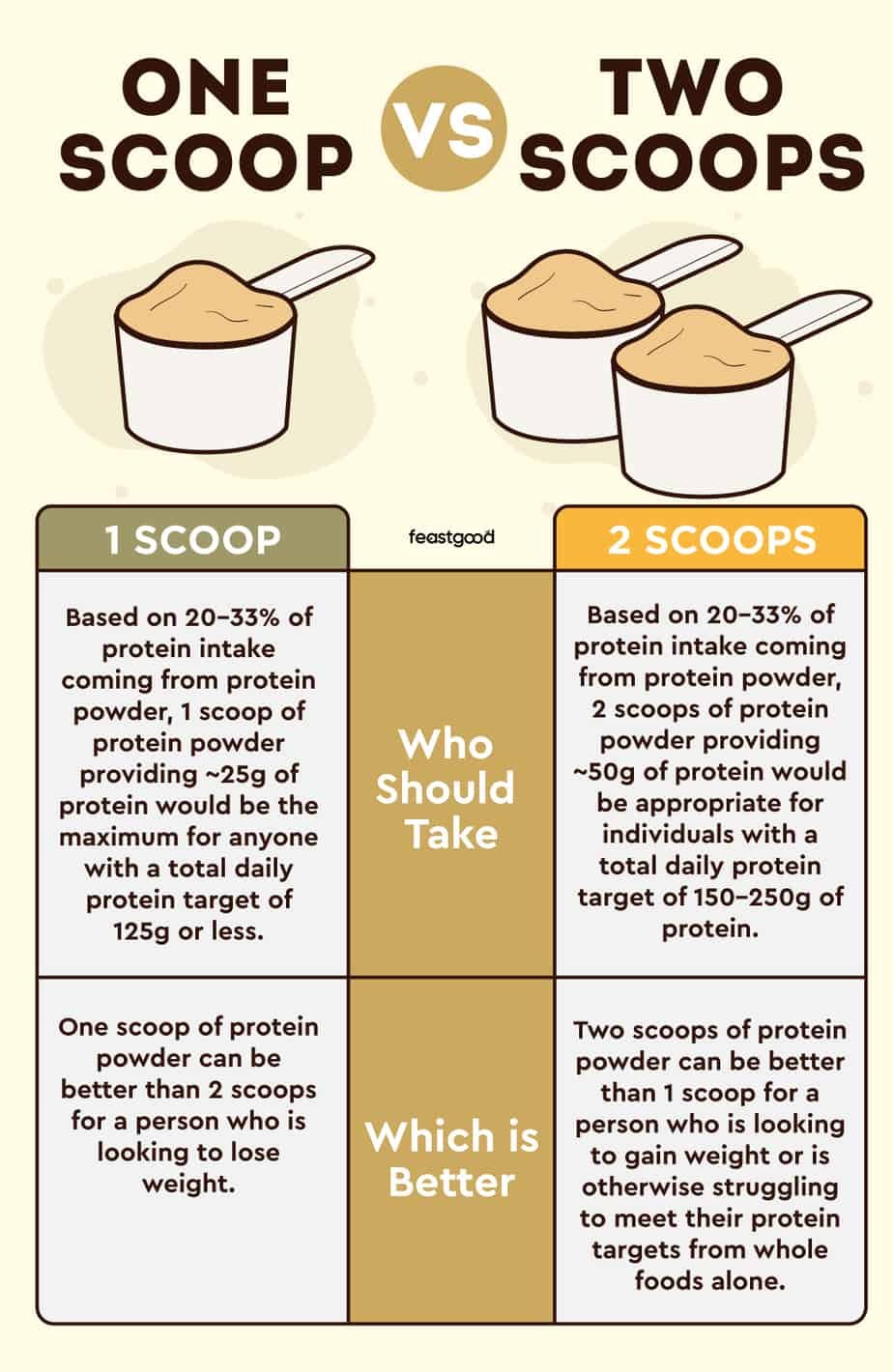
Source: storage.googleapis.com
How Many Scoops Of Protein Powder Should You Take Per Day?
For many healthy adults, one scoop per day is a practical starting point when regular meals do not provide enough protein. Some active people may need two scoops, especially when their daily protein needs are higher or their food intake is limited. Others may not need any protein powder.
The number of scoops should come from your daily protein target, not from the serving suggestion on the front of a container. A supplement serving is a product measurement. It is not a personalized nutrition prescription.
For example, suppose your daily protein goal is 120 grams. Your meals provide 85 grams. You need another 35 grams to reach your target. If one scoop provides 25 grams, one scoop will leave you 10 grams short. You could get the remaining amount from food or a suitable additional portion of powder.
The main goal is to meet your daily protein needs without taking more powder than you need. A balanced diet should still provide most of your protein and other important nutrients.
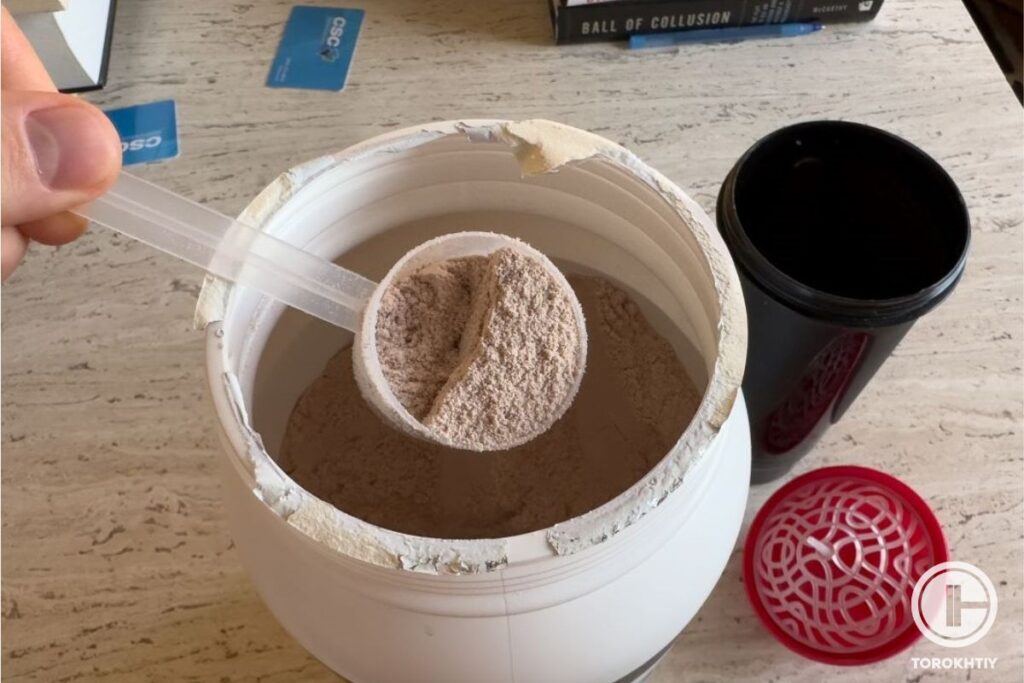
Source: torokhtiy.com
One scoop daily
May help people who eat a balanced diet but fall slightly short of their daily protein target.
Two scoops daily
May help active people who have a larger protein gap and cannot easily fill it with regular meals.
Three or more scoops daily
May be unnecessary for many people. This amount deserves a closer look at total protein intake, food quality, calorie intake, and individual health needs.
Zero scoops daily
A perfectly reasonable choice when regular food already supplies enough protein.
Is Two Scoops Of Protein Powder A Day Too Much?
Two scoops are not automatically too much. The answer depends on how much protein each scoop contains and how much protein you get from other sources. Two small servings may provide less protein than one large serving from another brand.
Consider a powder that provides 24 grams of protein per scoop. Two scoops supply 48 grams. If your daily target is 120 grams and your meals provide 72 grams, those two scoops bring you to your target. However, if your meals already provide 115 grams, both scoops may add more protein than you need.
Healthy adults who exercise can often tolerate higher protein intakes within established sports nutrition ranges. That does not mean everyone benefits from adding more. Your goal should be adequate intake, not the highest possible number.
Check your total
Add protein from every meal, snack, and drink before deciding whether a second scoop is necessary.
Watch your digestion
If two servings cause bloating, gas, diarrhea, or stomach discomfort, review the product and your total intake.
Can You Take Protein Powder Every Day?
Many healthy adults can use protein powder daily if it fits their nutrition needs and they tolerate its ingredients. There is no requirement to take it every day, though. You can use it on busy days, after certain workouts, or whenever your meals fall short.
A daily serving should not replace a varied diet. Whole foods provide protein along with fiber, vitamins, minerals, healthy fats, and other nutrients that plain protein powder may not contain.
Daily use
Can be convenient when your eating pattern consistently leaves a protein gap.
Occasional use
Works well when your meals usually meet your needs but some days are less balanced.
How Much Protein Do You Need Per Day?
Your daily protein requirement is the first number you should calculate. Protein needs are often measured in grams per kilogram of body weight. Your activity level, age, health, and fitness goals can change the amount that makes sense.
The Recommended Dietary Allowance for most healthy adults is 0.8 grams of protein per kilogram of body weight per day. This is a basic intake level designed to meet the needs of nearly all healthy adults, not necessarily the ideal target for every athlete or person with a specific fitness goal.
For people who exercise regularly, the International Society of Sports Nutrition gives a daily range of 1.4 to 2.0 grams per kilogram. The exact amount depends on exercise type, training volume, body composition, and total energy intake.
A person who walks regularly may have different needs from someone who lifts weights five days a week. Likewise, someone trying to maintain muscle during weight loss may need a different plan from someone who is not exercising.
Source: storage.googleapis.com
General adult recommendation
Approximately 0.8 grams per kilogram of body weight daily.
Regular exercise
Approximately 1.4 to 2.0 grams per kilogram daily may support training and recovery in healthy exercising individuals.
Muscle-building goals
A higher protein target within the sports nutrition range may be useful when combined with suitable resistance training.
Weight-loss goals
Adequate protein can help support fullness and preserve lean muscle during a calorie deficit.
Calculate Your Daily Protein Requirement
You can estimate your daily protein needs with a simple calculation. First, convert your weight from pounds to kilograms by dividing it by 2.2. Then multiply your weight in kilograms by the protein target that fits your needs.
For a basic adult estimate, multiply your weight in kilograms by 0.8. For an active adult, a sports nutrition target between 1.4 and 2.0 grams per kilogram may be appropriate. These are general estimates for healthy adults, not personal medical prescriptions.
For example, an adult who weighs 176 pounds weighs about 80 kilograms. At the basic adult allowance, the calculation is 80 multiplied by 0.8, which equals 64 grams of protein per day.
If the same person exercises regularly and uses a target of 1.6 grams per kilogram, the calculation becomes 80 multiplied by 1.6. That gives a daily target of 128 grams.
Step 1
Convert your body weight from pounds to kilograms by dividing by 2.2.
Step 2
Choose a suitable daily protein target based on your activity and health.
Step 3
Multiply your weight in kilograms by the chosen protein target.
Step 4
Subtract the protein you already get from food to find the amount a supplement may need to provide.
Daily Protein Examples By Body Weight
The following table shows estimated protein needs for several body weights. The first column uses the basic adult allowance of 0.8 grams per kilogram. The second uses 1.6 grams per kilogram as an example for a healthy adult who exercises regularly.
These figures are daily totals from all food and supplements combined. They are not instructions to consume the entire amount as protein powder.
150 pounds
About 55 grams at 0.8 grams per kilogram, or 109 grams at 1.6 grams per kilogram.
160 pounds
About 58 grams at 0.8 grams per kilogram, or 116 grams at 1.6 grams per kilogram.
180 pounds
About 65 grams at 0.8 grams per kilogram, or 131 grams at 1.6 grams per kilogram.
200 pounds
About 73 grams at 0.8 grams per kilogram, or 145 grams at 1.6 grams per kilogram.
How To Calculate The Number Of Protein Powder Scoops You Need
The simplest way to calculate your daily scoop count is to subtract your food protein from your daily target. Then divide the remaining amount by the protein supplied by one scoop.
This method works because protein powder is only one part of your daily protein intake. It also prevents you from treating the serving size printed on a container as a daily requirement.
Before starting, collect your product label and estimate your usual protein intake from food. You do not need to count every gram perfectly on the first day. A basic food log for a few typical days can help you understand where your protein comes from.
Source: unspunlondon.co.uk
Find your daily target
Use a suitable protein target based on your weight, activity, and health needs.
Count food protein
Include eggs, dairy, poultry, fish, meat, beans, soy, nuts, and other protein sources.
Find the remaining amount
Subtract your food protein total from your daily protein target.
Check the powder label
Find the actual grams of protein in one labeled serving.
Calculate the servings
Divide the remaining protein amount by the grams of protein in one serving.
Example: A Person Who Needs 120 Grams Of Protein
Imagine an adult who has a daily target of 120 grams. Their breakfast provides 25 grams, lunch provides 30 grams, dinner provides 35 grams, and snacks provide another 10 grams.
Their food supplies 100 grams of protein. This leaves a 20-gram gap. If their protein powder provides 25 grams per scoop, one scoop is enough to cover that gap.
The person does not need two scoops simply because the container recommends a two-scoop serving. One scoop already provides enough protein to meet the estimated target when combined with the day’s food.
Daily target
120 grams.
Protein from food
100 grams.
Remaining protein
20 grams.
Protein per scoop
25 grams.
Practical amount
One scoop provides enough to cover the estimated gap.
What If You Need 40 Grams Of Extra Protein?
Suppose your daily target is 140 grams, but your usual meals provide only 100 grams. You have a 40-gram gap. If one scoop contains 20 grams of protein, two scoops would provide the remaining amount.
You could take one serving at breakfast and another later in the day. You could also use one scoop and get the other 20 grams from Greek yogurt, eggs, milk, fish, or another food.
Spreading your intake across meals can be more practical than drinking both scoops at once. It also gives you more chances to eat foods that provide nutrients beyond protein.
Food-first option
Use one scoop and get the remaining protein from a regular meal or snack.
Supplement option
Use two servings when food choices and your daily schedule make that approach practical.
Does One Scoop Of Protein Powder Equal One Serving?
Not always. One scoop may equal one serving for a particular product, but other powders use two scoops or a different measurement. Scoop size and protein content vary by brand and formula.
Another important difference is the weight of the powder compared with the amount of actual protein it contains. A 30-gram serving of powder does not necessarily provide 30 grams of protein. The remaining weight may come from carbohydrates, fats, flavorings, sweeteners, and other ingredients.
For example, one serving might weigh 35 grams but provide only 25 grams of protein. Another product might weigh 30 grams and provide 24 grams. The larger serving does not automatically contain more protein.
Source: detroitchinatown.org
Serving size
The amount of powder the manufacturer defines as one serving.
Protein per serving
The actual grams of protein supplied by that amount of powder.
Scoop size
The physical measuring scoop supplied with the container, which can differ between products.
Serving weight
The total weight of the powder, including protein and other ingredients.
How To Read A Protein Powder Label
Turn the container around and look at the Supplement Facts panel. Find the serving size and the protein amount listed below it. These two numbers tell you how much powder the manufacturer expects you to use and how much protein that serving supplies.
Also check the number of servings per container, calories, added sugars, carbohydrates, fats, allergens, and ingredient list. These details can help you decide whether the powder fits your diet.
If the label says one serving is two scoops, do not assume one scoop supplies the full listed protein amount. Read the serving directions before measuring.
Serving size
Check whether one serving requires one scoop, two scoops, or a weight measured in grams.
Protein amount
Use the grams of protein listed per serving when calculating your daily intake.
Ingredients
Check for milk, soy, artificial sweeteners, added sugars, and other ingredients that may not suit you.
Serving instructions
Follow the product’s mixing and measurement directions.
Should You Weigh Protein Powder Instead Of Using A Scoop?
A kitchen scale can help when you want a more accurate powder measurement. Scoops can become less reliable when powder settles, gets packed down, or is measured with a different technique.
If a label lists a serving as 30 grams, weighing the powder can help you measure that amount more consistently. Use the product’s specific serving information rather than assuming every brand has the same scoop weight.
Remember that weighing 30 grams of powder does not mean you are consuming 30 grams of protein. You still need to use the protein value listed on the label.
Use the supplied scoop
Follow the manufacturer’s directions when using the product as intended.
Use a kitchen scale
Consider weighing powder when accurate portion measurement matters.
How Many Scoops Should You Take For Muscle Growth?
People who want to build muscle may need more protein than adults who do little physical activity. However, taking extra scoops does not automatically produce bigger muscles. Resistance training, adequate calories, recovery, sleep, and total daily protein intake all play important roles.
For most healthy people who exercise, a daily intake of 1.4 to 2.0 grams per kilogram of body weight is a useful sports nutrition range. A person who weighs 75 kilograms, for example, may use a target of 120 grams at 1.6 grams per kilogram.
If that person already gets 90 grams from meals, the remaining amount is 30 grams. A scoop providing 25 grams would cover most of the gap. A small amount of protein from another food could supply the rest.
The number of scoops should change when your food intake changes. On a day when you eat more chicken, fish, eggs, or dairy, you may need less powder. On a busy day with fewer protein-rich meals, a serving may be more useful.
Source: YouTube > UltimateFatBurner.com
Prioritize resistance training
Muscle growth requires a suitable training stimulus. Protein powder cannot replace strength exercises.
Meet your daily target
Focus on total protein intake from all sources rather than adding scoops without a calculation.
Spread protein across meals
Regular protein-rich meals and snacks can support muscle protein synthesis throughout the day.
Allow recovery time
Sleep and rest are important parts of a muscle-building plan.
How Much Protein Should You Take After A Workout?
A serving containing around 20 to 40 grams of high-quality protein is a common sports nutrition guideline for supporting muscle protein synthesis. The appropriate amount varies with body size, age, training, and the protein already present in a recent meal.
The International Society of Sports Nutrition also describes approximately 0.25 grams of high-quality protein per kilogram of body weight as a general per-serving guideline. This can help you decide whether one scoop is enough after exercise.
You do not have to rush to drink a shake the moment you finish lifting weights. Total daily protein intake matters more than following a strict 30-minute rule. A regular protein-rich meal before or after training may already meet your needs.
If you exercise in the morning and cannot eat a full meal right away, a protein shake can be a convenient option. You can also use milk, Greek yogurt, eggs, or another suitable food.
Before exercise
A normal protein-rich meal can provide amino acids before your training session.
After exercise
A meal or shake with an appropriate protein serving can support recovery.
Throughout the day
Continue meeting your total daily protein target rather than relying on one post-workout shake.
Can More Protein Powder Build Muscle Faster?
Taking more powder than you need does not guarantee faster muscle growth. Once your daily protein intake is sufficient, adding more may provide little extra benefit for your specific goal.
Extra servings also add calories. Depending on the product, they may add carbohydrates, fats, and sweeteners. If you are trying to manage your weight, those extra calories should fit into your overall eating plan.
A better approach is to improve your training plan, eat balanced meals, and track progress over time. If your strength and recovery are improving and your protein target is met, there may be no reason to add another scoop.
Avoid unnecessary servings
More powder is not a substitute for effective exercise and adequate recovery.
Review your progress
Consider your training performance, food intake, and recovery before changing your protein target.
How Many Scoops Should You Take For Weight Loss?
If your goal is weight loss, the right number of protein scoops depends on your daily protein target and calorie needs. Protein can help you feel full and support muscle maintenance while you lose weight, but protein powder does not directly cause fat loss.
A calorie deficit is still needed for weight loss. This means you consume fewer calories than your body uses over time. Protein powder can make it easier to meet your protein needs without preparing another full meal, but it still contributes calories.
For example, a shake containing 25 grams of protein may provide around 100 to 150 calories, depending on its ingredients and preparation. Adding milk, nut butter, fruit, or other ingredients can increase the total.
People who are trying to lose weight while maintaining muscle may benefit from a higher protein intake than the basic adult allowance. However, the appropriate target depends on body composition, exercise, age, and health. A registered dietitian can help set a suitable plan.
Use powder to fill a gap
Take a serving only when your meals do not provide enough protein.
Check total calories
Count the powder and everything you mix into the shake.
Choose satisfying meals
Include protein-rich foods, vegetables, fruit, and fiber-rich carbohydrates.
Protect muscle
Combine adequate protein with resistance exercise when appropriate.
Is One Scoop Enough For Weight Loss?
One scoop may be enough if it covers the difference between your daily protein target and the amount you get from food. For someone who eats protein at every meal, one serving may be all they need.
If your meals already supply enough protein, adding a shake may only increase your calorie intake. You do not need to drink protein powder simply because you are following a weight-loss plan.
The best option is the one that helps you meet your nutrition needs while keeping your overall eating pattern sustainable.
One scoop
Can help when your daily meals leave a modest protein gap.
Two scoops
May be useful when the protein gap is larger, provided the amount fits your daily plan.
Should You Take Protein Powder In One Sitting Or Split It Up?
Splitting protein intake across the day is often a practical way to support muscle health and meet your daily target. Rather than taking several scoops at once, you can spread protein-rich meals and shakes across breakfast, lunch, dinner, and snacks.
The International Society of Sports Nutrition describes distributing protein servings approximately every three to four hours as a useful approach for exercising individuals. Its position statement discusses servings of about 20 to 40 grams of protein, depending on individual needs.
This does not mean your body cannot digest more than 40 grams at once. There is no simple universal limit that prevents your digestive system from absorbing protein from a larger meal. The practical point is that spreading intake may help distribute muscle-building signals across the day.
For example, if your daily plan includes 120 grams of protein, you could aim for several protein-rich meals and use a shake where needed. The exact meal sizes do not need to be identical.
Source: flexfitnessapp.com
Breakfast
Include eggs, milk, Greek yogurt, cottage cheese, or another suitable protein source.
Lunch
Add chicken, fish, tofu, beans, lentils, or another protein-rich food.
Afternoon snack
Use one protein shake if your food intake leaves a gap.
Dinner
Choose a balanced meal with a suitable protein source.
Is It Better To Take Protein Powder In The Morning Or At Night?
There is no single best time for everyone. Morning protein can help people who skip breakfast or struggle to eat enough during the first part of the day. An afternoon shake may be useful after exercise or between meals.
Some people prefer protein before bed because it helps them meet their daily target. Casein is a slower-digesting milk protein that is often used for this purpose. However, a bedtime shake is not required for muscle growth.
Your total daily protein intake and consistent eating habits are more important than choosing a special time for every serving.
Morning
Useful when breakfast is low in protein or your morning schedule is busy.
After exercise
Convenient when you cannot have a regular meal soon after training.
Evening
Can help fill a daily protein gap when your meals have not supplied enough.
What Happens If You Take Too Much Protein Powder?
Taking more protein powder than you need can make your diet less balanced and increase your calorie intake. It may also cause digestive problems, especially when a product contains ingredients you do not tolerate.
Protein powder is not automatically harmful when used in reasonable amounts by healthy adults. However, more is not always better. Your body needs a balanced mix of nutrients, and replacing too many meals with shakes can reduce the variety of foods in your diet.
Some people experience bloating, gas, nausea, loose stools, or constipation after using certain powders. These problems may relate to lactose, sugar alcohols, sweeteners, added fiber, or the total serving size.
A high-protein diet also deserves extra care in people with kidney disease or other conditions that affect protein metabolism. Their needs may differ from those of healthy adults, and an ordinary fitness recommendation may not be suitable.
Digestive discomfort
Large servings or ingredients such as lactose and certain sweeteners may cause gas, bloating, or diarrhea.
Extra calories
Additional servings can raise daily calorie intake without providing a clear benefit.
Less food variety
Depending too much on shakes may reduce intake of whole foods and other nutrients.
Medical concerns
People with kidney disease or certain other health conditions may need a specific protein limit.
Can Too Much Protein Powder Damage Your Kidneys?
Protein intake requires extra attention when someone has chronic kidney disease. The kidneys help remove waste products that form when the body processes protein. Some people with reduced kidney function need a controlled protein intake to help manage their condition.
This does not mean that ordinary protein powder automatically damages healthy kidneys. Evidence about protein intake in healthy adults should not be applied without qualification to people with kidney disease.
If you have chronic kidney disease, reduced kidney function, a history of kidney problems, or a medical protein restriction, ask your healthcare professional before using protein powder regularly. A renal dietitian can help you determine the right amount and type of protein.
Healthy adults
Can often meet higher protein needs through a balanced diet and suitable supplementation.
People with kidney disease
May need an individualized protein target based on kidney function, disease stage, and treatment.
People on dialysis
May have different protein needs from people with earlier stages of kidney disease.
Who Should Talk To A Healthcare Professional First?
Not everyone should follow the same protein powder plan. Children, teenagers, pregnant or breastfeeding people, and adults with chronic health conditions may need specific nutrition guidance.
People who take regular medication should also review supplement ingredients with a pharmacist or healthcare professional. Some products contain added herbs, stimulants, vitamins, or minerals that may affect medication use.
If you have a milk or soy allergy, check the protein source carefully. Whey and casein come from milk, while many plant-based products contain soy, pea, or other ingredients that may not suit everyone.
Kidney or liver conditions
Get advice about an appropriate protein target and suitable supplement ingredients.
Pregnancy or breastfeeding
Review supplements with a qualified healthcare professional before use.
Children and teenagers
Prioritize normal meals and seek guidance from a pediatric healthcare professional when extra protein is a concern.
Food allergies
Read ingredient and allergen information before choosing a powder.
How To Choose And Use Protein Powder Safely
Choose a protein powder that matches your dietary needs, provides a useful amount of protein, and has a clear ingredient list. You do not need the most expensive product or the one with the biggest serving size.
Whey, casein, soy, pea, and other plant-based proteins can all contribute to daily protein intake. The right choice depends on allergies, dietary preferences, protein quality, digestion, and the amount of protein supplied per serving.
In the United States, dietary supplements are not approved by the FDA for safety and effectiveness before they are marketed. Manufacturers are responsible for meeting applicable requirements, while the FDA monitors the market and can take action against unsafe or unlawful products.
Third-party certification can provide additional information about product quality and testing. For athletes who are subject to drug testing, certification programs such as NSF Certified for Sport or Informed Sport may help identify products that have undergone specific screening. Certification does not guarantee that a product is right for every person.
Check protein per serving
Compare the actual protein amount rather than the total powder weight.
Review the ingredient list
Look for ingredients that may cause allergies or digestive problems.
Check added sugars
Choose a product that fits your calorie and nutrition goals.
Look for independent testing
Consider reputable third-party quality or sport certification when available.
Follow storage instructions
Keep the container sealed and dry, and follow the manufacturer’s storage directions.
Whey Protein Versus Plant-Based Protein
Whey protein comes from milk and contains all nine essential amino acids. It is a convenient option for people who consume dairy and tolerate it well. Whey concentrate and isolate differ in their protein concentration and the amount of lactose, fat, and carbohydrates they contain.
Plant-based powders can come from soy, peas, rice, or blends of different plant proteins. Soy provides all nine essential amino acids in adequate amounts, while some other plant proteins may have different amino acid profiles. A suitable blend can help provide a broader amino acid range.
You do not have to choose whey to support muscle growth. A plant-based powder can also contribute to your daily protein target. Compare the actual protein amount, ingredient list, and dietary fit rather than relying only on the product name.
Whey concentrate
A milk-based option that contains protein along with varying amounts of lactose, fat, and carbohydrates.
Whey isolate
A more processed whey option that generally provides a higher protein proportion and less lactose.
Soy protein
A plant-based complete protein that can suit people who avoid dairy.
Pea protein
A dairy-free option that may work well for people who avoid milk products.
Protein blends
Combine different protein sources to provide a broader amino acid profile.
What Should You Mix Protein Powder With?
Water is the simplest option when you want a quick shake with fewer added calories. Milk adds protein, carbohydrates, and other nutrients. The best liquid depends on your dietary needs and taste preferences.
You can also add protein powder to smoothies, oatmeal, yogurt, or other foods. These options can make it easier to include protein in your normal eating routine without drinking several shakes.
Remember to count the protein and calories from every ingredient. A smoothie with milk, yogurt, peanut butter, and protein powder may provide much more protein than the powder alone.
Water
A simple choice when you want to avoid extra calories from mixing liquids.
Milk
Adds extra protein and nutrients, but may not suit people with milk allergies.
Greek yogurt
Can create a thicker snack with additional protein.
Fruit smoothies
Combine protein with fruit and other foods for a more filling drink.
Oatmeal
Can be mixed with powder to increase the protein content of breakfast.
Common Mistakes When Deciding How Many Scoops To Take
Many people make protein powder decisions based on fitness videos, supplement advertisements, or advice from friends. These sources may describe what works for one person, but their routine may not match your weight, food intake, training, or health.
A better plan starts with your own daily needs. Track your food, check your label, and adjust the amount of powder only when there is a clear reason.
Avoiding a few common mistakes can help you save money and make better nutrition choices.
Copying another person’s scoop count
A bodybuilder’s protein target may be very different from the needs of someone who exercises occasionally.
Confusing powder weight with protein weight
A 30-gram serving does not necessarily provide 30 grams of protein.
Ignoring food protein
Meat, eggs, dairy, beans, and other foods must be included in your daily total.
Taking multiple scoops at once without a reason
Several servings in one shake may not be the most useful way to distribute your daily protein.
Using powder as a meal replacement
A basic protein shake may not supply enough fiber, healthy fats, vitamins, and minerals to replace a balanced meal.
Ignoring medical advice
People with health conditions may need a different protein target from healthy adults.
Signs You May Be Taking More Protein Powder Than You Need
There is no single symptom that proves you are taking too much protein powder. However, repeated digestive discomfort, unnecessary calorie intake, and frequent use of shakes despite already meeting your protein target are reasons to review your routine.
You may also notice that shakes are replacing meals that would otherwise provide more nutrients. If you are eating fewer vegetables, fruits, whole grains, and other whole foods because you rely on supplements, your overall diet may need attention.
Try reviewing your food intake and the amount of protein in each serving. If symptoms continue, stop using the suspected product and speak with a healthcare professional, especially if symptoms are severe or persistent.
Frequent stomach problems
Review the serving size, lactose content, sweeteners, and other ingredients.
Unnecessary extra calories
Compare your total daily intake with your nutrition and weight goals.
Reduced food variety
Make room for balanced meals and protein-rich whole foods.
No clear reason for extra servings
Recalculate your daily target before adding more powder.
A Simple Daily Protein Powder Plan
A simple plan can make protein intake easier to manage. Start with the protein you get from regular meals, then use a shake only when you need additional protein. You can change the timing based on your work, exercise, and meal schedule.
The following example is for a hypothetical healthy adult with a daily target of 120 grams. It shows one way to organize meals and a single protein shake. The amounts are examples, not a prescription for every person.
The purpose is to show that a scoop can fit into a normal eating pattern without taking over the entire diet.
Breakfast
Eggs and Greek yogurt provide approximately 25 grams of protein.
Lunch
Chicken, beans, or another suitable protein source provides approximately 30 grams.
Afternoon shake
One serving of protein powder provides approximately 25 grams.
Dinner
Fish, tofu, lean meat, or another protein source provides approximately 30 grams.
Other snacks
Milk, nuts, or another suitable food supplies approximately 10 grams.
How To Know If Your Protein Plan Is Working
A useful protein plan should fit your daily routine and support your overall nutrition goals. You should be able to meet your target without feeling forced to drink several shakes or skip regular meals.
If you exercise, monitor your training progress, strength, recovery, and ability to maintain a consistent eating pattern. Changes in body weight or muscle size should be considered over time rather than judged from one day.
If you cannot meet your target with your current meals, consider adjusting food portions or adding a suitable protein source. If you have a medical condition or an unusually high protein requirement, a registered dietitian can help you make a more accurate plan.
Track daily protein
Keep a basic record of protein from meals, snacks, and supplements.
Review the scoop count
Change the amount only when your food intake or protein target changes.
Check your overall diet
Make sure you still eat a variety of whole foods.
Review your health
Seek professional advice if you experience ongoing symptoms or have a condition that affects protein needs.
Frequently Asked Questions
Q
Is One Scoop Of Protein Powder A Day Enough?
One scoop may be enough if it fills the gap between your daily protein target and the protein you get from food. For example, if your meals provide 90 grams and your target is 115 grams, a scoop containing 25 grams can meet the difference.
If your regular meals already supply enough protein, you may not need a scoop at all. The right amount depends on your total daily intake.
Q
Can I Take Three Scoops Of Protein Powder A Day?
Some people may use three servings when their protein needs are high and their food intake does not cover the difference. However, three scoops are unnecessary for many adults and may add more protein and calories than they need.
Check the protein amount per serving, calculate your daily total, and consider whether some of the extra protein could come from whole foods. Speak with a healthcare professional if you have a condition that affects protein intake.
Q
How Many Scoops Of Protein Powder Should A Beginner Take?
A beginner can start by checking their daily protein intake rather than automatically taking two scoops. If regular meals provide enough protein, no supplement is necessary.
If there is a gap, one serving may be a convenient starting point. Adjust the amount based on the protein content of the product and your remaining daily requirement.
Q
Can I Take Two Scoops Of Protein Powder At Once?
You can consume two servings at once if the amount fits your dietary needs and you tolerate the product. However, taking both servings together is not required to meet your daily target.
Spreading protein intake across meals and snacks can be a practical approach, particularly for people who exercise regularly. The amount per meal should reflect your body size and overall daily needs.
Q
Should I Take Protein Powder On Rest Days?
You can use protein powder on rest days if your meals do not provide enough protein. Muscle recovery continues after exercise, so your body still needs adequate nutrition when you are not training.
You do not have to use a shake every day. If your food supplies enough protein on a rest day, there is no special reason to add another serving.
Q
Is It Safe To Take Protein Powder Twice A Day?
For many healthy adults, using two servings per day can fit into a balanced diet. Safety depends on total protein intake, product ingredients, individual tolerance, and medical conditions.
People with kidney disease, certain liver conditions, allergies, or other health concerns should get professional advice before making regular use of multiple servings.
Q
Does Protein Powder Count Toward Your Daily Protein Intake?
Yes. Protein from powder counts toward your total daily protein intake just like protein from eggs, milk, fish, meat, beans, and other foods.
If your daily target is 120 grams and you get 25 grams from a shake, you need another 95 grams from your other meals and snacks.
Q
Can I Take Protein Powder Without Working Out?
Yes. Protein is an essential nutrient, and your body needs it whether you exercise or not. A person who does not work out may still use protein powder when food intake does not meet their daily needs.
However, people who are not very active may have lower protein needs than those who train regularly. Calculate your target before adding a supplement.
✦ Wrapping Up
Conclusion
The number of protein powder scoops you need each day depends on your body weight, activity level, fitness goals, diet, and health. For many people, one or two scoops can help fill a daily protein gap, but some need none and others may need a different amount.
Start with your daily protein target. Most healthy adults need about 0.8 grams per kilogram of body weight each day as a basic allowance, while many people who exercise regularly may benefit from 1.4 to 2.0 grams per kilogram. These figures include protein from both food and supplements.
Next, check how much protein you already eat. Read the Supplement Facts panel to find the actual protein amount per serving, then calculate how much powder you need to fill any remaining gap. Remember that one scoop does not always equal one serving.
Protein powder can be a useful tool, but it should support a balanced diet rather than replace it. Whole foods provide many nutrients that a basic protein shake cannot supply. If you have kidney disease, another medical condition, or special dietary needs, ask a qualified healthcare professional for personal guidance.
💡 Key Takeaway
Calculate your daily protein target, track the protein in your regular meals, and subtract that amount from your target. Divide the remaining grams by the protein in one labeled serving of your powder. That calculation will give you a practical starting point for deciding how many scoops of protein powder to take per day.
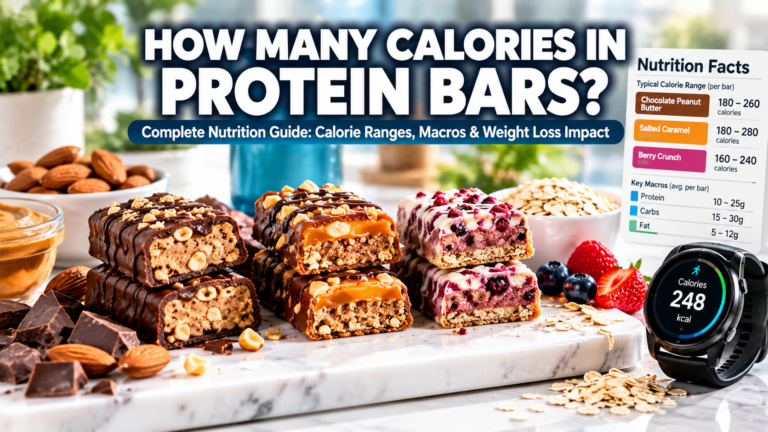
You’re in the healthfood aisle, and every wrapper says “protein bar.” Some have 4 grams of protein and 18 grams of sugar. Others list 14 ingredients you can’t…