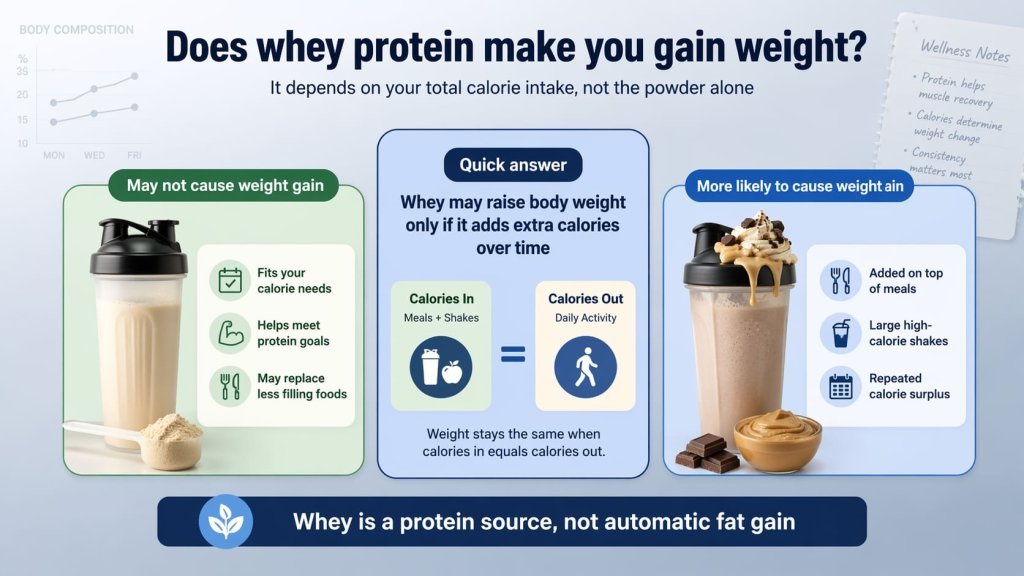
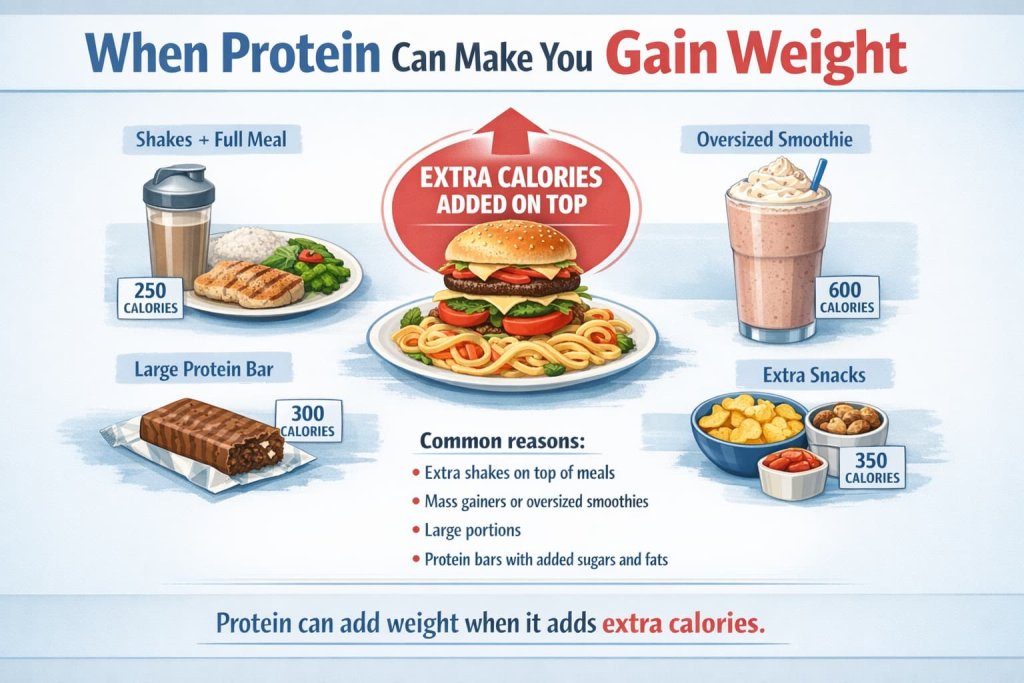
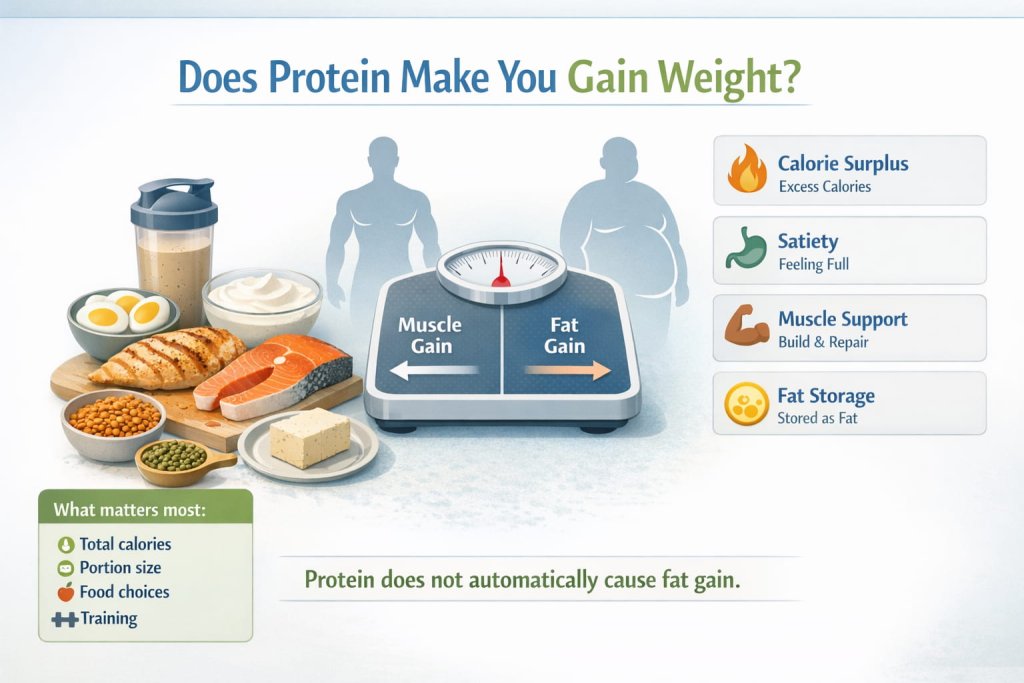
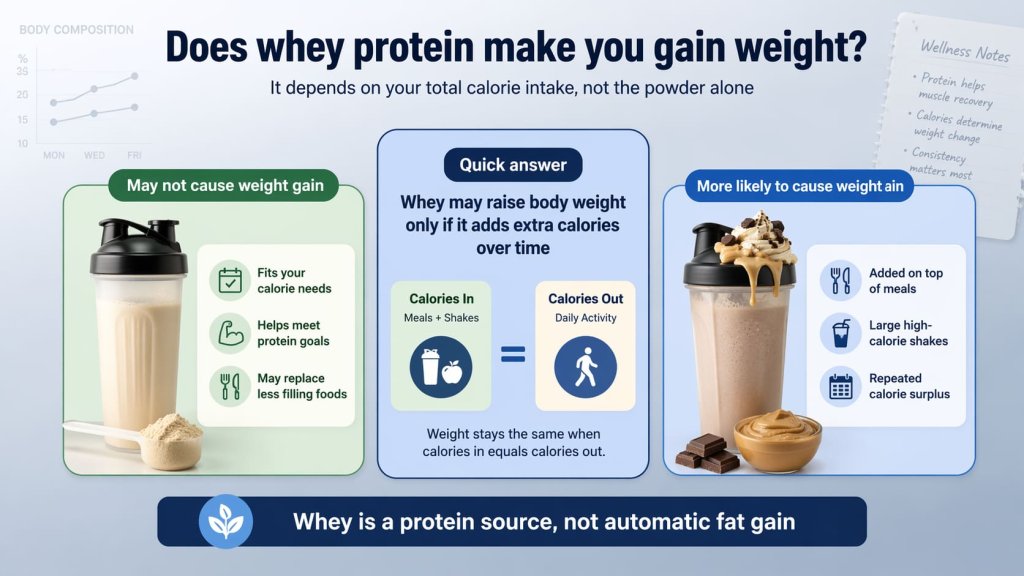
Protein powder can make you gain weight if it adds extra calories to your daily diet. However, it does not automatically cause weight gain or make you gain body fat.
If you shop for protein powder at Walmart, Target, Costco, or a local grocery store in the United States, you will find many types. Some are made for muscle growth, while others are sold as meal replacements or weight gain supplements. It can be hard to know what a daily shake will do to your body.
The simple answer is that protein powder contains calories. If you drink it on top of your usual meals and snacks, you may eat more calories than your body uses. Over time, this extra energy can lead to weight gain. If you use a shake to replace another food with a similar number of calories, your weight may stay much the same.
Protein also helps your body repair and build muscle. When you combine enough protein with regular strength training, you may gain lean muscle over time. This is different from gaining body fat, and the result depends on your diet, training, sleep, and overall health.
In this guide, I explain how protein powder affects body weight, which ingredients matter, how to read a nutrition label, and how to use a shake without unwanted weight gain. You will also learn how to choose a serving that fits your personal goal.
Source: wellfitinsider.com
Will Protein Powder Make Me Gain Weight?
Yes, protein powder can contribute to weight gain, but it depends on how much you consume and what you eat during the rest of the day. Protein itself is not a special weight-gain ingredient. It is a nutrient that provides energy and supports many important body functions.
One gram of protein provides about 4 calories. A serving with 25 grams of protein therefore provides about 100 calories from protein alone. The full serving may contain more calories because many powders also contain carbohydrates, fats, flavorings, and other ingredients.
Your body uses calories for basic functions, movement, digestion, and exercise. When you regularly consume more energy than you use, the extra energy can be stored. This may increase your body weight over time.
For example, drinking a 150-calorie shake after your usual meals adds energy to your daily diet. If you do not reduce other food intake or increase energy use, this extra amount may contribute to weight gain. The same shake may have little effect if it replaces a snack with a similar calorie value.
The key point is that protein powder is a convenient source of protein, not a guaranteed way to gain weight. The effect depends on your full eating pattern.
Source: wellfitinsider.com
For weight maintenance
Use a shake to fill a protein gap or replace another snack with a similar calorie amount.
For weight loss
Choose a suitable serving and include its calories in your daily food plan.
For weight gain
Use protein powder as one part of a balanced eating plan that provides enough total calories.
For muscle growth
Combine adequate protein with progressive resistance training and enough recovery.
Does Protein Powder Cause Fat Gain?
Protein powder does not directly turn into body fat simply because you drink it. However, protein still provides energy. If your total calorie intake stays above your body’s needs, some of the extra energy can be stored as fat.
This means even a low-sugar protein powder can contribute to fat gain if you consume too much of it on top of your normal diet. The words low carb, clean protein, or high protein on a package do not mean the product is calorie-free.
Look at the full nutrition label rather than judging a powder by its protein content alone.
Total calories matter
Your overall calorie intake is more important for weight change than the presence of protein powder in your diet.
Extra ingredients matter
Milk, cream, sugar, nut butter, and other additions can increase the calories in a shake.
How Protein Powder Affects Your Body Weight
Protein powder can affect your weight in different ways because protein supports both energy balance and muscle repair. Understanding these two roles helps explain why two people can use the same powder and get different results.
When you exercise, especially during strength training, your muscles experience small amounts of stress. Your body uses amino acids from protein to repair muscle tissue. With regular training and enough nutrition, this process can support muscle growth.
At the same time, your body still needs enough total energy to function. If you consistently consume more calories than you use, your weight may rise. The amount of muscle and fat you gain depends on several factors, including your training routine and calorie intake.
This is why the number on your bathroom scale does not tell the whole story. A person who gains muscle may see their weight increase even when their waist size stays similar.
Source: groomingwise.com
Muscle repair
Protein supplies amino acids that help repair and maintain muscle tissue after physical activity.
Muscle development
Adequate protein can support muscle growth when combined with a suitable resistance training plan.
Energy intake
Protein calories count toward your daily energy intake, just like calories from carbohydrates and fats.
Body composition
Changes in muscle and fat can happen at the same time, so scale weight alone may not show the full result.
Can Protein Powder Increase Muscle Weight?
Yes, protein powder can help support muscle growth when your body needs more protein than your regular diet provides. However, drinking protein shakes without strength training is unlikely to produce meaningful muscle growth on its own.
Resistance exercises such as squats, pushups, rows, and weightlifting give your muscles a reason to adapt. Protein provides the building materials needed for repair and growth.
Research on resistance training and protein supplementation has found small additional gains in muscle size and strength from extra protein intake. These benefits are not unlimited. Taking more protein does not keep increasing muscle growth forever.
If your goal is to build muscle, focus on a regular training plan, adequate food intake, and consistent recovery rather than relying on larger shakes.
Train consistently
Use resistance exercises that gradually challenge your muscles.
Eat enough protein
Spread suitable protein sources across your meals and snacks.
Allow recovery
Get enough sleep and give trained muscles time to recover.
Can You Gain Weight Without Gaining Muscle?
Yes. If you drink protein powder but do not perform resistance exercise, extra calories may still contribute to weight gain without much muscle growth.
Your body does not automatically send every gram of protein to your muscles. It uses amino acids for many functions, and it can use excess energy from protein for fuel or store energy when overall intake is too high.
This is why protein intake and exercise should work together. A shake alone cannot replace the physical stimulus needed to build stronger muscles.
How Many Calories Are in Protein Powder?
The calorie content of protein powder depends on its ingredients, serving size, and type. Some basic powders contain relatively few calories, while meal replacement products and mass gainers may contain much more.
A common serving of whey protein provides around 100 to 150 calories, although some products fall outside this range. Plant-based powders can have similar or different calorie levels depending on the protein source and added ingredients.
The best way to know how much energy you are consuming is to check the Nutrition Facts label. Pay attention to the serving size because the scoop included in the package may not match the amount you actually use.
Also check whether the listed nutrition facts apply to the dry powder alone or to a prepared shake. Adding milk, fruit, oats, or peanut butter can change the total.
Source: nutritioncult.com
Plain whey protein
Often provides about 100 to 150 calories per serving, depending on the product.
Plant-based protein
May provide a similar calorie amount, but ingredients and serving sizes vary.
Meal replacement powder
May contain more calories because it can include carbohydrates, fats, vitamins, and minerals.
Mass gainer
Often contains substantially more calories because it is designed to help increase total energy intake.
Does Mixing Protein Powder With Milk Cause Weight Gain?
Mixing protein powder with milk can increase the calorie content of your shake. Milk provides additional protein, carbohydrates, and, depending on the type, fat.
For example, a hypothetical shake made with 120 calories of protein powder and 100 calories of milk contains about 220 calories. If you use whole milk, the total may be higher than if you use an unsweetened lower-calorie milk alternative.
This does not mean you should avoid milk. It simply means you should count the full drink rather than looking only at the powder label.
Whole milk
Adds protein, carbohydrates, and more fat than most lower-fat milk options.
Skim milk
Adds protein and carbohydrates with less fat.
Unsweetened almond milk
Often adds fewer calories, but usually provides much less protein than dairy milk.
Water
Adds no calories and keeps the shake’s calorie content close to the powder’s label value.
Can Protein Shakes With Peanut Butter Cause Weight Gain?
Yes, a protein shake with peanut butter can contribute to weight gain because peanut butter adds extra calories and fat. It can also make a shake more filling and provide useful nutrients.
For example, adding two tablespoons of peanut butter to a shake may add around 180 to 200 calories, depending on the brand and serving size. Adding a banana and milk can raise the total even further.
If you want to gain weight, these ingredients can help increase your energy intake. If you want to maintain or lose weight, use smaller portions or adjust the rest of your meals.
Measure portions
Use a measuring spoon instead of estimating a large serving by eye.
Check the full recipe
Add the calories from every ingredient to understand the total.
Which Types of Protein Powder Are More Likely to Cause Weight Gain?
No type of protein powder automatically causes weight gain. However, some products contain more calories per serving than others, which can make it easier to increase your daily calorie intake.
The main difference is often the product’s purpose. A basic protein powder is usually designed to add protein without a large amount of extra energy. A mass gainer is made to provide more calories and often includes substantial amounts of carbohydrates.
You should choose a powder based on your nutrition needs, food preferences, and weight goal. The protein source matters for dietary restrictions and digestion, while the calorie content matters for energy balance.
Source: groomingwise.com
Whey protein
A milk-based protein that contains all essential amino acids. Its calorie content varies by product.
Casein protein
Another milk-based protein that digests more slowly than whey. It can help increase daily protein intake.
Soy protein
A plant-based complete protein that provides all essential amino acids.
Pea protein
A plant-based option that can help people who avoid dairy or soy.
Hemp protein
A plant-based powder that may provide fiber and other nutrients, depending on processing.
Mass gainer
A high-calorie product designed to help people increase their overall energy intake.
Does Whey Protein Make You Gain Weight?
Whey protein can contribute to weight gain if it increases your daily calorie intake above your body’s needs. However, ordinary whey protein is not specifically designed to make you gain body fat.
Whey comes from milk and contains essential amino acids. It is often used by people who lift weights because it offers a convenient way to increase protein intake after exercise or between meals.
Whey concentrate may contain more lactose, fat, and carbohydrates than some whey isolate products. Whey isolate is usually more processed and often contains more protein per serving, but the exact nutrition values depend on the brand.
If you are lactose intolerant, check the label carefully. Some whey products may cause bloating or digestive discomfort. A suitable lactose-free or plant-based option may work better.
Whey concentrate
Contains whey protein along with varying amounts of lactose, carbohydrates, and fat.
Whey isolate
Usually contains a higher percentage of protein and less lactose and fat.
Whey hydrolysate
Contains protein that has been partially broken down through processing.
Does Plant-Based Protein Powder Cause Weight Gain?
Plant-based protein powder can also contribute to weight gain if it adds extra calories to your diet. Its source does not remove the basic relationship between energy intake and body weight.
Common plant protein sources include pea, soy, rice, and hemp. Some products combine several sources to provide a broader range of essential amino acids.
Check the ingredient list and nutrition facts. Plant-based powders can contain added sugar, oils, flavorings, and other ingredients that change the calorie content.
Choose by nutrition
Compare protein, calories, added sugar, and serving size.
Check dietary needs
Look for products that fit your food allergies, preferences, and digestive needs.
How to Use Protein Powder Without Gaining Unwanted Weight
You can use protein powder without unwanted weight gain by choosing a suitable serving, counting its calories, and fitting it into your normal eating routine. You do not need to avoid protein shakes if you want to maintain your current weight.
Start by looking at your usual food intake. You may already get enough protein from eggs, chicken, fish, Greek yogurt, milk, beans, lentils, tofu, and other foods. If your diet already meets your needs, an extra shake may not offer much benefit.
If you need more protein, use a powder to fill the gap. You can mix it with water or another drink that fits your calorie needs. You can also use it in a meal or snack instead of adding it on top of everything you already eat.
Your weight may change from day to day because of fluid, digestion, salt intake, and other normal factors. Look at longer-term trends rather than reacting to one reading on the scale.
Source: flabfix.com
Step 1: Check your daily protein intake
Estimate how much protein you get from regular meals before deciding to buy or use a supplement.
Step 2: Read the Nutrition Facts label
Check calories, protein, serving size, carbohydrates, fats, and added sugars.
Step 3: Measure your serving
Use the listed serving size instead of adding several scoops without checking the nutrition values.
Step 4: Choose a suitable liquid
Use water or a suitable milk option based on your calorie and protein needs.
Step 5: Track your overall routine
Review your food intake, activity, and weight trend over several weeks.
Step 6: Adjust when needed
Reduce unnecessary shake calories or change the serving size if your weight is rising when you do not want it to.
How Much Protein Powder Should I Take Each Day?
There is no single serving amount that works for everyone. Your daily protein needs depend on body weight, age, activity, health, and training goals.
The general Recommended Dietary Allowance for protein for healthy adults is 0.8 grams per kilogram of body weight each day. This is a basic reference for healthy adults, not necessarily an ideal target for every person who exercises or wants to build muscle.
For people who exercise regularly, sports nutrition guidance often uses a higher range. The International Society of Sports Nutrition describes approximately 1.4 to 2.0 grams per kilogram of body weight per day as sufficient for most exercising individuals.
These amounts refer to total protein from food and supplements combined. They do not mean you should drink that amount of protein powder every day.
Calculate total protein
Count protein from all meals, snacks, drinks, and supplements.
Fill the remaining gap
Use only enough powder to help meet your daily target.
Avoid unnecessary excess
More protein is not automatically better once your needs are met.
How to Calculate Your Protein Needs
You can estimate your daily protein needs by multiplying your weight in kilograms by a suitable protein target. This gives you a starting point for planning your food intake.
For example, a hypothetical 150-pound adult weighs about 68 kilograms. At 0.8 grams per kilogram, the basic reference amount is about 54 grams of protein per day. At 1.6 grams per kilogram, the amount would be about 109 grams per day.
The higher example may be useful for some people who perform regular resistance training, but it is not a universal requirement. Your health, activity, and overall diet can change the appropriate target.
Basic adult reference
Body weight in kilograms multiplied by 0.8 grams.
Illustrative active-person target
Body weight in kilograms multiplied by 1.4 to 2.0 grams when appropriate for regular exercise.
Can You Use Protein Powder While Trying to Lose Weight?
Yes, protein powder can fit into a weight-loss plan. It provides protein, which helps maintain muscle tissue and can make meals and snacks more satisfying.
The important part is how you use it. A shake can replace a higher-calorie snack or help you meet your protein needs while keeping your overall calorie intake within your plan.
Protein is also useful during weight loss because your body needs enough nutrients to maintain muscle. Combining an appropriate protein intake with resistance exercise can help support lean muscle while you lose body fat.
However, a protein shake does not burn fat by itself. It cannot cancel out a large calorie surplus, and drinking several shakes a day may make it harder to manage your total intake.
Source: wellfitinsider.com
Choose a suitable calorie level
Look for a powder that fits your daily energy needs rather than choosing the highest-calorie option.
Keep meals balanced
Include vegetables, fruits, whole grains, healthy fats, and other protein sources.
Use resistance training
Strength exercise helps support muscle maintenance during weight loss.
Watch added ingredients
Large amounts of honey, syrup, peanut butter, or cream can turn a small shake into a high-calorie drink.
Is Protein Powder Good for Weight Loss?
Protein powder can be useful for weight loss when it helps you meet your protein needs without adding too many calories. It is a convenient option for people who have busy schedules or struggle to get enough protein from regular meals.
A shake made with water and a suitable protein powder may provide a simple snack. You can also add protein powder to plain yogurt or oatmeal, but remember that the other ingredients add calories.
Whole foods should still make up a large part of your diet. They provide fiber, vitamins, minerals, and other nutrients that a basic protein powder may not contain.
Can Protein Powder Help Reduce Hunger?
Protein can help you feel full after eating, although the effect varies between people. A protein shake may be more satisfying than a drink that contains mostly added sugar.
However, liquid meals do not always provide the same level of fullness as solid foods. If a shake leaves you hungry, consider having it with a balanced meal or snack instead of using it as your only source of nutrition.
Your daily eating pattern matters more than one drink. Include enough fiber, protein, and other nutrients to support steady energy and satisfaction.
Why Might You Gain Weight After Starting Protein Powder?
If your weight increases after you start using protein powder, the supplement may be one part of the reason, but it is not always the cause. Changes in your food intake, exercise routine, fluid balance, and digestion can also affect the scale.
A new shake may add calories without you noticing. For example, you might drink it after breakfast, lunch, and dinner instead of using it to replace a snack or fill a protein gap.
You may also start exercising more often at the same time. Strength training can change muscle size and the amount of stored water in your muscles. This can affect scale weight even when body fat has not increased.
Rather than stopping a supplement after one higher reading, review your overall routine and look for a lasting pattern.
Source: nutritioncult.com
Extra daily calories
The shake may add energy on top of your regular meals.
Large serving sizes
Using more powder than the label serving can increase calorie intake.
High-calorie additions
Milk, oats, peanut butter, bananas, and sweeteners can increase the total.
Muscle and water changes
A new resistance training routine may change lean mass and temporary water storage.
Digestive changes
Some products may cause bloating or discomfort, which can affect how your abdomen feels.
Does Protein Powder Cause Bloating?
Some protein powders can cause bloating, gas, or stomach discomfort. This does not mean they are directly causing body fat gain.
Whey concentrate may contain lactose, which can be difficult for people with lactose intolerance to digest. Certain sugar alcohols, fibers, gums, and other additives can also cause digestive symptoms in some people.
If you notice discomfort after drinking a shake, check its ingredients and serving size. You may tolerate a smaller serving or a different protein source better.
Persistent or severe digestive symptoms should be discussed with a healthcare professional rather than managed by repeatedly changing supplements.
Check lactose
Consider whether dairy-based products trigger your symptoms.
Review additives
Look for ingredients that may cause digestive discomfort.
Try a smaller serving
A smaller amount may be easier to tolerate, if the product is otherwise suitable.
How to Tell Whether You Are Gaining Muscle or Fat
You cannot reliably tell whether weight gain is muscle or fat by looking at the scale alone. Both can increase body weight, and both can change during a muscle-building program.
Consider several signs together. Improvements in strength, workout performance, and muscle measurements may support the idea that your training is producing useful changes. A steadily increasing waist measurement alongside a rising weight may suggest that some fat gain is also occurring.
These signs are not perfect measurements. For a clearer picture, use consistent measurements over several weeks and consider help from a registered dietitian or qualified fitness professional.
Body weight trend
Compare regular readings taken under similar conditions.
Strength progress
Track the weights, repetitions, and exercises you can perform.
Waist measurement
Measure at the same location and under similar conditions.
Clothing fit
Notice longer-term changes without treating them as a precise body composition test.
Common Mistakes That Can Lead to Unwanted Weight Gain
Many people use protein powder with good intentions but overlook how much energy their shakes provide. Small choices can add up, especially when you drink several shakes every day.
The most useful approach is to treat protein powder like food. Measure it, count its calories, and consider what it adds to your usual diet.
Avoid using supplement marketing as a substitute for checking the nutrition facts. A product labeled as healthy, natural, or high protein can still contain a large amount of energy.
Source: flabfix.com
Drinking shakes without checking calories
A shake can add more calories than you expect, especially when it contains several ingredients.
Taking several scoops at once
More powder does not automatically lead to more muscle growth.
Using mass gainers without a clear need
These products can provide a large calorie load that may not fit your weight goal.
Ignoring regular meals
Replacing too many meals with shakes can reduce food variety and fiber intake.
Expecting protein to replace exercise
Protein supports muscle repair, but resistance training provides the stimulus for muscle growth.
Ignoring digestive symptoms
Persistent bloating or discomfort may signal that a product or ingredient does not suit you.
Does Taking Protein Powder Before Bed Cause Weight Gain?
Taking protein powder before bed does not automatically cause weight gain. The total amount of energy you consume across the day matters more than the time you drink a shake.
A nighttime shake can be useful if it helps you meet your protein needs. Casein is often used before bed because it digests more slowly than whey, but it is not required for everyone.
If you already meet your protein needs, an extra nighttime shake may simply add calories without providing much additional benefit.
Does Drinking Protein Powder Without Working Out Cause Weight Gain?
It can contribute to weight gain if it adds extra calories to your diet. However, you do not need to exercise to digest or use protein.
Protein supports tissue repair, normal body functions, and other processes even when you are not following a workout plan. The main difference is that resistance training provides an additional reason for your muscles to grow.
If you do not exercise regularly, you may not need a sports-focused protein supplement. Whole foods can often meet your daily needs.
Is Protein Powder Safe for Everyday Use?
Protein powder can be suitable for many healthy adults when used in reasonable amounts, but it is not necessary for everyone. The safety of a product depends on its ingredients, quality, serving size, and your health.
The National Institutes of Health Office of Dietary Supplements explains that protein helps build, maintain, and repair muscles. It also notes that many athletes can meet their protein needs through food, while supplements can be useful when getting enough protein from meals is difficult.
More protein does not always mean better results. Excess intake can displace other important foods, and a very high-protein diet may not be suitable for people with certain medical conditions.
People with kidney disease or other conditions that affect protein needs should speak with their healthcare provider before using protein supplements. Pregnant or breastfeeding people, teenagers, and people who take regular medications should also seek appropriate advice before starting a sports supplement.
In the United States, dietary supplements are regulated differently from prescription medicines. A product’s presence in a store does not mean the FDA has approved it for safety or effectiveness before sale. Choose products carefully and look for credible independent quality testing when available.
Source: groomingwise.com
Check the ingredient list
Review protein sources, sweeteners, allergens, stimulants, and other added ingredients.
Check serving instructions
Do not assume that a larger serving is more effective.
Look for independent testing
Programs such as NSF Certified for Sport and Informed Choice can provide additional quality checks for participating products.
Consider your medical history
Ask a qualified healthcare professional whether a protein supplement fits your health needs.
Can Too Much Protein Damage Your Kidneys?
People with healthy kidneys generally tolerate normal dietary protein intake, but very high protein intake may not be suitable for everyone. People with chronic kidney disease may need an individualized protein plan.
Your kidneys help remove waste products formed when your body processes protein. If kidney function is reduced, your protein needs may differ from those of a healthy adult.
Do not follow an extreme high-protein diet based on advice from a fitness influencer or supplement label. If you have kidney disease, ask your doctor or renal dietitian to set an appropriate intake.
Can Protein Powder Replace Regular Meals?
A basic protein powder is not a complete meal replacement. It may provide protein but lack enough fiber, healthy fats, carbohydrates, vitamins, and minerals for a balanced meal.
Some meal replacement products are designed to provide more nutrients, but their nutrition content still varies. Read the label and compare the product with your actual meal needs.
Whole foods should remain an important part of your eating routine. Eggs, beans, fish, yogurt, vegetables, fruit, and whole grains offer a wider range of nutrients.
How to Choose Protein Powder for Your Weight Goal
The right protein powder depends on your goal, dietary needs, and daily calorie intake. You do not need to buy an expensive product or choose a powder with the most protein per scoop.
Start with a simple comparison of calories, protein, added sugar, fat, and serving size. Then check whether the protein source fits your food preferences and digestion.
A basic whey or plant-based powder may work if you only need extra protein. A mass gainer may be useful for someone who struggles to eat enough calories, but it is unnecessary if your daily food intake already supports your goal.
Source: nutritioncult.com
For weight maintenance
Choose a powder with a calorie amount that fits your normal meals and snacks.
For weight loss
Look for a suitable protein serving without excessive added calories or sugar.
For muscle growth
Choose a convenient protein source and combine it with a structured resistance training plan.
For intentional weight gain
Consider a higher-calorie shake only if ordinary meals are not enough to meet your energy needs.
For dairy-free diets
Compare soy, pea, rice, and blended plant protein products.
What Should You Check on a Protein Powder Label?
The Nutrition Facts panel is one of the most useful parts of a protein powder package. It shows how much energy and protein you get from a stated serving.
Check the actual scoop size because two brands may use different serving weights. Also review added sugars, saturated fat, allergens, and any ingredients that may not suit your needs.
If you are an athlete subject to drug testing, consider a product with suitable independent sport certification. Certification can help reduce certain contamination risks, but it does not guarantee that a supplement will improve performance.
Calories
Shows how much energy each serving adds to your diet.
Protein
Shows how much protein the serving provides.
Added sugar
Helps you compare products with different sweeteners and flavorings.
Serving size
Shows the amount of powder used for the listed nutrition values.
Allergens
Helps identify milk, soy, and other ingredients that may cause problems for you.
Is a Mass Gainer Better Than Regular Protein Powder?
A mass gainer is not automatically better. It is simply designed for a different purpose. Regular protein powder mainly adds protein, while a mass gainer usually provides extra carbohydrates and calories as well.
If you have trouble eating enough food to gain weight, a mass gainer may make it easier to increase your calorie intake. However, you can also make a higher-calorie shake at home using milk, oats, fruit, yogurt, and nut butter.
If you want to maintain your current weight or lose body fat, a mass gainer may add more calories than you need. A regular protein powder or whole-food protein source may be more suitable.
Practical Examples: How Protein Powder Changes Your Daily Calories
A few simple examples can show why the same protein powder may lead to different weight outcomes. These examples are hypothetical and use estimated calorie values, not measurements from a specific product.
Imagine that your usual daily food intake already provides enough energy to maintain your weight. Adding a 150-calorie shake every day without changing anything else increases your energy intake.
Now imagine that you replace a 150-calorie snack with the same shake. Your total calorie intake may stay about the same. This is why the way you use a supplement matters as much as the powder itself.
Source: wellfitinsider.com
Example 1: Adding a shake
Your usual diet provides 2,000 calories. You add a 150-calorie shake, bringing the total to 2,150 calories.
Example 2: Replacing a snack
Your usual diet provides 2,000 calories. You replace a 150-calorie snack with a 150-calorie shake, keeping the total near 2,000 calories.
Example 3: Making a large shake
A 120-calorie powder serving, 150 calories of milk, 100 calories of banana, and 190 calories of peanut butter create a shake with about 560 calories.
What Happens If You Drink Protein Powder Every Day?
Drinking protein powder every day does not automatically cause weight gain. The outcome depends on your daily calorie intake and whether the supplement helps you meet a real protein need.
If your meals already provide enough protein, drinking an additional shake may not offer much extra value. If your meals are low in protein, a suitable serving may help you meet your needs.
Daily use is not required for everyone. You can use protein powder on workout days, rest days, or only when your food intake falls short. Your overall nutrition pattern is more important than following a rigid shake schedule.
How Long Does It Take to Gain Weight From Protein Powder?
There is no fixed time because protein powder does not produce weight gain on its own. Changes depend on the size of your calorie surplus, your activity level, and your individual body response.
If a shake creates a consistent calorie surplus, weight changes may become noticeable over several weeks. A single day of higher calorie intake does not predict a lasting change.
If you are trying to gain muscle, progress generally takes time. Consistent resistance training, enough food, and recovery are all important parts of the process.
Important Factors That Can Change Your Weight
Protein powder is only one small part of weight management. Your age, activity, sleep, health, medication use, and eating habits can all affect how your body responds to changes in food intake.
For example, a person who starts lifting weights may use more energy and gain muscle over time. Another person who is less active may not use the extra calories from a daily shake in the same way.
Sleep and stress can also affect appetite and daily habits. Some medical conditions and medicines can influence body weight, so unexplained changes should not always be blamed on a supplement.
If your weight changes quickly without a clear reason, or if you experience swelling, unusual fatigue, or other concerning symptoms, seek medical advice.
Source: groomingwise.com
Age
Body composition and energy needs can change as you get older.
Physical activity
Daily movement and exercise affect how much energy your body uses.
Sleep
Poor sleep can affect appetite, food choices, and weight management.
Medical conditions
Some health conditions can affect body weight and nutrition needs.
Medication
Some medicines can influence appetite, fluid balance, or body weight.
When Should You Talk to a Healthcare Professional?
Speak with a healthcare professional before using protein powder if you have kidney disease, liver disease, a history of eating disorders, or another condition that affects your diet.
A registered dietitian can help you estimate your protein needs and choose foods or supplements that fit your health goals. This can be especially helpful if you have food allergies, digestive problems, or several dietary restrictions.
Do not use protein powder to treat unexplained weight loss or other health symptoms without medical advice. Unplanned weight changes can have causes that need proper assessment.
Unexplained weight changes
Seek advice if your weight changes without an obvious reason.
Existing kidney problems
Ask your healthcare provider about a safe protein intake.
Ongoing digestive symptoms
Discuss persistent pain, diarrhea, or severe bloating.
Medication use
Check whether a supplement is suitable alongside your current medicines.
Frequently Asked Questions
Q
Will protein powder make me gain weight if I do not work out?
Yes, it can contribute to weight gain if it adds extra calories to your daily diet. You do not need to exercise for your body to use protein, but resistance training helps support muscle growth.
If you do not work out, choose a serving that fits your nutrition needs rather than taking extra protein without a clear reason.
Q
Can protein powder make me gain weight without gaining fat?
It may help support muscle gain without a large increase in body fat when combined with resistance training and an appropriate diet. However, it is not possible to guarantee that every increase in body weight will come from muscle.
Your training, total calorie intake, recovery, and starting body composition all affect the outcome.
Q
Does protein powder make your stomach bigger?
Protein powder does not directly make your stomach bigger. However, some products may cause temporary bloating or gas due to lactose, sweeteners, or other ingredients.
A larger waist measurement over time may reflect changes in body fat or other factors. Persistent bloating or abdominal discomfort deserves medical attention.
Q
Will one protein shake a day make me gain weight?
One protein shake a day will not automatically make you gain weight. Its effect depends on its calorie content and whether you add it to your usual diet or use it to replace another food.
A 120-calorie shake used in place of a similar snack may have little effect on your total calorie intake. The same shake added every day may contribute to weight gain if it creates a lasting calorie surplus.
Q
Is whey protein more likely to cause weight gain than plant protein?
Neither whey nor plant protein automatically causes more weight gain. The total calories in the serving and your overall food intake matter more than the protein source.
Compare the nutrition labels because different brands may contain different amounts of protein, fat, carbohydrates, and added sugar.
Q
Should I stop drinking protein powder if I gain weight?
Not necessarily. First, check whether the weight increase is a lasting trend and whether the shake has added more calories than you intended.
You may be able to adjust the serving size, change the ingredients, or use the shake to replace another snack. If your weight changes unexpectedly or you have other symptoms, speak with a healthcare professional.
Q
Can beginners use protein powder to build muscle?
Yes, beginners can use protein powder if they need help meeting their daily protein needs. It is a convenient food supplement, not a requirement for building muscle.
A beginner can make progress with regular strength training, balanced meals, enough protein, and good recovery. Whole foods can provide the protein needed for muscle growth too.
Q
Is protein powder better than eating high-protein foods?
Protein powder is convenient, but it is not automatically better than whole foods. Foods such as eggs, fish, chicken, yogurt, beans, lentils, and tofu provide protein along with other nutrients.
A basic protein powder may be useful when you have limited time or difficulty meeting your protein needs. A balanced diet should still include a variety of whole foods.
Q
Can I drink protein powder on rest days?
Yes. Your muscles continue to repair and adapt on rest days, so your daily protein needs do not disappear when you skip a workout.
You can use a shake on a rest day if it helps meet your total protein needs. You do not need an extra serving if your meals already provide enough.
✦ Wrapping Up
Conclusion
So, will protein powder make me gain weight? It can, but the result depends on your total calorie intake, serving size, and daily activity. Protein powder itself does not automatically cause fat gain. It simply adds protein and calories to your diet.
If you want to maintain your weight, choose a serving that fits your normal food intake. If you want to lose weight, use protein powder carefully within a balanced eating plan. If you want to gain muscle, combine adequate protein with regular resistance training and enough recovery.
Remember that more protein does not always mean better results. A balanced diet, suitable exercise, and consistent habits are more useful than relying on several large shakes each day. Whole foods should remain the foundation of your nutrition, with supplements filling gaps when needed.
💡 Key Takeaway
Before your next shake, check its serving size, calories, and protein content. Compare those numbers with your daily food intake, then decide whether the shake should replace a snack or add protein to your existing diet. Choose the amount that supports your weight goal without adding calories you do not need.
Are Pure Protein bars healthy? Learn about their protein, sugar, calories, ingredients, benefits, and possible drawbacks before adding them to your diet.