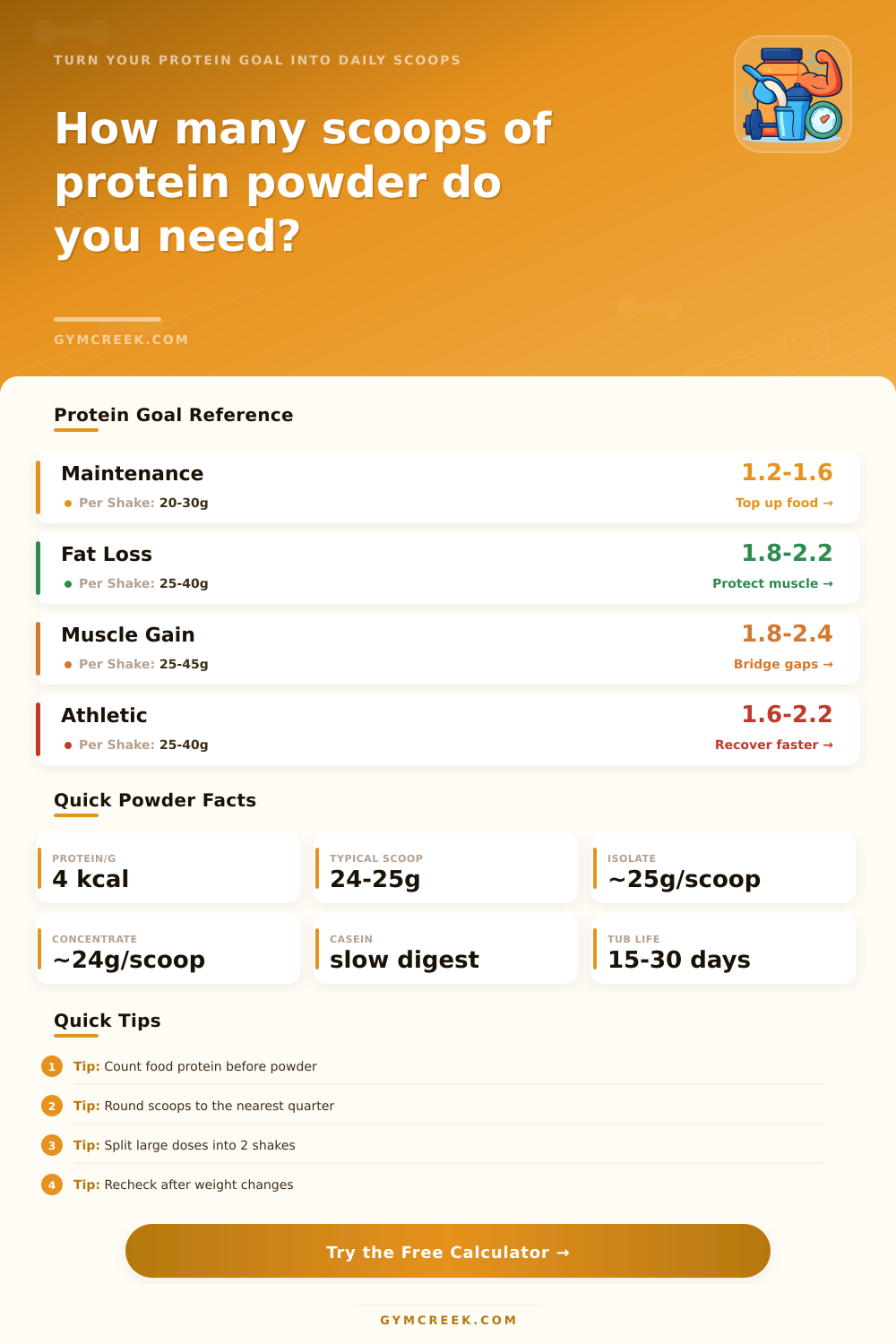
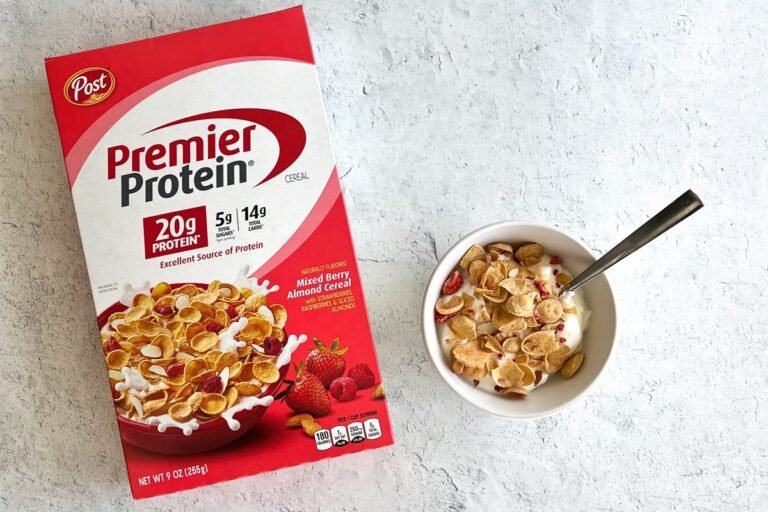
Most healthy adults need zero to two servings of protein powder per day, depending on how much protein they get from food, their body weight, activity level, and fitness goals.
If you shop for groceries, cook at home, or visit a gym in the United States, you have probably seen protein powder advertised as an easy way to build muscle and meet daily nutrition goals. A scoop in a morning smoothie or a shake after a workout can be convenient. However, drinking several servings every day is not automatically better.
The right number of servings depends on your total daily protein needs. For example, an adult who gets enough protein from chicken, eggs, fish, beans, milk, and other foods may not need a supplement at all. Someone who struggles to eat enough protein may benefit from one serving, while a person with a larger protein gap may occasionally need two.
I recommend thinking of protein powder as a helper rather than the main source of protein in your diet. First, estimate how much protein you need. Next, count the protein in your regular meals. Then use powder only to fill the difference. This simple method helps prevent unnecessary servings and makes your daily intake easier to manage.
There is no universal serving limit that applies to everyone. Your health, age, body size, exercise routine, food choices, and medical needs all matter. People with kidney disease or other conditions that affect protein requirements should get individual advice before increasing their intake.
Source: macronutrients.com
How Many Servings of Protein Powder Should You Take Each Day?
For many healthy adults, zero to two servings of protein powder per day is a practical range. The correct amount depends on how much protein you get from regular meals and how much you need to support your health or exercise routine.
One serving may provide around 20 to 30 grams of protein, although products differ. If your meals already provide enough protein, adding another shake may offer little extra value. If your meals fall short, a serving can help close the gap.
The most useful approach is to calculate your daily protein target instead of following a fixed number of scoops. A protein supplement should support your diet, not replace a balanced eating pattern.
Source: nutricarenow.com
No protein powder needed
Choose this approach when your regular meals already provide enough protein for your needs.
One serving daily
A single serving can help people who need a convenient way to add approximately 20 to 30 grams of protein.
Two servings daily
Two servings may help when your food intake is low compared with your daily target. Count both servings toward your total protein.
More than two servings
This is not automatically harmful for every healthy adult, but it should not be a default routine. Review your food intake, total protein, calories, and medical needs before relying on several shakes.
Is One Serving of Protein Powder Enough?
Yes, one serving can be enough if it fills the difference between your food intake and your daily protein target. For example, imagine that your target is 100 grams of protein and your meals provide 75 grams. One shake containing 25 grams would cover the gap.
You do not need another shake simply because you exercise. Your body uses protein from food and supplements in the same overall daily protein calculation. The source may differ, but the protein still contributes to your total intake.
For general nutrition
One serving may help when your normal meals provide slightly less protein than you need.
For busy schedules
A shake can provide a quick source of protein when preparing a full meal is difficult.
Can You Take Two Servings of Protein Powder Daily?
Yes, two servings may fit into the diet of a healthy adult when they help meet an appropriate protein target. For example, two servings containing 25 grams each provide 50 grams of protein from powder.
However, this amount should be considered alongside protein from breakfast, lunch, dinner, and snacks. If you already consume 100 grams from food and your target is 110 grams, two additional shakes may be unnecessary.
Try to keep whole foods as the foundation of your diet. They provide other nutrients, such as fiber, vitamins, minerals, and healthy fats, that a basic protein powder may not provide.
Check your daily total
Add the protein from both shakes to the protein in every meal.
Watch your calories
Protein shakes contain calories, and additions such as milk, nut butter, and sweeteners can increase the total.
Review your digestion
Two large servings may cause bloating or stomach discomfort in some people, especially when they contain lactose or certain sweeteners.
Understand Your Daily Protein Requirements First
Your daily protein requirement is the starting point for deciding how many servings of powder you need. The amount depends mainly on body weight, activity, age, health, and your overall nutrition.
The Recommended Dietary Allowance, or RDA, for protein for most healthy adults is 0.8 grams per kilogram of body weight per day. This is a general intake level intended to meet the needs of nearly all healthy adults. It is not necessarily an ideal muscle-building target for someone who trains regularly.
The International Society of Sports Nutrition describes a daily range of approximately 1.4 to 2.0 grams per kilogram for many healthy exercising individuals. The appropriate point within that range depends on training demands and personal circumstances.
These numbers describe total protein from all sources. They do not mean you should consume that amount from protein powder alone.
Source: i.pinimg.com
Adults with low activity
The general RDA of 0.8 grams per kilogram per day provides a basic reference for healthy adults.
People who exercise regularly
Protein needs may increase with regular training, especially when resistance exercise is part of the routine.
People building muscle
A total daily intake around 1.4 to 2.0 grams per kilogram is commonly used as a reference for healthy exercising adults.
People with medical conditions
Individual protein needs may be higher or lower depending on the condition and treatment plan.
Calculate Protein Needs by Body Weight
You can estimate your daily protein needs with a simple calculation. Convert your weight from pounds to kilograms by dividing it by 2.2. Then multiply your weight in kilograms by your chosen daily protein target.
For a general adult estimate, multiply body weight in kilograms by 0.8. For a healthy adult who exercises regularly, a sports nutrition target may fall between 1.4 and 2.0 grams per kilogram. The higher range is not a requirement for everyone.
Example for a 150-pound adult
150 pounds divided by 2.2 equals about 68.2 kilograms. At 0.8 grams per kilogram, the basic RDA is about 55 grams per day.
Example for a 180-pound adult
180 pounds divided by 2.2 equals about 81.8 kilograms. At 0.8 grams per kilogram, the basic RDA is about 65 grams per day.
Example for a 200-pound adult
200 pounds divided by 2.2 equals about 90.9 kilograms. At 0.8 grams per kilogram, the basic RDA is about 73 grams per day.
Why Active People May Need More Protein
Exercise places extra demands on your muscles. Resistance training creates small amounts of muscle damage and stimulates muscle protein synthesis, the process your body uses to repair and build muscle tissue.
Protein provides the amino acids needed for this process. People who train regularly may benefit from a higher daily intake than people who rarely exercise. However, eating more protein does not replace proper training, enough calories, sleep, or recovery.
A person who walks regularly may have different needs from someone who performs heavy resistance training five days per week. Your training volume and intensity help determine where your protein target should fall.
Walking and light exercise
A basic protein intake may be enough for many people who do not perform demanding training.
Resistance training
Regular strength workouts may increase protein needs to support muscle repair and growth.
Intense training
People with high training demands may need a more carefully planned protein intake, based on their total diet and recovery needs.
How to Calculate How Many Protein Powder Servings You Need
The easiest way to calculate your servings is to subtract the protein you get from food from your estimated daily protein target. The remaining amount is your protein gap.
You can then divide that gap by the amount of protein in one serving of your powder. This gives you an estimate of how much powder you need, rather than making you guess based on the number of scoops shown on a fitness website.
Remember that a serving is not always one scoop. Some containers define one serving as two scoops or a specific weight in grams. Always use the serving information printed on the product label.
Source: gymcreek.com
Step 1: Estimate your daily target
Use a suitable protein guideline based on your body weight, exercise habits, and health.
Step 2: Count food protein
Estimate the protein in your breakfast, lunch, dinner, and snacks.
Step 3: Find the difference
Subtract your food protein from your daily target.
Step 4: Read your powder label
Check the actual grams of protein in one labeled serving.
Step 5: Calculate your servings
Divide your remaining protein gap by the grams of protein in each serving.
A Practical Example of Daily Protein Intake
Imagine a healthy adult has a daily protein target of 120 grams. Their normal meals provide 90 grams. Their protein powder provides 25 grams per serving.
The calculation is simple: 120 minus 90 equals a 30-gram gap. One serving provides 25 grams, leaving only 5 grams to reach the target. The person may get that small amount from an ordinary snack or another meal.
There is no need to take two complete servings just to cover a small gap. This is why checking your daily food intake is more useful than following a fixed supplement schedule.
Daily target
120 grams of total protein.
Protein from food
90 grams from regular meals and snacks.
Remaining protein
30 grams.
Protein from one serving
25 grams.
Practical result
One serving provides most of the missing protein.
How Many Servings Are Needed for Different Protein Gaps?
The following examples show how your protein gap changes the number of servings you may need. These are hypothetical calculations, not universal daily recommendations.
The examples assume that one serving provides 25 grams of protein. If your product provides 20 or 30 grams, your calculation will change.
A 15-gram gap
You may not need a full serving. A smaller portion or protein-rich food may be enough.
A 25-gram gap
One full serving provides approximately the amount needed.
A 40-gram gap
One serving provides 25 grams, and the remaining 15 grams can come from food or another suitable source.
A 50-gram gap
Two servings provide 50 grams, but you can also combine one shake with protein-rich meals.
Does Your Fitness Goal Change the Number of Servings?
Yes. Your fitness goal can change your total protein needs, which may change how much powder you use. However, the goal itself does not determine the number of shakes you must drink.
Someone who wants to build muscle may need more total protein than someone who is lightly active. A person trying to lose weight may also want to maintain muscle while reducing calories. In both cases, food and supplements should work together.
The key is to choose a reasonable daily target and use protein powder only when your normal meals do not provide enough.
Source: thehoneypotbakery.com
Muscle growth
Focus on adequate daily protein, progressive strength training, enough food, and recovery.
Weight management
Protein can support fullness and help maintain muscle during weight loss, but total calorie intake still matters.
Protein can support muscle repair when combined with adequate rest and overall nutrition.
How Many Servings for Muscle Building?
People who want to build muscle often use one serving after training or at another time when they need extra protein. Some may use two servings on days when their meals do not provide enough.
For many healthy adults who exercise regularly, a total daily intake of 1.4 to 2.0 grams per kilogram of body weight is a useful sports nutrition reference. The exact target depends on training and personal circumstances.
For example, a person weighing 75 kilograms would have a broad reference range of 105 to 150 grams per day. If meals provide 110 grams, one serving containing 25 grams may be enough to reach a target near the lower or middle part of that range.
Do not assume that more powder means more muscle. Muscle growth also depends on training quality, adequate energy, and consistent recovery.
Prioritize total intake
Count protein from all meals rather than relying only on post-workout shakes.
Train consistently
Protein works alongside resistance exercise, not as a replacement for it.
Allow recovery
Give your muscles time to recover between demanding training sessions.
How Many Servings for Weight Loss?
Protein powder can be useful during weight loss because it offers a convenient source of protein. Protein also helps you feel satisfied after meals and supports the maintenance of muscle when you lose body weight.
However, a protein shake still contains calories. Adding several shakes without adjusting your overall food intake may make it harder to maintain a calorie deficit.
One serving may be enough for someone who needs a convenient protein-rich snack. Another person may not need powder at all if meals already contain enough protein.
Choose a suitable serving
Look for a powder that provides useful protein without excessive added sugar or unnecessary calories.
Build balanced meals
Include vegetables, fruit, whole grains, and protein-rich foods.
Avoid replacing every meal
Protein powder should not become your main source of nutrition.
How Many Servings on Rest Days?
Your muscles continue to recover on days when you do not exercise. Therefore, your daily protein needs do not suddenly disappear on rest days.
You can keep the same total protein target if it remains appropriate for your training plan. However, you may need less powder if your meals provide more protein on those days.
There is no need to drink an extra shake simply because you trained the previous day. Focus on your overall daily intake.
Keep meals consistent
Continue eating enough protein throughout your recovery day.
Adjust supplement use
Skip a shake when your regular meals already meet your target.
How Much Protein Is in One Serving of Protein Powder?
Many protein powders provide approximately 20 to 30 grams of protein per serving. However, this is not a fixed industry standard. Some products provide less, while others provide more.
The weight of the powder and the amount of actual protein are two different measurements. For example, a 35-gram serving of powder may contain only 25 grams of protein. The remaining weight may come from carbohydrates, fat, flavoring, sweeteners, and other ingredients.
Always check the Supplement Facts panel or nutrition information. Look for the serving size in grams and the actual protein amount per serving.
Source: image5.slideserve.com
Serving size
The total weight of powder used for one labeled serving.
Protein content
The number of grams of actual protein supplied by that serving.
Calories
The energy supplied by protein and any other ingredients in the powder.
Added ingredients
Check sugars, flavorings, sweeteners, allergens, and other ingredients.
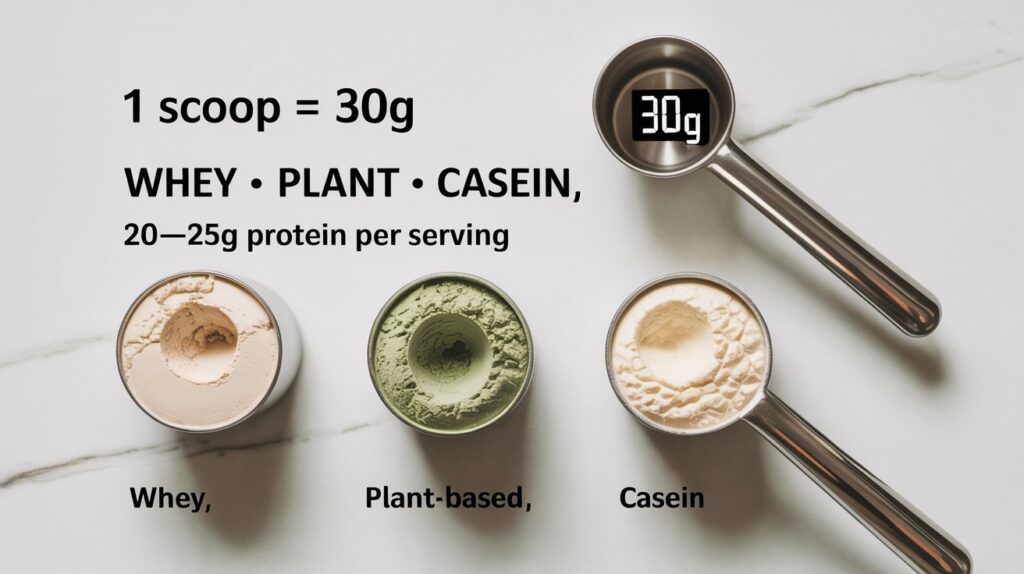
Does One Scoop Always Equal One Serving?
No. A scoop is a measuring tool, while a serving is the quantity defined by the manufacturer. Some products use one scoop per serving, while others require two scoops.
Scoop sizes also differ between brands. A scoop from one container may hold a different weight from a scoop in another container. Using the scoop without checking the label can lead to inaccurate intake calculations.
For greater accuracy, use a kitchen scale when the serving size is listed in grams. This is especially useful if you change products or use different types of protein powder.
Read the serving instructions
Check how many scoops make up one serving.
Measure the correct amount
Use the listed gram weight instead of assuming all scoops are the same.
Check protein per serving
Do not confuse the total powder weight with actual protein content.
Does Whey or Plant Protein Change Your Serving Count?
Different protein sources can provide different amounts of protein per serving. Whey, casein, soy, pea, and blended plant proteins may have different nutrition profiles and ingredient lists.
Whey protein comes from milk and contains all nine essential amino acids. Soy protein is also a complete protein source. Some plant protein products combine sources to provide a broader amino acid profile.
The serving count still depends on the protein gap in your diet. You do not automatically need more servings because a powder comes from plants instead of milk. Compare the actual protein content and overall nutritional quality.
Whey protein
A dairy-based option that commonly provides a concentrated source of complete protein.
Casein protein
Another milk-based protein that digests more slowly than whey.
Soy protein
A plant-based complete protein that can help meet daily protein needs.
Pea and plant blends
These may offer useful protein, but check the amino acid profile and protein amount on the label.
When Should You Take Your Daily Protein Powder Servings?
You can take protein powder at a time that fits your routine. There is no need to drink it at an exact minute after exercise to get value from it.
Your total daily protein intake is more important than following a strict supplement schedule. Spreading protein across meals can also help you provide your body with a steady supply of amino acids throughout the day.
For people who exercise, a protein-rich meal or shake before or after a workout can support muscle protein synthesis. The best time depends on when you last ate, your appetite, and your schedule.
Source: i.etsystatic.com
Breakfast
Add protein powder to oatmeal, yogurt, or a smoothie when breakfast contains little protein.
Before exercise
A shake may be useful if you have not eaten protein for several hours and tolerate it well.
After exercise
A protein-rich meal or shake can help meet your daily needs during recovery.
Between meals
Use a shake as a convenient snack when your regular food intake falls short.
Before bed
A protein-rich snack may help you meet your daily target, but a bedtime shake is not required for everyone.
Should You Drink Protein Powder Immediately After a Workout?
No. You do not have to drink a shake immediately after finishing your workout. Eating a protein-rich meal within a reasonable period around your training session is also useful.
Research on exercise nutrition supports consuming adequate protein before or after resistance training. However, muscle recovery continues for many hours after exercise, so the entire day’s intake matters.
If you eat a meal containing enough protein after training, you may not need a separate shake. If your next meal is several hours away, a shake can be a convenient option.
After strength training
Aim to include a suitable protein source in your post-workout meal or snack.
After cardio
Prioritize overall nutrition and adequate carbohydrates, while including enough protein throughout the day.
When a meal is available
A balanced meal can provide the protein you need without a supplement.
Can You Take Too Many Servings of Protein Powder?
Yes, using more protein powder than you need can create unnecessary problems. The main concern is not a universal number of scoops. It is the total amount of protein, calories, and other ingredients you consume, along with your individual health.
For a healthy adult, a higher protein intake may fit an active lifestyle. However, that does not mean unlimited protein powder is useful. Extra servings can displace balanced meals, add calories, increase food costs, or cause digestive discomfort.
People with chronic kidney disease may need to limit protein, depending on their stage of disease and treatment. Anyone with kidney problems should speak with a healthcare professional or renal dietitian before starting a high-protein supplement routine.
Source: macronutrients.com
Digestive discomfort
Large servings or certain ingredients may cause bloating, gas, nausea, or diarrhea.
Unnecessary calories
Extra shakes can increase daily calorie intake without providing a meaningful benefit.
Poor dietary balance
Relying heavily on powder may reduce the variety of whole foods in your diet.
Medical concerns
People with kidney disease or other conditions affecting protein metabolism may need a personalized limit.
Does Too Much Protein Damage Your Kidneys?
There is no reason to assume that a normal serving of protein powder automatically damages healthy kidneys. However, people with existing kidney disease may have different protein needs, and high protein intake may be unsuitable for some of them.
The National Kidney Foundation provides guidance for people who need to limit protein because of kidney disease. The appropriate amount depends on individual health and whether the person receives dialysis.
If you have reduced kidney function, abnormal kidney test results, or a history of kidney disease, do not follow a high-protein fitness plan without medical guidance.
Healthy adults
A suitable protein intake can be part of a balanced diet, but excessive supplementation is not automatically beneficial.
People with chronic kidney disease
Follow the protein target recommended by your healthcare professional.
People receiving dialysis
Protein requirements may differ from those of people who are not receiving dialysis. Individual guidance is important.
Can Too Much Protein Powder Cause Stomach Problems?
Yes. Some people experience digestive symptoms when they drink large amounts of protein powder. Whey concentrate, for example, may contain lactose, which can bother people who have difficulty digesting it.
Sugar alcohols, artificial sweeteners, added fiber, and certain thickeners may also cause discomfort in sensitive individuals. The specific ingredients matter as much as the protein amount.
If a shake causes repeated symptoms, stop using that product and review its ingredients. If symptoms continue or become severe, seek medical advice.
Try a smaller serving
A smaller amount may be easier to tolerate, provided it fits your nutrition needs.
Check lactose content
A lactose-free or suitable plant-based product may help people with lactose intolerance.
Review sweeteners
Some sweeteners and sugar alcohols can trigger gas or bloating.
Avoid unnecessary ingredients
Choose a simpler formula if you suspect certain additives are causing problems.
How to Choose and Use Protein Powder Safely
Choose protein powder based on its actual protein content, ingredient list, dietary suitability, and quality information. A large number on the front of a container does not tell you everything about the product.
In the United States, dietary supplements are regulated by the FDA, but they are not approved for safety and effectiveness before they are marketed in the same way as prescription medicines. Manufacturers are responsible for meeting applicable requirements.
Third-party testing can provide an additional level of confidence in product contents and quality. However, a certification does not mean that a supplement is suitable for every person or that it has been proven to produce specific fitness results.
Source: image5.slideserve.com
Read the Supplement Facts panel
Check serving size, protein grams, calories, carbohydrates, fats, and other listed ingredients.
Review allergens
Check for milk, soy, egg, or other ingredients that may trigger an allergic reaction.
Check quality testing
Look for credible independent certification, such as NSF Contents Certified or NSF Certified for Sport, when relevant.
Follow storage instructions
Keep the container sealed and store it according to the manufacturer’s directions.
Follow the labeled serving size
Do not assume that a larger scoop is necessary to meet your protein target.
What Does Third-Party Testing Mean?
Third-party testing means an independent organization evaluates a product against a defined testing or certification standard. Depending on the program, this may include checking ingredient identity, label accuracy, contaminants, and banned substances.
NSF offers different certification programs for supplements. NSF Contents Certified focuses on supplement contents and quality requirements, while NSF Certified for Sport also addresses substances prohibited in sport.
These programs have different scopes. Check the exact certification and product listing instead of assuming every certification tests for every possible contaminant.
Label accuracy
Testing can help verify whether the product contents match the declared information.
Contaminant screening
Some programs test for certain heavy metals, microorganisms, or other contaminants.
Banned substance screening
Sport-focused certification may help athletes reduce the risk of consuming prohibited substances.
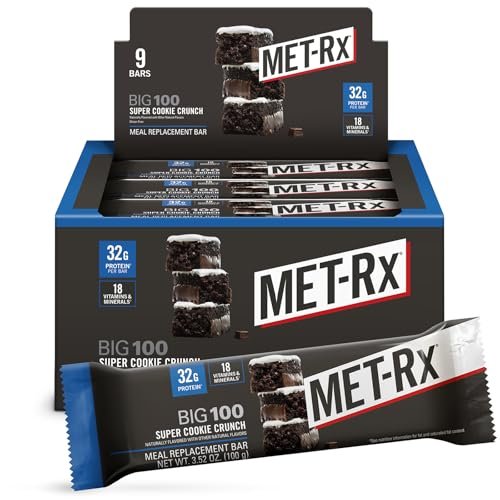
Can You Replace Meals With Protein Powder?
A basic protein powder is not a complete replacement for a balanced meal. It may provide protein but lack the range of nutrients found in foods such as vegetables, fruits, whole grains, dairy products, and healthy fats.
Some formulated meal replacement products contain added vitamins, minerals, carbohydrates, and fats. These products differ from ordinary protein powders, so check the label before treating one as a meal.
For everyday nutrition, use protein powder as an addition to meals rather than allowing it to replace most of your food.
Use whole foods regularly
Include eggs, fish, poultry, dairy, beans, lentils, nuts, and other protein-rich foods.
Add fiber-rich foods
Fruit, vegetables, and whole grains help provide nutrients that simple protein shakes may lack.
Keep meals varied
Different foods provide different vitamins, minerals, and other useful nutrients.
Common Mistakes When Taking Protein Powder Every Day
The biggest mistake is treating protein powder as if it has a fixed daily dose for everyone. Your actual needs depend on your diet, body size, exercise, and health.
Another common mistake is counting scoops instead of grams of protein. Two people can take the same number of scoops and consume very different amounts of protein because their products have different serving sizes.
A simple daily food record can help you avoid these problems. Track your meals for several days, estimate your average protein intake, and use powder only when it helps you reach a suitable target.
Source: i.etsystatic.com
Copying another person’s routine
A friend who drinks two shakes daily may have different body weight, training demands, and food intake.
Ignoring food protein
Meat, fish, dairy, eggs, beans, and lentils all contribute to your daily total.
Assuming more is better
Extra servings do not guarantee faster muscle growth or better recovery.
Ignoring the ingredient list
A product may contain allergens, sweeteners, added sugar, or ingredients you do not tolerate.
Using powder instead of balanced meals
A supplement cannot provide all the nutrients found in a varied diet.
Forgetting medical needs
A high-protein routine may be unsuitable for some people with kidney disease or other health conditions.
How to Know Whether Your Current Intake Is Appropriate
A useful starting point is to compare your average daily food intake with your estimated protein target. If the numbers are close, you may not need multiple servings of powder.
Also consider your digestion, energy, meal quality, and exercise recovery. These factors cannot prove that your protein intake is perfect, but they can help you decide whether your current routine needs attention.
If you feel uncertain, a registered dietitian can review your food record and help set a suitable protein target.
Track for several days
Record the protein in your meals and snacks rather than estimating from memory.
Compare with your target
Check whether your regular diet meets your estimated daily requirement.
Review your supplement use
Reduce unnecessary servings when your food already covers your protein needs.
Seek qualified advice
Get help if you have a medical condition, persistent digestive symptoms, or special nutrition needs.
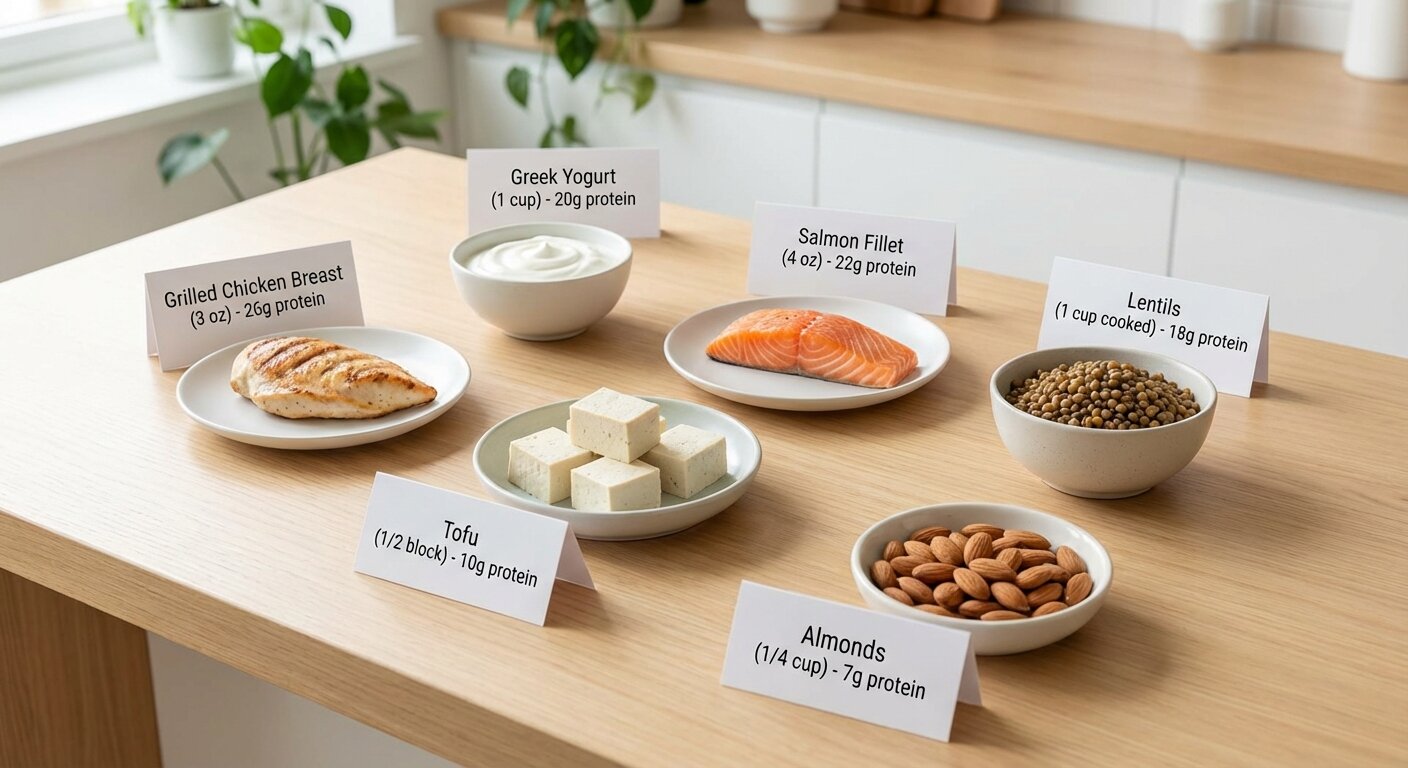
Can You Get Enough Protein Without Protein Powder?
Yes. Most people can meet their protein needs through regular foods if they eat a varied and balanced diet. Protein powder is convenient, but it is not essential for building or maintaining muscle.
Whole foods provide protein along with other nutrients. For example, eggs provide protein and several vitamins, beans provide protein and fiber, and fish provides protein along with other nutrients.
If you prefer not to use supplements, plan meals around suitable protein sources. Include them throughout the day rather than trying to get all your protein from one large meal.
Source: i.pinimg.com
Eggs
A convenient source of complete protein that works well at breakfast or in other meals.
Chicken and turkey
Lean poultry can provide substantial protein as part of lunch or dinner.
Fish
Fish provides protein and can also supply useful fats, depending on the type.
Greek yogurt
A convenient dairy food that can provide protein at breakfast or as a snack.
Beans and lentils
Plant protein sources that also provide fiber and other nutrients.
Tofu and soy foods
Useful plant-based options for people who avoid meat and dairy.
Milk and cottage cheese
Dairy foods that can help increase protein intake without using powder.
An Example of a Protein-Rich Daily Meal Plan
You can build a protein-rich day without relying on supplements. The following example shows how different food sources can contribute to your daily total.
The amounts are approximate and depend on portion size, cooking method, and the exact foods used. They are examples rather than a prescribed diet.
Breakfast
Two eggs and a serving of Greek yogurt can provide approximately 25 to 30 grams of protein, depending on portions.
Lunch
A serving of chicken with rice and vegetables may provide approximately 30 to 40 grams.
Afternoon snack
Milk, nuts, or cottage cheese can add approximately 8 to 15 grams, depending on the food and portion.
Dinner
Fish, beans, tofu, or another protein source may provide approximately 20 to 30 grams.
Frequently Asked Questions
Q
Is two servings of protein powder a day too much?
Not necessarily. Two servings may be appropriate for a healthy adult who needs extra protein to meet a suitable daily target. However, you should count the protein from all meals and snacks before deciding how much powder to use.
If your food already provides enough protein, two additional servings may be unnecessary. People with kidney disease or other medical conditions should get personalized advice before increasing their intake.
Q
Can I take protein powder three times a day?
Some people may use three servings when their dietary needs and food intake justify it, but this is not a routine requirement for most adults. Three servings containing 25 grams each would provide 75 grams of protein from powder alone.
That amount may leave less room for protein-rich whole foods and other important nutrients. Calculate your total protein requirement first and discuss higher supplement use with a registered dietitian if needed.
Q
Should I take protein powder every day?
You can use protein powder every day if it helps you meet an appropriate protein target and you tolerate the product. However, daily supplementation is not necessary when your regular diet already provides enough protein.
Your body needs protein every day, including rest days. You can get that protein from foods without using a supplement.
Q
How many grams of protein powder should I take per day?
There is no universal daily gram amount for protein powder. Many products provide around 20 to 30 grams of actual protein per serving, but the number of servings you need depends on your remaining protein gap.
For example, if your daily target is 100 grams and your meals provide 75 grams, a serving containing 25 grams may cover the difference. Count actual protein rather than the total weight of powder.
Q
Is one scoop of protein powder enough after a workout?
One scoop may be enough if it provides a suitable protein serving and helps you meet your daily needs. Many sports nutrition recommendations use approximately 20 to 40 grams of high-quality protein per feeding, depending on individual factors.
However, the scoop size varies by product. Check the label and remember that a protein-rich meal after exercise can serve the same general purpose.
Q
Can I drink protein powder twice in one day?
Yes. You can divide your protein powder intake into two servings if that makes it easier to meet your daily protein needs. For example, you might have one serving at breakfast and another after exercise.
The timing is flexible. What matters most is that your total intake is appropriate and that supplements do not replace a balanced diet.
Q
Can beginners take protein powder every day?
Beginners can use protein powder if they need extra protein, but it is not required to start exercising or building muscle. A balanced diet with enough protein can support a beginner’s nutrition needs.
Start by learning how much protein your meals provide. If you consistently fall short of your target, a suitable serving may be useful.
Q
Should I take protein powder on rest days?
You still need adequate protein on rest days because muscle repair and recovery continue when you are not exercising. However, you do not have to drink a shake if your meals already meet your protein target.
Keep your overall nutrition consistent and adjust powder use according to your food intake.
Q
Can too many protein shakes cause weight gain?
They can contribute to weight gain if they increase your total calorie intake beyond what your body uses over time. Protein powder contains calories, even when it is mixed with water.
Milk, fruit, peanut butter, and other additions can increase the calories in a shake. Include these amounts in your daily food plan if weight management is your goal.
Q
Is protein powder safe for people with kidney problems?
People with kidney disease may need to limit or carefully manage their protein intake. Their needs depend on kidney function, disease stage, treatment, and other health factors.
Do not start a high-protein supplement routine without speaking with your healthcare professional or renal dietitian. A general fitness recommendation may not be suitable for someone with kidney disease.
✦ Wrapping Up
Conclusion
The right number of protein powder servings per day depends on how much protein you need and how much you already get from food. For many healthy adults, zero to two servings is a practical range. Some people need none, while others may benefit from additional servings to meet a higher protein target.
Start with your body weight, activity level, and overall nutrition. Estimate your daily protein needs, record the protein in your meals, and calculate the remaining gap. Then choose a serving size based on the actual protein content printed on your product label.
Remember that protein powder is a supplement, not a replacement for a balanced diet. Whole foods provide protein along with fiber, vitamins, minerals, and other nutrients. Regular exercise, adequate sleep, and consistent nutrition also matter when your goal is better fitness or muscle growth.
If you have kidney disease, are pregnant or breastfeeding, are under 18, or have another condition that affects your nutritional needs, seek individual advice before following a high-protein plan. A registered dietitian can help you choose an appropriate target and decide whether a supplement is useful.
💡 Key Takeaway
Before taking another serving, calculate your daily protein target and subtract the protein you already get from food. Use protein powder only to fill the remaining gap, follow the product’s serving instructions, and prioritize a balanced diet.
If you’ve ever asked yourself what protein bars are the healthiest while standing in the snack aisle, you’re not alone. The shelf is packed, and half those…