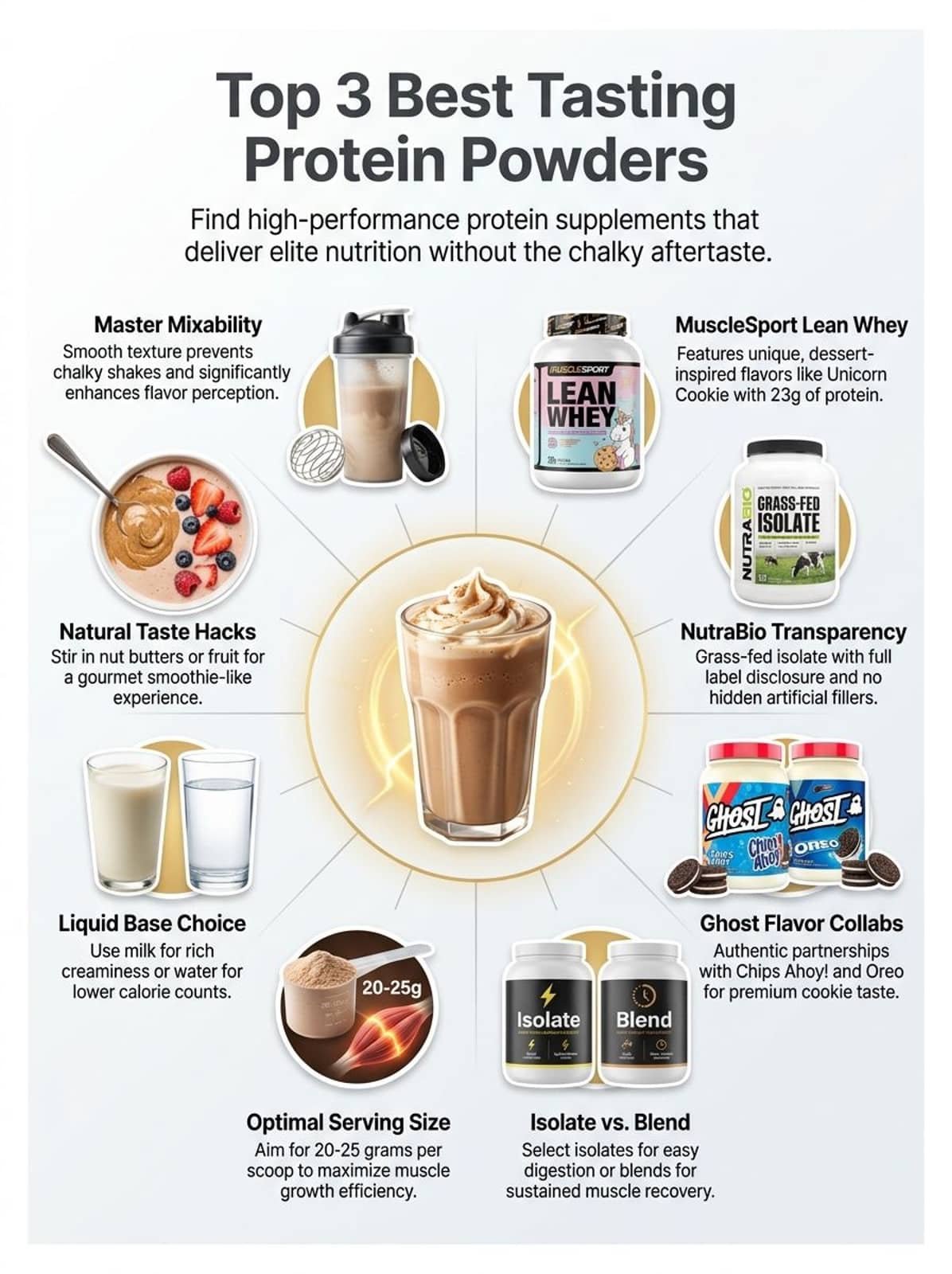
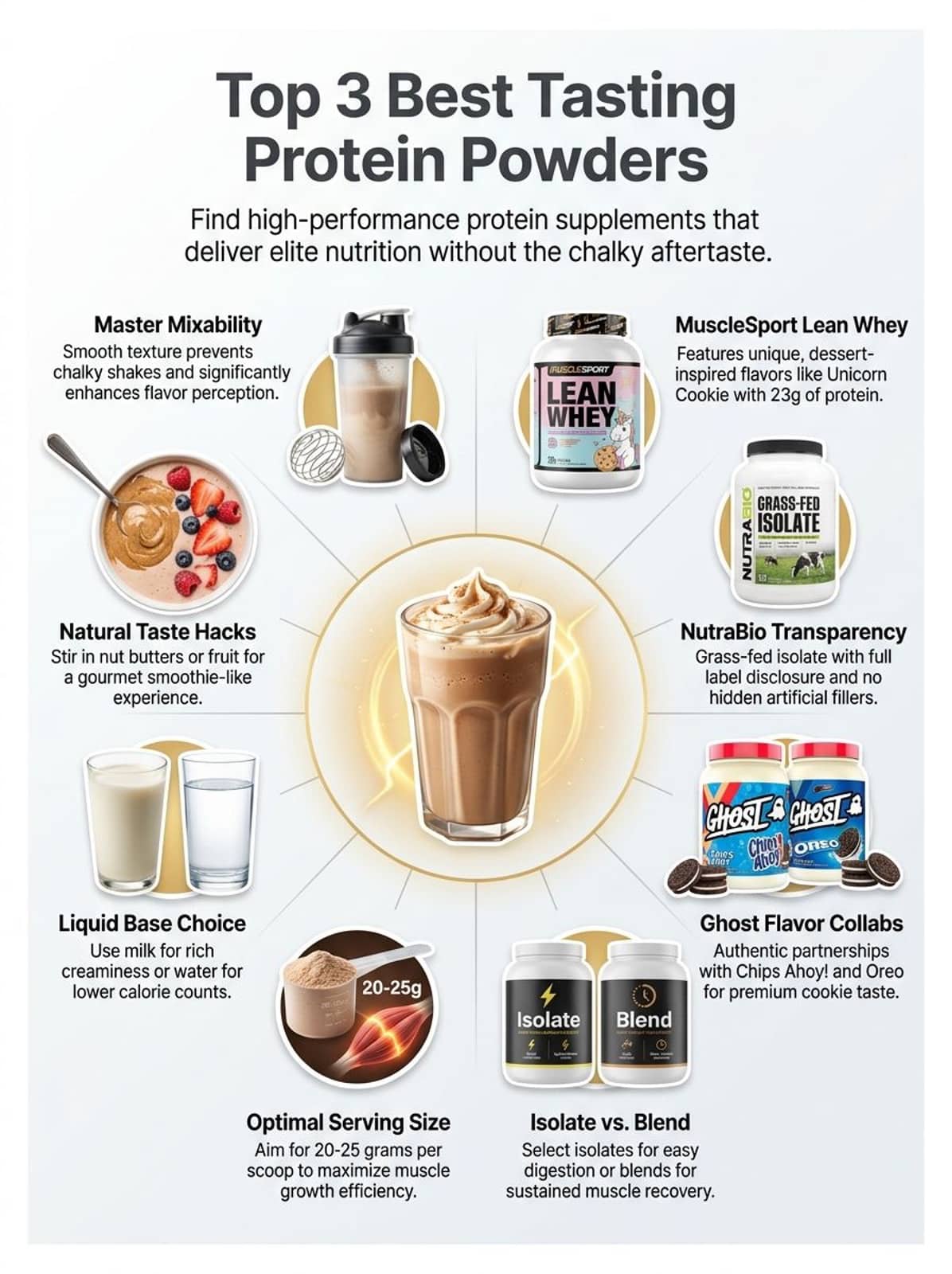
Protein powder usually tastes mildly sweet, creamy, or slightly chalky, depending on its protein source, flavor, sweeteners, and ingredients. Chocolate and vanilla are often similar to milkshake flavors, while unflavored powders can taste plain, earthy, or slightly milky.
Walk into an American grocery store or fitness shop, and you may find dozens of protein powder flavors. Some taste like chocolate milk, vanilla ice cream, or a fruit smoothie. Others have an earthy taste or a dry texture that takes some getting used to. The flavor can also change based on whether you mix the powder with water, milk, or another drink.
The answer to what protein powder tastes like is not the same for every product. Whey protein often has a mild dairy taste, while pea, soy, and other plant proteins may have stronger natural flavors. Added sweeteners, cocoa, vanilla, fruit flavoring, and thickeners also affect the final taste. Even two powders with the same flavor name can taste quite different.
If you are thinking about trying protein powder for the first time, there is no need to expect every shake to taste like a dessert. Some are smooth and pleasant, while others may feel gritty, foamy, or too sweet. Understanding these differences can help you choose a flavor and mixing method that suits your taste.
Source: sporked.com
What Does Protein Powder Taste Like Overall?
Most protein powders have a mild base taste with added flavoring and sweeteners. The result can range from a drink that tastes like chocolate milk to one that has a noticeable grain-like or earthy flavor. Some powders are smooth and creamy, while others leave a dry feeling in your mouth.
The protein itself plays a large role in the taste. Whey comes from milk, so it may have a light dairy flavor. Plant proteins come from sources such as peas, soy, rice, and seeds. These ingredients can bring natural flavors that some people describe as nutty, grassy, or earthy.
The flavor you taste also depends on how the powder is prepared. A scoop mixed with cold water may taste thin and slightly sweet. The same powder mixed with milk may taste more like a milkshake. The amount of liquid matters, too, because less liquid creates a stronger flavor.
Source: www.pinterest.com
Sweet
Many flavored powders contain sugar, stevia, sucralose, or other sweeteners. Some taste like a mild dessert, while others can be very sweet.
Creamy
Whey and some blended powders can have a creamy mouthfeel, especially when mixed with milk.
Chalky
Some powders leave a dry, powder-like feeling on the tongue. This may be more noticeable when the powder does not dissolve well.
Earthy
Pea, rice, and other plant proteins may have natural earthy, nutty, or grain-like notes.
Bitter or artificial
Certain flavorings and sweeteners can leave a bitter, chemical-like, or lingering aftertaste.
Does All Protein Powder Taste the Same?
No. Protein powders can taste very different even when they have the same advertised flavor. One chocolate powder may taste rich and cocoa-like, while another may taste more like sweetened milk. Differences in protein processing, cocoa content, sweeteners, and flavoring can explain much of this variation.
The protein source matters just as much. A vanilla whey powder may taste mild and creamy, while a vanilla pea protein may have a more noticeable earthy base. The vanilla label describes the added flavor, not the complete taste of the drink.
Protein source
Whey, casein, soy, pea, and rice proteins have different natural flavor profiles.
Recipe
Sweeteners, cocoa, flavor extracts, gums, and other ingredients change taste and texture.
Preparation
Liquid type, temperature, mixing time, and powder concentration affect the final drink.
What Do Different Protein Powder Flavors Taste Like?
The flavor name gives you a useful idea of what to expect, but it does not guarantee a particular taste. Some flavors are mild and natural, while others are strongly sweet or dessert-like. Your choice may also depend on whether you plan to drink protein powder with water, milk, or in a smoothie.
Chocolate, vanilla, strawberry, and cookies and cream are common options in the US market. These flavors are often easier to recognize than specialty blends, although their sweetness and richness can vary.
Source: dietsheriff.com
Chocolate
Chocolate protein powder often tastes like cocoa, chocolate milk, or a light chocolate dessert. Products with more cocoa may have a deeper and slightly bitter flavor. Others taste sweeter and more like a chocolate milkshake.
Vanilla
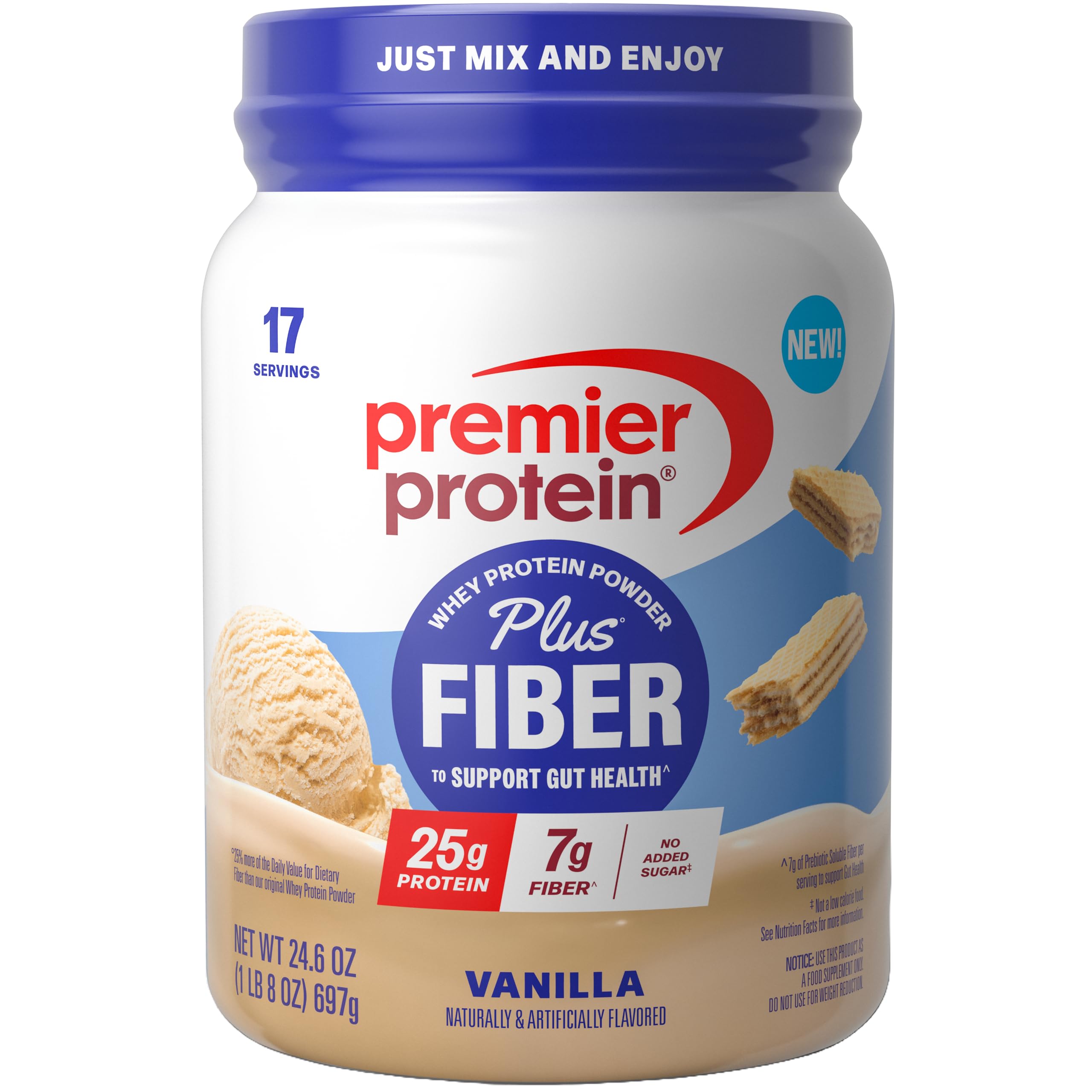
Vanilla protein powder usually has a mild, sweet, creamy flavor. It may remind you of vanilla milk or melted ice cream. Its gentle taste also makes it useful in smoothies and oatmeal.
Strawberry
Strawberry protein powder can taste like strawberry milk, candy, or a fruit smoothie. Some versions have a fresh fruit-like note, while others have a stronger artificial fruit taste.
Cookies and cream
This flavor often combines sweet cream notes with chocolate or cookie-like flavoring. Some products include small crunchy pieces, while others rely entirely on flavor ingredients.
Banana
Banana protein powder may taste like banana milk or a banana smoothie. Depending on the flavoring, it can have a ripe fruit taste or a candy-like sweetness.
Coffee and mocha
Coffee and mocha flavors combine roasted coffee notes with sweetness and, in some cases, chocolate. They may taste similar to a sweet iced coffee, but caffeine content depends on the actual ingredients.
Unflavored
Unflavored powder usually has little or no added flavoring. However, it can still taste milky, nutty, earthy, or slightly bitter because the protein ingredient has its own natural taste.
Which Protein Powder Flavor Is Easiest for Beginners?
Vanilla and chocolate are reasonable starting points if you are new to protein powder. Vanilla offers a mild flavor that works with fruit, milk, and other ingredients. Chocolate can be a good option if you already enjoy chocolate milk or cocoa drinks.
If you dislike very sweet drinks, look for a product with a less intense flavor profile. Reading the ingredient list and checking the sweetener type can help you understand what you are buying. A small sample size can also reduce the risk of purchasing a large container you may not enjoy.
For a mild taste
Consider vanilla or an unflavored option.
For a dessert-like taste
Consider chocolate, cookies and cream, or another sweet flavor.
For a fruit taste
Consider strawberry, banana, or fruit-based blends.
How Protein Sources Change the Taste
The type of protein used in a powder can change its natural flavor, smell, and texture. This is one reason why two vanilla powders may taste different. The added vanilla flavor must work with the taste of the protein ingredient underneath it.
Protein processing also matters. Different ingredients and manufacturing methods can affect how easily a powder mixes and how strong its natural flavor remains. The following comparison describes common taste tendencies, not fixed rules for every product.
Source: wellwisdom.com
Whey protein
Whey is made from a component of milk. It often has a mild dairy taste and can feel creamy when mixed. Some whey powders have a slightly milky or tangy note.
Whey isolate
Whey isolate is processed to contain a higher proportion of protein and less lactose and other milk components than many whey concentrates. Its taste can be lighter, but flavor depends on the specific formula.
Casein protein
Casein is another milk protein. It often creates a thicker, pudding-like texture. Some people enjoy this richness, while others find it heavy or pasty.
Soy protein
Soy protein may have a mild bean-like or nutty flavor. Its strength varies with processing and added flavor ingredients.
Pea protein
Pea protein can have an earthy, vegetal, or slightly beany taste. Strong flavoring may cover some of these natural notes.
Rice protein
Rice protein may have a grain-like or slightly dry flavor. Its texture can also feel different from whey.
Blended plant protein
Plant blends may combine pea, rice, soy, or other proteins. Combining sources can change the flavor and texture, but it does not guarantee a smooth or neutral taste.
Does Plant-Based Protein Powder Taste Worse Than Whey?
Not necessarily. Plant-based protein can taste different from whey, but different does not automatically mean worse. Some people enjoy its nutty or earthy notes, while others prefer the mild dairy taste of whey.
The formula makes a difference. A well-flavored plant protein may taste pleasant, while a poorly balanced one may have a strong earthy aftertaste. If you avoid dairy or prefer plant ingredients, taste should be one part of your choice rather than the only factor.
Check the protein source
Look at whether the powder uses pea, soy, rice, hemp, or a blend.
Check the flavor ingredients
Cocoa, vanilla, fruit flavoring, and sweeteners can change the natural taste.
Check dietary needs
Confirm allergens and ingredient details rather than assuming every plant-based powder is free from all common allergens.
Why Does Protein Powder Taste Chalky or Gritty?
A chalky or gritty protein shake usually feels different from a regular milkshake. Instead of a smooth drink, you may notice small particles, a dry coating on your tongue, or powder that settles at the bottom of the glass. This can happen even when the flavor itself is pleasant.
Protein powders contain concentrated ingredients in a dry form. They do not all dissolve completely in liquid. Some form a suspension, which means tiny particles remain spread throughout the drink rather than fully dissolving.
The protein type, particle size, added thickeners, and mixing method can all affect texture. A powder that mixes well in a blender may still feel grainy when stirred with a spoon.
Source: wellwhisk.com
Poor mixing
Adding powder to a small amount of liquid or mixing too briefly can leave dry clumps.
Natural protein texture
Some protein ingredients have a naturally coarse or grainy mouthfeel.
Thickening ingredients
Gums and other texture ingredients may create a thick or slightly slippery feeling.
Excess powder
Using more powder than the recommended serving can make a shake too thick and intense.
Settling
Some mixtures separate after standing. The powder may collect at the bottom, changing the texture of the last few sips.
Is Chalky Protein Powder Normal?
A little chalkiness can be a normal texture feature of some protein powders. It does not automatically mean the product is spoiled or unsafe. However, a sudden change in texture, unusual odor, damaged packaging, or signs of moisture may be reasons to stop using it and check the product information.
If the powder is within its storage period and looks and smells normal, try mixing it according to the label. If the unpleasant texture continues, you may simply prefer another formula or protein source.
Normal texture variation
A slight powdery or grainy mouthfeel can occur with some formulas.
Possible storage problem
Unexpected moisture, unusual clumps, mold, or an off smell should not be ignored.
Personal preference
Even a properly prepared powder may not have the smooth texture you enjoy.
Does Protein Powder Taste Better With Water or Milk?
Protein powder often tastes richer and creamier with milk, while water produces a lighter drink. Neither option is always better. The right choice depends on your taste, dietary needs, and the type of powder you use.
Water does not add much flavor of its own. This makes the original taste of the powder more noticeable. If your powder is very sweet, earthy, or artificial tasting, you may notice those qualities more clearly.
Milk adds its own natural sweetness, fat, and protein, depending on the type. This can make a shake feel fuller and more like a milkshake. However, dairy milk is not suitable for everyone, and plant-based milk can have its own flavor.
Source: thehansindia.com
Cold water
Creates a light shake and lets the powder’s original flavor come through.
Dairy milk
Adds creaminess and a mild milk flavor. It also contributes extra protein and other nutrients.
Almond milk
Can add a mild nutty taste. Unsweetened versions may keep the overall sweetness lower.
Soy milk
Adds a fuller texture and may contribute additional protein. Its natural bean-like taste can affect the final flavor.
Oat milk
Often creates a smooth, slightly sweet drink that can work well with vanilla or chocolate powder.
What Is the Best Liquid for a Better-Tasting Shake?
If you want a creamy shake, start with cold milk or an unsweetened milk alternative that suits your diet. If you want a lighter drink, use cold water. You can also combine water and milk to balance flavor and texture.
Follow the liquid amount on the product label first. Then adjust it slightly if the taste is too strong or the texture is too thick. Adding more liquid usually makes the flavor less concentrated.
For chocolate powder
Cold dairy milk or oat milk may create a richer chocolate drink.
For vanilla powder
Milk, almond milk, or cold water can all work, depending on the desired sweetness.
For unflavored powder
A smoothie with fruit or milk can help balance its natural taste.
How to Make Protein Powder Taste Better
You do not have to drink protein powder exactly the same way every day. A few simple changes can improve its taste and texture. Start with the liquid amount and mixing method before adding several extra ingredients.
A good approach is to prepare one serving according to the package directions. Taste it, identify what you dislike, and make one adjustment at a time. This helps you find out whether the problem is sweetness, flavor strength, or texture.
Source: www.pinterest.com
Use cold liquid
Cold water or milk can make many protein drinks more refreshing. It may also make a sweet flavor feel less intense.
Blend with a banana
A ripe banana adds natural sweetness and a thicker smoothie texture. It works especially well with vanilla and chocolate powders.
Add cocoa powder
Unsweetened cocoa can give a chocolate shake a deeper cocoa flavor. Start with a small amount because too much can add bitterness.
Use berries
Strawberries, blueberries, and raspberries can add fruit flavor and balance a plain or mildly sweet powder.
Mix with yogurt
Plain yogurt can create a thick, creamy smoothie. Choose a suitable dairy-free option if you avoid dairy.
Add cinnamon
A small amount of cinnamon can add warmth to vanilla, banana, and some chocolate shakes.
Adjust the liquid
Add more liquid if the drink tastes too strong or feels too thick. Use less only when you prefer a concentrated shake and the label permits it.
A Simple Chocolate Protein Smoothie
A chocolate smoothie is an easy way to soften a powder’s strong taste. The fruit adds sweetness, while milk creates a richer texture. This example is a preparation idea, not a required way to use protein powder.
Blend one serving of chocolate protein powder with one cup of milk, one small banana, and a few ice cubes. Add a little more milk if the mixture becomes too thick. Follow the serving size and preparation guidance on the powder’s label.
Protein powder
One label-directed serving of chocolate protein powder.
Liquid
One cup of dairy or suitable plant-based milk.
Fruit
One small ripe banana.
Ice
A few ice cubes for a colder, thicker drink.
How to Fix an Overly Sweet Protein Shake
If your shake tastes too sweet, avoid adding more sweet ingredients. Instead, increase the amount of unsweetened liquid or blend it with plain yogurt. Unsweetened cocoa may also help balance a chocolate flavor.
If the powder itself remains too sweet, consider a less sweet flavor or an unflavored formula next time. Adding extra ingredients is not always the best answer, especially if you want to keep the drink simple.
Too sweet
Add unsweetened liquid or plain yogurt.
Too bitter
Try a little banana or milk, if suitable for your diet.
Too earthy
Combine it with cocoa, berries, or a stronger smoothie flavor.
Too thick
Add liquid gradually until the texture feels comfortable.
What Does Unflavored Protein Powder Taste Like?
Unflavored protein powder usually tastes more like its main ingredient than a finished drink. It may have a mild milk-like taste, a slightly nutty flavor, or an earthy note. Some varieties are nearly neutral, but completely tasteless protein powder is not guaranteed.
The word unflavored means that the manufacturer has not added the usual flavoring ingredients to create a named flavor such as chocolate or vanilla. It does not mean that the powder has no natural taste. The protein source can still affect smell, flavor, and texture.
Unflavored powder can be useful if you want to mix protein into different foods. You may be able to add it to oatmeal, smoothies, pancake batter, or other recipes. However, the powder can still change the taste and texture of the food.
Source: weikfitness.com
Whey-based unflavored powder
May have a light dairy or milky flavor.
Pea-based unflavored powder
May have a noticeable earthy or vegetal taste.
Soy-based unflavored powder
May have a mild bean-like or nutty flavor.
Rice-based unflavored powder
May have a grain-like flavor and a slightly dry texture.
Can You Drink Unflavored Protein Powder With Water?
Yes, if the product label allows it. However, plain water may not hide the natural taste of the protein. If you dislike earthy or milky notes, you may prefer adding the powder to a smoothie or another food.
Start with the recommended serving and liquid amount. Mix it well and taste the drink before changing the recipe. This gives you a clearer idea of the powder’s natural flavor.
For a simple drink
Mix with cold water or a suitable milk alternative.
For a fruit smoothie
Blend with banana, berries, and your preferred liquid.
For breakfast
Mix into oatmeal after cooking, following the product’s preparation guidance.
Why Does Protein Powder Leave a Bad Aftertaste?
Some protein powders taste pleasant at first but leave a bitter, metallic, artificial, or unusually sweet flavor after you swallow. This lingering taste is called an aftertaste. It can come from sweeteners, flavor ingredients, the protein source, or a combination of these factors.
Different people also respond to flavors in different ways. A sweetener that tastes clean to one person may leave a bitter note for someone else. This is one reason why product reviews and flavor rankings cannot predict everyone’s experience.
If you notice a bad aftertaste, first check whether the powder is mixed correctly and stored as directed. If the taste remains unpleasant, another flavor or protein source may suit you better.
Source: sporked.com
Sweetener aftertaste
Some people notice a lingering taste from certain high-intensity sweeteners, including stevia and sucralose.
Natural protein flavor
Plant proteins may retain earthy or beany notes even after flavoring is added.
Strong flavoring
Very intense vanilla, chocolate, or fruit flavoring may feel artificial to some people.
Old or poorly stored powder
Exposure to moisture, heat, or air can affect product quality. An unusual smell or unexpected taste deserves attention.
Can You Tell if Protein Powder Has Gone Bad by Its Taste?
Taste alone is not a reliable way to determine whether protein powder is safe to use. Check the expiration or best-by information, storage instructions, packaging condition, and any changes in smell or appearance.
Discard powder that shows signs of mold, moisture damage, contamination, or other clear spoilage. Do not taste a product to test whether it is safe when it already looks or smells suspicious. If the product has a recall notice, follow the manufacturer’s and relevant food safety authority’s instructions.
Check the package
Look for damage, broken seals, and signs that moisture entered the container.
Check the powder
Unexpected wet clumps, visible mold, or unusual discoloration are warning signs.
Check the smell
A rancid, musty, or otherwise unusual odor is a reason not to use the product.
What Should You Check Before Choosing a Protein Powder?
Taste is important because you are more likely to enjoy a product that fits your preferences. Still, flavor should not be the only thing you consider. The ingredient list, protein source, allergens, serving size, and dietary needs also matter.
A product with a pleasant chocolate flavor may not suit someone who avoids dairy. Likewise, a plant-based product may still contain ingredients that cause an allergic reaction in some people. Read the full label rather than relying only on the flavor name or front-of-package claims.
Source: weikfitness.com
Protein source
Decide whether you prefer whey, casein, soy, pea, rice, or another protein source.
Sweetener
Check whether the formula contains sugar, sugar alcohols, stevia, sucralose, or other sweeteners.
Allergens
Review milk, soy, and other allergen information. Also check cross-contact warnings when relevant.
Protein per serving
Compare the amount of protein with the serving size and the rest of the nutrition facts.
Additional ingredients
Check for gums, flavorings, added vitamins, caffeine, and other ingredients that may affect your preferences.
Independent quality information
Where appropriate, look for credible third-party testing or certification and understand what that program actually checks.
Does a Better Taste Mean a Better Protein Powder?
No. Taste and nutritional quality are different things. A powder can taste like a dessert but contain ingredients that do not fit your dietary needs. Another powder may have a plain flavor but provide the protein content you want.
Think about taste as one part of the decision. The best product for your needs should also fit your nutrition goals, food restrictions, budget, and ingredient preferences. A pleasant flavor cannot replace a careful label check.
For flavor
Choose a taste and sweetness level you are likely to enjoy.
For nutrition
Compare protein content, serving size, and other nutrients.
For dietary needs
Check allergens and ingredients that you need to avoid.
Is It Better to Buy a Small Protein Powder Container First?
A small container or sample pack can be a sensible way to test a flavor before buying a large tub. This is especially useful if you have never tried plant protein, a new sweetener, or a particular flavor blend.
Prepare the sample as directed and try it with the liquid you normally use. One serving may not tell you everything about long-term preference, but it can help you avoid buying a large amount of a flavor you dislike.
Test the flavor
Notice whether the sweetness and natural protein taste suit you.
Test the texture
Check whether the powder mixes smoothly enough for your preference.
Check the full label
Confirm that the ingredients and serving instructions meet your needs.
Common Mistakes That Can Make Protein Powder Taste Worse
A protein powder that tastes unpleasant may not always be the problem. The way you prepare and store it can also affect the result. A few small changes can make a shake easier to drink without changing the product itself.
The simplest method is to follow the label, use the recommended serving, and adjust the liquid only after you have mixed the powder properly. Avoid adding large amounts of extra ingredients before you know what is causing the unpleasant taste.
Source: www.pinterest.com
Using too little liquid
A concentrated shake can taste overly sweet and feel thick. Add liquid gradually to reach a more balanced flavor.
Adding powder without mixing properly
Dry pockets and clumps can make each sip taste different. Use a suitable shaker or blender.
Using too much powder
Extra powder can create an overly strong taste and thick texture. Follow the labeled serving size.
Choosing a flavor based only on its name
A cookies-and-cream or strawberry label does not guarantee that the product will taste like a familiar dessert or fruit.
Ignoring the protein source
A flavored plant protein may still have earthy notes. Consider the base ingredient before choosing.
Storing powder in a humid place
Moisture can affect the powder’s quality. Keep the container sealed and follow the storage instructions.
Expecting every shake to taste like a milkshake
Protein powder is a concentrated food ingredient. Its texture and flavor may differ from a regular milkshake.
Should You Mix Protein Powder With Hot or Cold Water?
Cold liquid is often easier for making a refreshing shake. Hot liquid may work in some recipes, but direct addition to very hot liquid can cause certain powders to clump or form an uneven texture.
If you want to add protein powder to oatmeal or another warm food, follow the manufacturer’s preparation guidance. You can also mix the powder with a small amount of cool liquid first, then add it to the warm food if the product instructions allow it.
For cold shakes
Use cold water or milk and shake or blend until evenly mixed.
For warm recipes
Follow the product’s heating and preparation guidance to reduce clumping.
For better texture
Avoid pouring dry powder directly into a large amount of very hot liquid unless the product is designed for that use.
Frequently Asked Questions
Q
Does protein powder taste like a milkshake?
Some flavored protein powders taste similar to milkshakes, especially chocolate, vanilla, and cookies-and-cream varieties mixed with milk. However, not every product has the same sweetness or creamy texture.
Powders mixed with water may taste lighter and less rich. The protein source and added ingredients also affect how close the drink comes to a regular milkshake.
Q
Does protein powder taste bad without flavoring?
Unflavored protein powder does not always taste bad, but it may have a noticeable natural flavor. Whey can taste mildly milky, while pea protein may have earthy or vegetal notes.
If you prefer a neutral taste, try a small amount in a smoothie or another food before deciding whether you enjoy it.
Q
Why does my protein shake taste like chemicals?
A chemical-like taste may come from strong flavoring or a sweetener that does not suit your taste. Some people notice a lingering artificial or bitter note from certain flavored formulas.
Check the ingredients and storage condition. If the powder has an unusual smell, unexpected discoloration, moisture damage, or other signs of spoilage, do not continue using it.
Q
Can protein powder taste good with just water?
Yes. Many flavored protein powders can taste pleasant with cold water alone. Chocolate, vanilla, and fruit flavors are common options, although the result depends on the product.
Water creates a lighter drink than milk and does not hide the natural taste of the protein. If the shake tastes too strong, add a little more water and mix again.
Q
Is vanilla or chocolate protein powder better tasting?
Neither flavor is universally better. Vanilla usually has a mild, sweet taste, while chocolate often has a richer cocoa flavor. Some vanilla products can be very sweet, and some chocolate powders have a noticeable bitter cocoa note.
If you are unsure, try a small sample of each. Your preferred flavor will depend on your taste, the protein source, and how you plan to prepare the drink.
Q
Does protein powder have a smell that affects its taste?
Yes. Smell plays a role in how you experience flavor. Chocolate and vanilla powders may have familiar sweet aromas, while plant-based powders can have stronger natural grain or vegetable-like smells.
A mild ingredient-related smell may be normal, but a rancid, musty, or unusual odor can indicate a storage or quality problem. Do not use a powder that appears spoiled.
Q
Does protein powder taste better when blended?
Blending can improve the texture by breaking up dry clumps and mixing the powder more evenly. Adding fruit, milk, or ice can also create a smoother and richer drink.
Blending does not guarantee that every powder will taste better. Some formulas may still have an earthy flavor or a noticeable sweetener aftertaste.
✦ Wrapping Up
Conclusion
Protein powder can taste like chocolate milk, vanilla cream, fruit smoothies, or something much more natural and earthy. Its flavor depends on the protein source, added ingredients, sweeteners, and preparation method. Whey often has a mild dairy taste, while plant-based powders may have nutty, grain-like, or earthy notes.
Texture matters just as much as flavor. Some powders mix into smooth drinks, while others feel thick, chalky, or slightly gritty. Mixing with cold milk can create a creamier shake, while water gives you a lighter drink. Fruit, cocoa, yogurt, and other simple ingredients can also help improve the taste.
There is no single best-tasting protein powder for everyone. The right option is one that fits your flavor preferences, dietary needs, ingredient requirements, and nutrition goals. Reading the label and trying a small serving before buying a large container can make the decision easier.
💡 Key Takeaway
If you are trying protein powder for the first time, start with a small sample of vanilla or chocolate whey or a suitable plant-based alternative. Mix one label-directed serving with cold milk or water, taste it, and adjust the liquid or add fruit if needed. Compare the flavor, texture, ingredients, and protein content before choosing a larger container.
Are MadeGood bars healthy? Explore their ingredients, sugar, calories, vitamins, benefits, and drawbacks to decide if they deserve a place in your diet.